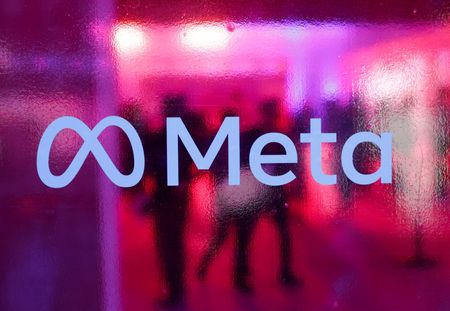

Four U.S. states are seeking a staggering $1.4 trillion in penalties from Meta Platforms, the company behind Facebook and Instagram, over claims that it deliberately engineered its platforms to be addictive to young users and deceived the public about the risks involved.
Meta disclosed the penalty figure in a court filing submitted Monday, responding to documents filed by state attorneys general outlining how damages should be calculated if the states win at trial. The amount is nearly equal to Meta’s current market capitalization of roughly $1.5 trillion — and had not been previously made public.
The case is heading toward an August trial in Oakland, California, brought by the attorneys general of California, Colorado, Kentucky, and New Jersey.
Meta pushed back sharply on the penalty demand, calling it completely unsupported by the evidence in the case.
“A sanction of that size has no analog in the history of consumer protection enforcement,” the company stated in the filing.
Representatives for the attorneys general did not respond to requests for comment following the filing.
While the states’ penalty filings remain sealed from public view, attorneys for the states explained at a June court hearing how they arrived at the figure. They said they multiplied the number of legal violations by fine amounts established under state law, with the violation count based on estimates of how many teens and young users were affected by Meta’s conduct.
In total, 29 states have filed federal lawsuits against Meta, with most alleging the company violated the federal Children’s Online Privacy Protection Act by gathering data from children without obtaining proper consent from parents. The August trial before U.S. District Judge Yvonne Gonzalez Rogers will cover all claims under that federal law, as well as the four states’ additional allegations that Meta broke state consumer protection laws by misleading users about platform safety.
Meta has denied all of the allegations. The company argues that the attorneys general have no evidence it misled anyone about its platforms’ supposed addictiveness, pointing out that “social media addiction” is not a recognized psychiatric diagnosis — and therefore, any statements it made denying addictiveness could not be considered false.
An additional 14 states have filed claims under their own state laws, and those cases are scheduled for a separate trial in February.
Last month, Judge Rogers turned down Meta’s attempt to have the trial thrown out, ruling that genuine factual disputes remain — including whether Meta’s platforms are addictive, whether the company falsely denied designing them that way, and whether it “partially” targeted children with its platforms.
Following that ruling, California Attorney General Rob Bonta said Meta was prioritizing profits over children’s well-being and violating consumer protection laws. He pledged to hold the company “fully accountable” for its part in the teen mental health crisis.
Meta is not alone in facing this type of legal pressure. Snapchat and its parent company Snap Inc., YouTube and parent Alphabet Inc., and TikTok and parent ByteDance are all confronting thousands of lawsuits in federal and state courts. The suits allege these companies knowingly built features into their platforms designed to addict children and teenagers, contributing to a growing mental health crisis among young people.
States across the country have pursued these companies in court, with some cases consolidated before Judge Rogers and others proceeding in individual state courts. New Mexico was the first state to take one of these cases to trial, and in March a jury awarded the state $375 million after determining that the company had misled New Mexico consumers. A judge in New Mexico is now weighing the second phase of that case, which seeks additional damages and a court order requiring changes to the company’s Instagram, Facebook, and WhatsApp platforms.