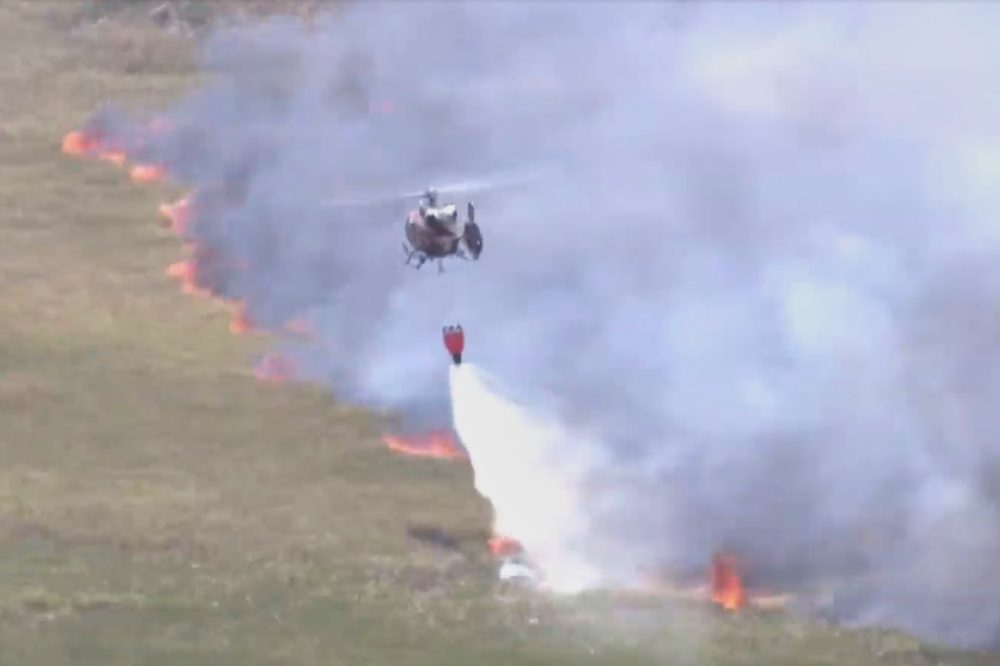

NAHUNTA, Ga. — Devastating blazes continued to spread throughout the Southeast on Wednesday, leaving nearly 50 homes destroyed in Georgia while prompting widespread evacuations and school shutdowns across multiple communities.
The most severe fires were concentrated along Georgia’s coastline and in areas surrounding Jacksonville, Florida, where officials say the state is experiencing one of its most catastrophic fire seasons in recent decades. While the origin of these wildfires remains under investigation, extended drought conditions combined with low moisture levels and powerful winds have created ideal conditions for rapid fire spread.
Georgia’s two largest fires have consumed more than 31 square miles combined, with at least four additional smaller blazes reported statewide. The hardest-hit regions are experiencing exceptional or extreme drought conditions — the most severe classifications according to federal drought monitoring systems.
In Brantley County, located in southeast Georgia, a rapidly advancing wildfire continued threatening additional properties Wednesday after destroying 47 homes the previous day, County Manager Joey Cason reported.
The blaze expanded roughly six-fold in just twelve hours on Tuesday, Cason explained during Wednesday’s press briefing. Nearly two dozen firefighting agencies have joined efforts to combat the flames.
Sheriff Len Davis of Brantley County urged residents to prepare for potential evacuation, emphasizing that wind patterns could change suddenly and without warning.
Federal Emergency Management Agency officials report that approximately 800 people have been evacuated from the county, with five emergency shelters now operational as the fire poses risks to an additional 300 homes.
A separate major fire originating in Clinch County has also triggered evacuations across several communities, according to the Georgia Forestry Association. Association President and CEO Tim Lowrimore described the situation, stating: “This is a serious and evolving situation.”
Florida firefighters were simultaneously confronting 131 active wildfires Wednesday, which have scorched 34 square miles primarily across the state’s northern regions.
Fire suppression equipment has been strategically positioned throughout Florida to ensure rapid response capabilities, Agriculture Commissioner Wilton Simpson announced.
Simpson warned: “Florida has got one of the worst fire seasons in maybe the last 30 or 40 years or it’s turning out to be that way. We’ve been in drought for 18 months now all across the state.”
Train service disruptions affected Amtrak operations Monday in northeastern Florida due to wildfire activity. Normal service resumed Wednesday, confirmed Amtrak representative Beth Toll.
Weather officials warned that dangerous combinations of minimal humidity and gusty winds would maintain elevated fire risks Wednesday.
Smoke plumes reached major metropolitan areas including Atlanta, Savannah, Georgia, and Jacksonville, Florida. Air quality measurements in southern Georgia deteriorated to unhealthy levels Wednesday, potentially affecting all area residents.
The Atlanta-Fulton County Emergency Management Agency predicted smoky conditions would persist throughout the Atlanta region Wednesday, despite the primary fires burning more than 200 miles southeast of the metropolitan area.
Meteorologists forecast continued high fire danger each afternoon through Friday due to persistently dry environmental conditions.