
When Hassan heads to the market in Sarmada, north of Idlib, to pick up groceries for his family, he no longer bothers checking for cash. His smartphone is all he needs.
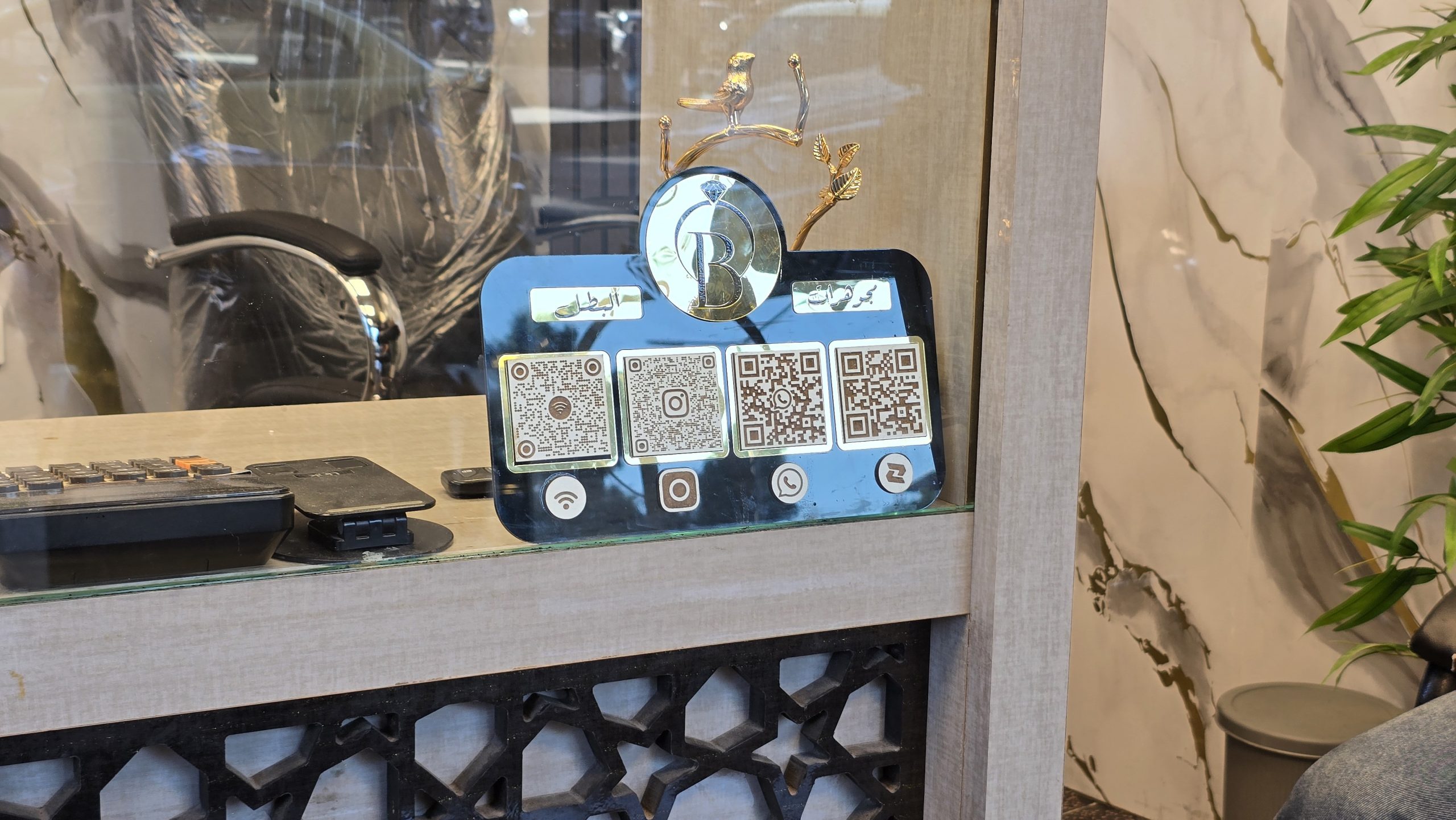
Standing at a vegetable stall, he chooses tomatoes, cucumbers, and peppers. Once the seller tallies up the total, Hassan scans a QR code posted at the stand, types in the amount, and hits “Send.” A notification pops up within seconds confirming the payment, and the vendor gives a nod to signal everything went through.
For years, Idlib has been defined by the horrors of war — airstrikes, displacement camps, and masses of people fleeing violence. But a different kind of change is now unfolding there. More and more residents are turning to a smartphone application called Sham Cash to handle purchases as routine as bread, vegetables, coffee, and medicine — a sign of how commerce is evolving in a region long shaped by conflict and scarce banking options.
“The app has made financial transactions much easier since it was launched,” Hassan said. “We can now buy our daily needs or sell our goods without having to rely on paper money in many cases.”
The shift goes beyond grocery shopping. At a café nearby, a man named Ahmad orders a coffee, scans a payment code on his phone, and wraps up the transaction in moments. Ahmad, who had traveled to Sarmada from Damascus, said this kind of seamless digital payment experience is hard to find elsewhere in the country. “This level of convenience in payments doesn’t exist in any other Syrian city I’ve visited,” he said. “So far, the app hasn’t spread this widely outside this region.”
Flower shops, pharmacies, retail stores, and gyms are among the businesses now accepting digital payments alongside cash. Residents acknowledge that physical money hasn’t disappeared from local markets, but many say they can handle most of their daily spending through the app.
Sham Cash gained significant traction after it became the designated platform for distributing salaries to public-sector workers and retirees, expanding its role from a simple money-transfer tool into a broader payment system used for shopping, bill payments, and other services.
Idlib’s financial situation has long stood apart from the rest of Syria. After the region fell outside the control of the former Assad government, the Turkish lira and the US dollar became the dominant currencies in local markets, with the Syrian pound playing a smaller role than in other parts of the country. Now, as Syria’s transitional government works to promote greater use of the Syrian pound, the area is experiencing yet another financial shift — one driven by digital payment apps that have made smartphones central to everyday life.
A government source told The Media Line that the app currently serves around 1.25 million public employees and retirees who receive their pay through the platform. Nofal Al-Ahmad, a retiree from Idlib, said the change has reshaped his daily routine. “In the past, we had to stand in line for hours to collect our pensions,” he said. “Now the money arrives on my phone while I’m at home, and I can immediately use it to buy what I need without carrying cash.”
Business owners have also woven the app into their operations. Mohammad Al-Qasim, a veterinary pharmacist in Idlib, said he prefers getting paid through Sham Cash because it makes financial dealings with suppliers more straightforward. “Most of my customers are sheep and cattle breeders, and a large percentage of them pay through the app,” he said. “Like most business owners in Idlib, we receive payments this way and later transfer money to suppliers. The app has become an essential part of our daily transactions.”
Abu Khaled, who runs a candy shop in Sarmada, said digital payments have become second nature for his customers. “Most customers pay for sweets through the app,” he said. “It has become part of people’s daily lives, and after getting used to it, it no longer makes sense not to use it.”
Still, not everyone has fully embraced the change. Umm Mahmoud, who collects her husband’s pension through Sham Cash, said that while the app makes receiving money more convenient, she still trusts physical cash more. “As soon as the pension arrives on my phone, I go directly to a money exchange office to withdraw it,” she said. “I trust paper money more.”
Government worker Akram Al-Qasim shares that sentiment. Although he recognizes that the app has made transactions easier, he withdraws his salary in cash as soon as it hits his account. “I feel more secure when I have cash in hand,” he said. “That’s why I withdraw my salary as soon as it arrives.”
The uneven spread of the technology across Syria is also a point of discussion. Hamza Zidan, who owns a loudspeaker sales company in Idlib, said the gap becomes clear when he visits other parts of the country. “I travel between Aleppo, Homs and Damascus,” he said. “Whenever I ask to pay through Sham Cash, vendors are often surprised, or refuse because they don’t use it.”
The company behind Sham Cash says it is actively working to upgrade its services and strengthen its technical foundation. A company employee named Mahmoud Al-Sheikh told The Media Line that recent improvements include a redesigned user interface, expanded cash withdrawal and deposit options through the addition of Al-Haram and Al-Fouad exchange companies, and stronger security features such as fingerprint and PIN authentication.
Additional updates include the ability to hide account balances and support for multiple languages. Al-Sheikh said the company is also focused on improving the app’s performance in areas with poor internet access, while growing its network of participating merchants and broadening the range of available services.
Al-Sheikh also raised a warning about fraud, noting that fake social media pages and groups have been impersonating the app’s technical support team in an attempt to collect users’ personal information, including email addresses and passwords. He said Sham Cash never requests such details through social media and urged users to report any fraudulent accounts they encounter.
Internet outages and technical disruptions remain ongoing challenges, sometimes causing delays in transactions. In March 2026, the app went down for several hours amid reports it had been hit by a cyberattack. Sham Cash denied that any user data was affected, saying the outage stemmed from a technical problem that was subsequently fixed.
One resident, Umm Saeed, described a moment that captured just how deeply digital payments have taken hold. While shopping at a market in Idlib, a woman approached her asking for help. “I told her I wasn’t carrying any cash because I use the Sham Cash app,” Umm Saeed recalled. “To my surprise, she pulled out her phone, opened a QR payment code and asked me to transfer the money through the app.” The encounter illustrated how far the technology has spread — reaching well beyond shops and businesses into situations where few would have expected to see it.
From vegetable sellers and coffee shops to pharmacies, flower stalls, and candy stores, the smartphone has taken on a new role in Idlib. For a growing number of residents, it functions as a digital wallet that travels with them through every part of their day — a transformation that remains largely unique to this corner of Syria.