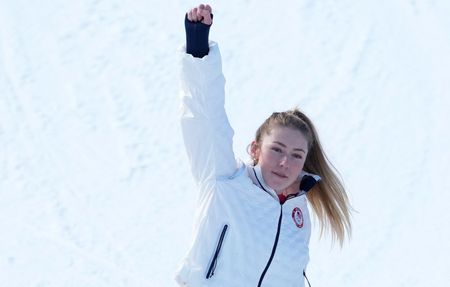

American alpine skier Mikaela Shiffrin claimed her first Olympic gold medal in eight years on Sunday, capturing the slalom championship in Cortina d’Ampezzo, Italy. For the 30-year-old athlete, this victory represented much more than athletic achievement — it marked her first Olympic triumph since her father’s passing six years ago.
“Everything in life that you do after you lose someone you love is like a new experience,” Shiffrin explained following her slalom victory on the Olimpia delle Tofane course, which helped her move past her disappointing performance at the Beijing 2022 Games.
“It’s like being born again. I still have so many moments where I resist this. I don’t want to be in life without my dad.”
The champion’s personal battle played out alongside professional challenges including injuries, confidence issues, and gradually rebuilding faith in her skiing abilities.
“When I did get injured… my slalom was in a place that I felt was repeatable. And my GS (giant slalom) was not quite,” she explained.
Shiffrin acknowledged that competing at the Olympic level has become more challenging over time.
“Yes, I think it’s harder,” she responded when questioned about whether Olympic competition is more demanding than World Cup racing.
“I wouldn’t have said that in Sochi (2014, when she won slalom gold) because I was like, what are we talking about? It’s just skiing.”
However, Sunday brought the mental clarity she had been seeking.
“What was beautiful was that I actually felt that it was… it just felt like ski racing. It felt like another day on the mountain between the start and the finish,” she said.
Narrow Margins Define Success
Shiffrin’s reflections highlighted how slim the difference between victory and defeat remains, even with extensive experience. Following a lackluster team combined event, she was reminded of the work still required despite holding the career record with 108 World Cup wins.
“I can show up with however many victories… and they think it’s a given. And I’m like, this just goes to show how hard it is,” she noted.
During the race, she defeated Switzerland’s Camille Rast by 1.50 seconds — a margin nearly equal to the combined gaps between first and second place in women’s Olympic slalom events since 1998.
“It felt like it was just on the limit… we’re just right nudging against the ceiling here,” she described.
Before competition began, her emotions about her father’s absence returned.
“I sort of started to cry a little bit because I was thinking about my dad. Maybe today was the first time that I could actually accept this reality,” she shared after taking a quiet moment in the finish area to remember him.
Her grieving experience has been more practical than mystical.
“Part of my journey through grief has been challenging because I don’t feel this thing that a lot of people talk about… this deep spiritual connection,” she revealed. “People talk about feeling the presence, and I haven’t felt it in that way. I feel connected to him in my thoughts and in talking about him.”
Shiffrin credited her support team with helping her reach this breakthrough moment.
“The wonderful thing about this day was that I felt proud before it happened because of my team,” she said, referencing conversations that helped her work through complicated feelings.
Ultimately, her team’s guidance was straightforward and practical.
“It is as simple as skiing. It is something that I have within myself and we’ve trained and prepared for,” Shiffrin concluded.