
HARRISBURG, Pa. (AP) — A devastating windstorm swept through the Midwest on Saturday, plunging nearly half a million people into darkness and causing widespread damage to buildings and vehicles across multiple states. The powerful weather system also contributed to fatal wildfires in Nebraska’s grasslands.
By Saturday afternoon, approximately 450,000 customers remained without electricity across Ohio, Pennsylvania and Michigan, based on data from PowerOutage.us, a national outage monitoring service.
The National Weather Service recorded extraordinary wind speeds during the storm, including a 66 mph gust at Pittsburgh International Airport on Friday that ranked as the fourth-strongest non-thunderstorm wind event in the facility’s history. Even more dramatic was Cleveland Burke Lakefront Airport, where winds reached 85 mph Friday afternoon.
The fierce winds wreaked havoc on structures throughout the region. A gas station canopy collapsed in New Franklin, Ohio, while an auto parts store sign was destroyed in Baldwin, Pennsylvania. From Cleveland to Pittsburgh, fallen trees and large branches crashed into residential homes and vehicles. In Niles, Illinois, near Chicago, wind severely damaged a school building’s roof.
The same weather pattern intensified multiple wildfires across Nebraska’s ranch and grassland areas, resulting in one fatality in Arthur County, according to state officials. Authorities have not released the victim’s identity or provided additional circumstances surrounding the death.
State emergency officials are calling it the Morrill County fire, which has consumed at least 735 square miles spanning four counties since Thursday. The Nebraska Emergency Management Agency reports that a minimum of 12 buildings have been completely destroyed.
Chelle Ladely, a Sidney resident, described the frightening conditions even though her property sits roughly 40 miles from the closest fire zone. She expressed deep concern for relatives and neighbors in affected areas.
“Smoke is filling the air and at night, I can see the burn of the fires on the horizon,” Ladely said. “My father is a crop agronomist, and his company as well as other local farmers are all gathering their water trucks to help aid with the fires, and truckloads of bottled water and food is being supplied by our good patrons for our volunteer firemen trying to extinguish the blazes.”
Additional wildfires driven by winds reaching 65 mph consumed another 225 square miles by Saturday midday, bringing the total burned area to nearly 938 square miles. The Nebraska Emergency Management Agency stated that the extreme wind conditions have prevented firefighters from establishing containment lines around any of the blazes. Governor Jim Pillen conducted an aerial tour of Morrill County fire damage on Saturday.
Despite threatening weather conditions in Chicago, thousands of St. Patrick’s Day celebrants gathered to watch the traditional river dyeing ceremony and downtown parade. Snow threats and bitter winds pushed the wind chill temperature far below freezing during the festivities.
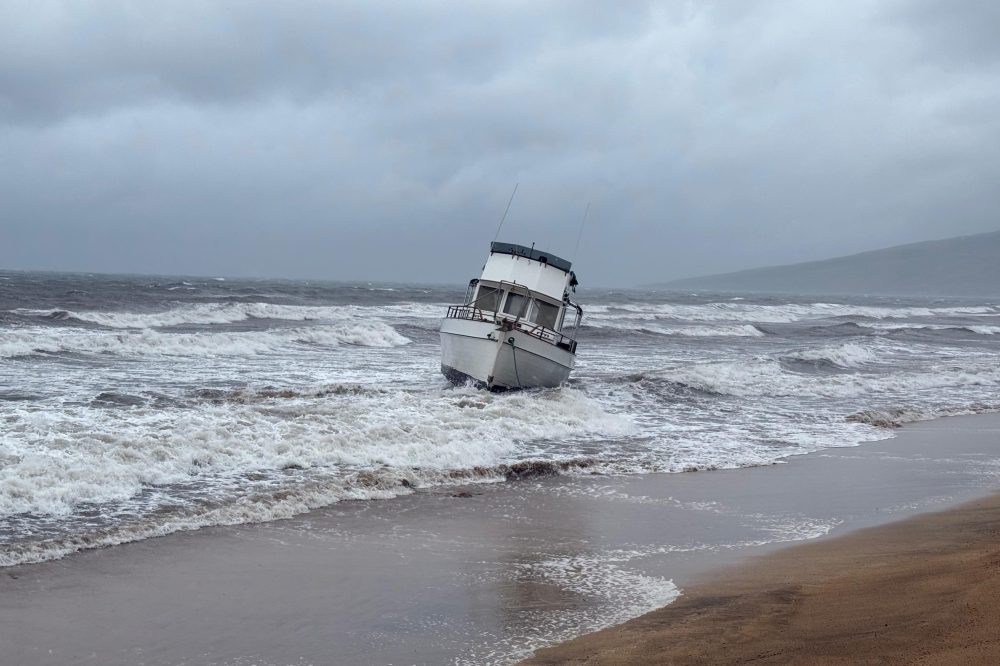
The destructive winds represent just one element of an unusual weather pattern affecting much of the country, which includes flooding rains in Hawaii, approaching triple-digit temperatures in Phoenix, and returning winter conditions to the Midwest and Northeast. Chicago temperatures are forecast to drop near single digits by Tuesday, while Minneapolis could see readings around zero degrees.
Multiple Minnesota municipalities have already issued snow emergency declarations beginning Sunday, anticipating what meteorologists believe could be the season’s heaviest snowfall. Wisconsin and Michigan’s Upper Peninsula are also expected to be significantly impacted.
AccuWeather meteorologists are characterizing the weather system as a “potent triple-threat March megastorm” that will continue from Sunday through Monday.
“It’s definitely a very active weather weekend, that’s for sure,” AccuWeather senior meteorologist John Feerick said. “It’s a highly amplified pattern, which means you get a lot of extremes. Also, not just the Lower 48, but Hawaii’s getting hit hard right now with some very heavy rain.”
Feerick warned that areas along the Wisconsin-Iowa border could experience ice formation, creating hazardous travel conditions throughout much of the Upper Midwest region.