
SARAJEVO, Bosnia-Herzegovina — Severe weather conditions wreaked havoc across multiple Balkan nations Friday, as powerful winds, heavy precipitation, and snowfall forced educational institutions to shut down and left thousands of residents in the dark.
Weather officials issued emergency alerts for numerous communities throughout northern and northwestern Slovenia after wind gusts peaked at 141 kph (87 mph) in certain locations, according to public broadcaster RTV SLO.
Emergency response teams worked overnight to remove debris and fallen trees that had blocked multiple roadways throughout the affected region.
The power grid took a significant hit, with more than 15,000 residents losing electrical service in impacted zones. RTV SLO documented unusual “wintry” weather patterns, including snowfall in typically milder southern regions of the Alpine country.
Croatia’s capital city of Zagreb experienced destructive winds Thursday afternoon through Friday morning, resulting in downed trees, damaged public transportation infrastructure, and roof damage. Educational officials canceled Friday classes at elementary and high schools due to hazardous conditions.
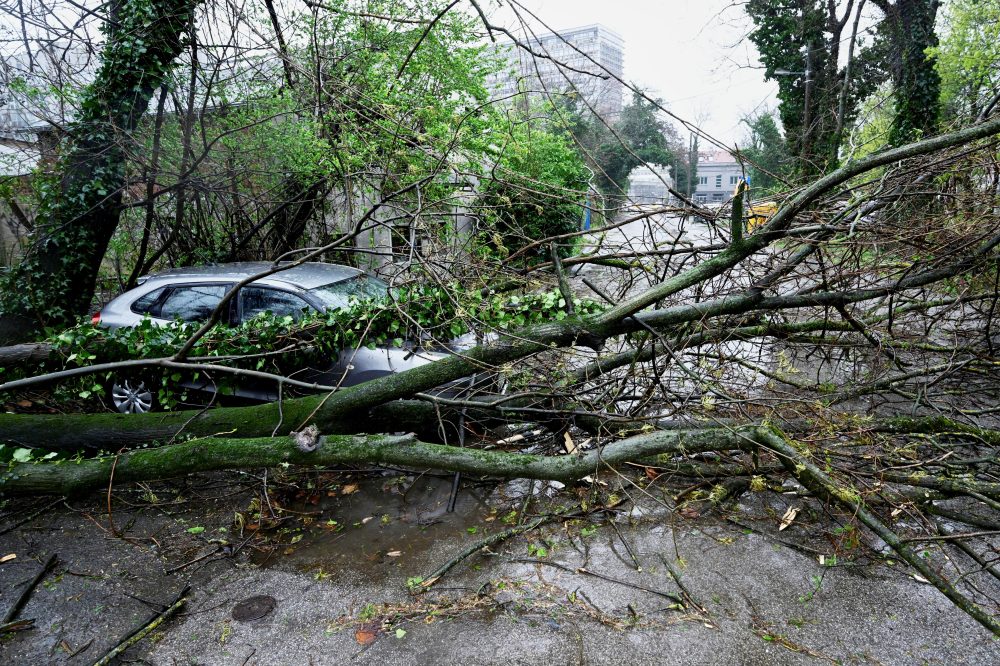
Local news outlets and social media platforms displayed images of massive trees uprooted throughout Zagreb, with some obstructing traffic lanes and crushing parked vehicles. Wind velocities occasionally spiked to 120 kph (74 mph), according to meteorologist Petra Mikus Jurković.
“Such lasting, strong, stormy wind is not common for the Zagreb area,” she said.
Croatia’s automobile association HAK, which tracks driving conditions and provides roadside assistance, reported multiple vehicle collisions in northwestern regions due to snow and high winds.
Transportation officials in northwestern Bosnia restricted heavy truck traffic because of dangerous snowfall conditions. Local school districts suspended classes indefinitely until weather conditions and power restoration efforts show improvement.
Climate scientists suggest these intense weather events may be connected to broader climate change patterns.