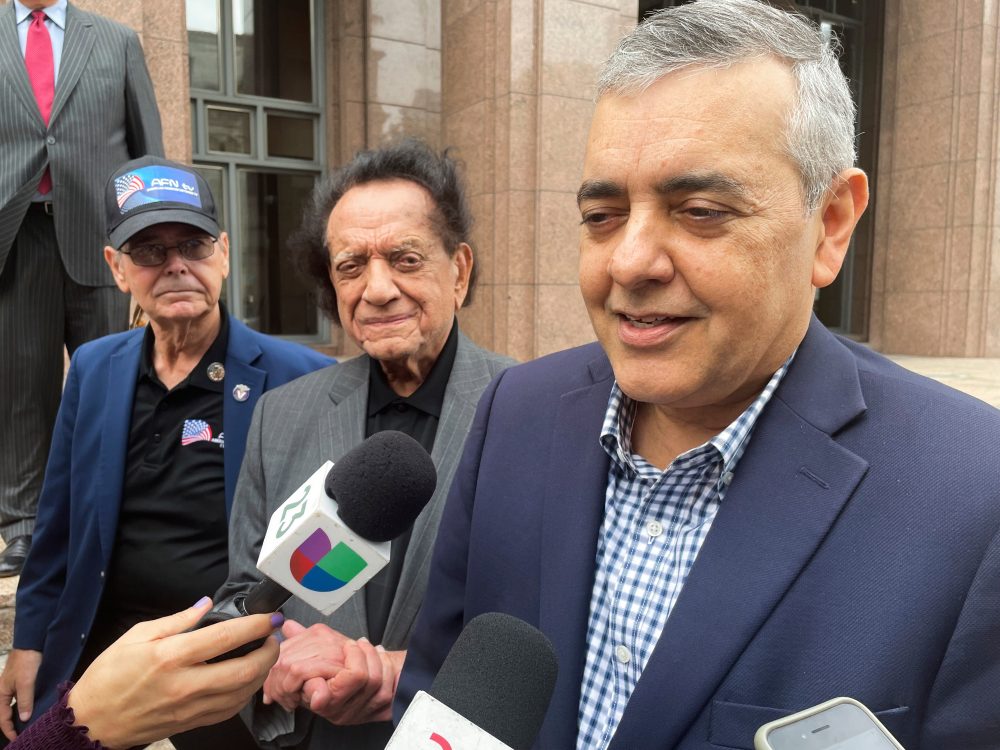

MIAMI — A federal criminal trial begins Monday featuring an unusual witness: Secretary of State Marco Rubio will testify about his former roommate, a onetime Miami congressman now facing charges for allegedly conducting secret lobbying work for Venezuela’s government.
Federal prosecutors claim David Rivera operated as a covert agent for former Venezuelan President Nicolás Maduro, using his Republican political connections from his congressional years to influence the White House toward softening its tough stance against Venezuela’s socialist leadership.
According to the government’s case, Rivera — who once shared living quarters with Rubio in Florida — convinced Venezuela’s then-Foreign Minister Delcy Rodríguez, currently serving as Venezuela’s acting president, to grant him a massive $50 million lobbying agreement funded by the state petroleum company PDVSA. The prosecution alleges Rivera’s influence operation included assistance from Texas GOP Representative Pete Sessions and a person with ties to the Cali drug cartel, as they pursued White House and Exxon Mobil meetings on Maduro’s behalf.
This case provides an uncommon look at Miami’s controversial influence on U.S.-Latin American relations — a city long known as a destination for political exiles, financial misconduct, and anti-communist activism. It’s particularly noteworthy that Rubio, Miami’s highest-profile political figure, is scheduled to appear in court Tuesday to discuss his encounters with Rivera during the period when Rivera was allegedly assisting Maduro’s diplomatic efforts in Washington.
The proceedings will also examine Rodríguez’s role, as she reportedly depended on Rivera to arrange meetings across New York, Caracas, Washington and Dallas in an attempt to build American support for restored Venezuela relations — a campaign that initially failed but may now be possible under different circumstances following Maduro’s removal and his successor’s more moderate approach.
The 11-count federal indictment, made public in 2022, accuses Rivera and a co-defendant of money laundering and violating foreign agent registration requirements.
To conceal their activities, prosecutors say Rivera created an encrypted messaging group named MIA — representing Miami — with his primary Venezuelan government contact: media mogul Raúl Gorrín, who later faced U.S. charges for bribing Venezuelan officials.
Group participants allegedly used coded language for their discussions: Maduro became the “bus driver,” Sessions was “Sombrero,” and they referred to millions of dollars as “melons,” according to prosecutors.
The 60-year-old Rivera maintains his innocence. His legal team argues that his solo business, Interamerican Consulting, was contracted by a U.S. subsidiary of Venezuela’s government oil company — not PDVSA directly — eliminating any foreign agent registration obligation.
Defense lawyers claim his consulting focused on positioning Venezuelan-owned Citgo within America’s energy sector and was completely separate from his diplomatic mediation work, which involved collaborating with Maduro’s political opposition to promote leadership more favorable to U.S. interests.
However, civil lawsuit plaintiffs contend Rivera performed minimal promised services and used the contract to mask illegal lobbying activities. From approximately $20 million he collected, $3.75 million was directed to a South Florida business that serviced Gorrín’s luxury yacht.
Rubio’s anticipated testimony represents a rare occurrence — the last time a sitting Cabinet member testified in a criminal proceeding was Labor Secretary Raymond Donovan’s 1983 appearance at a organized crime trial.
Although Rubio faces no charges and the indictment contains no suggestions of senatorial misconduct, prosecutors indicate Rivera considered him crucial for White House access. For Rubio, prosecutors revealed during last week’s pre-trial proceedings, communication with Gorrín provided an unofficial channel to Caracas when U.S. intelligence had identified a potential assassination threat against him from Venezuelan socialist party leader Diosdado Cabello.
The indictment details a July 9, 2017 meeting between Rivera and Rubio at the senator’s Washington residence. Rivera allegedly informed Rubio about his collaboration with Gorrín, who had supposedly convinced Maduro to accept an agreement involving free and fair elections.
“Remember, U.S. should facilitate, not just support, a negotiated solution,” Rivera texted Rubio two days afterward as the senator prepared to meet with Trump, according to the indictment. “No vengeance, reconciliation.”
After a subsequent meeting involving Rubio, Rivera, Gorrín and others, Rivera commented in the chat that the bus driver — Maduro — would need to compensate him for arranging the Rubio meeting. Rivera indicated that without the senator’s backing, there would be “no turkey.”
The diplomatic initiative collapsed quickly. That same month, Trump imposed sanctions on Maduro and declared him a “dictator,” initiating a “maximum pressure” strategy to remove the Venezuelan leader. Rubio subsequently appeared on Venezuelan television to promote the White House position.
“For Nicolás Maduro, who I am sure is watching, the current path you are on will not end well for you,” Rubio stated in a July 31, 2017 ten-minute broadcast to Venezuelan citizens that aired on Gorrín’s television network.
The State Department has declined to provide comment.
Following the contract’s execution, Rivera and Gorrín organized a New York City meeting between Rodríguez, then serving as foreign minister and PDVSA board member, and Sessions, whose Dallas-area congressional district encompassed Exxon’s corporate headquarters.
Subsequently, Sessions attempted to facilitate a meeting for Rodríguez with Darren Woods, who had replaced Trump’s former Secretary of State Rex Tillerson as Exxon’s chief executive. Rodríguez sought to settle a prolonged investment disagreement and entice Exxon’s return to Venezuela to help restore the OPEC member’s deteriorating oil sector. The proposed meeting was unsuccessful as Exxon rejected the approach.
Nearly a year after assisting Rivera’s Exxon outreach, Sessions covertly visited Caracas for a Maduro meeting that Gorrín and Rivera had arranged, the indictment states. Sessions also agreed to deliver a letter from the Venezuelan president to Trump as part of this effort.
Rivera’s defense team sought testimony from both Maduro and White House chief of staff Susie Wiles. Maduro, through legal counsel, indicated he would exercise his constitutional right against self-incrimination if forced to testify, while prosecutors successfully blocked attempts to subpoena Wiles, who had been a registered lobbyist for Gorrín’s Globovision network during the same period the media owner was collaborating with Rivera.
Prior to his 2010 congressional election, Rivera held senior positions in Florida’s state legislature. During that period, he shared a Tallahassee residence with Rubio, who eventually became Florida House speaker.
Rivera has encountered previous controversies, including accusations that he covertly financed a Democratic candidate intended to split votes in a 2012 congressional election. Federal prosecutors dismissed that case last year after an appellate court overturned a substantial fine from a trial court. Rivera was also investigated — though never prosecuted — regarding campaign finance infractions and a $1 million gambling company contract during his Florida legislative service.
Rivera has rejected all allegations of misconduct and characterized both investigations as politically driven.