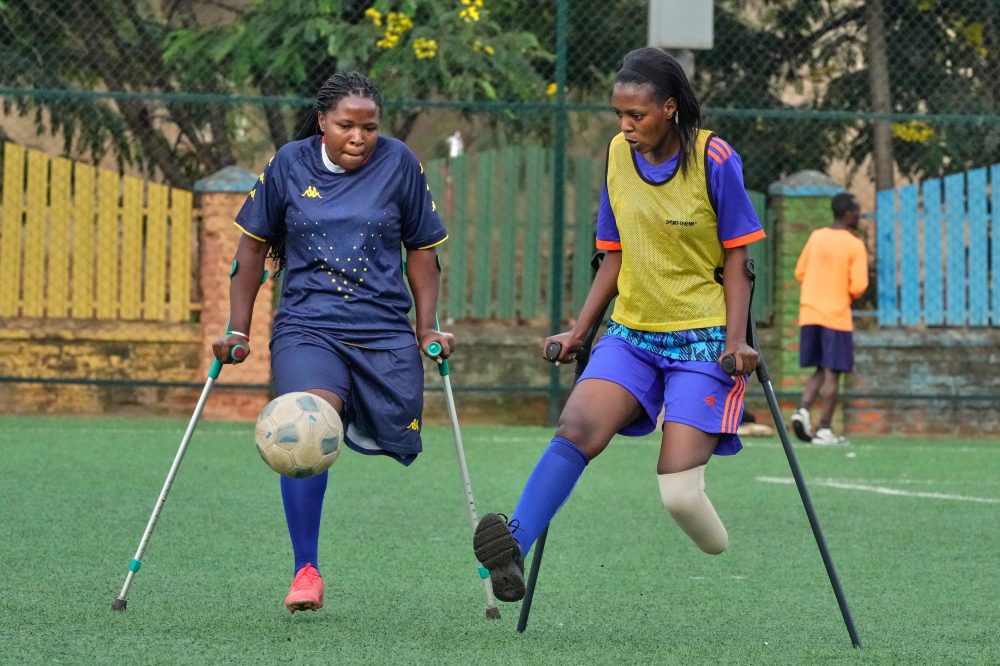

KIGALI, Rwanda — On a soccer field in Rwanda’s capital, the sound of crutches clashing fills the air as players pursue both a ball and their dreams of international competition. Young spectators cheer with excitement watching a goalkeeper make a diving save using only one arm.
Over the last ten years, amputee soccer has experienced significant growth in Rwanda. This modified version features seven players per side who navigate the field using crutches, while goalkeepers play with a single arm. Participants describe discovering not just a sport they never thought possible, but also a supportive community that provides both physical recovery and emotional belonging.
In Kigali, these athletes use the game to promote healing and unity following various traumatic experiences, including the nation’s most devastating chapter: the 1994 genocide that claimed approximately 800,000 lives of Tutsis and moderate Hutus during a brutal 100-day massacre by the Hutu majority.
Nyiraneza Solange, born two years following the genocide, lost her leg at age 5 due to complications from a fall and subsequent infection. She explained that witnessing the determination of genocide survivors who had lost limbs inspired her to join amputee soccer.
The former coach of Rwanda’s inaugural amputee soccer team motivated her by explaining how she could utilize her crutches during gameplay. Any initial apprehension quickly disappeared.
“I don’t even think about I don’t have a leg,” Solange stated, describing how playing gives her a sense of freedom and has helped her overcome the social stigma associated with being an amputee.
Current estimates suggest Rwanda has over 3,000 individuals with lower-limb amputations. Some lost limbs during the genocide, while others became amputees through traffic accidents or medical conditions.
Louise Kwizera, who serves as vice president of the Rwanda Amputee Football Federation, explained that the sport helps participants rebuild trust and creates unity within a society that “was once divided.”
“In communities affected by conflict or trauma, the playing field becomes a place of peace. People who may have different pasts come together as teammates,” Kwizera shared with The Associated Press.
Rwanda aims to participate in next year’s second women’s amputee soccer World Cup, an invitation-only tournament expected to take place in either Poland or Brazil. The country sent only one athlete to represent them at the inaugural competition in 2024.
The World Amputee Football Federation oversees this sport, which is now played across more than 50 nations. Rwanda currently operates five professional women’s teams alongside ten men’s teams.
Fred Sorrels, who manages Haiti’s women’s amputee soccer team, traveled to Rwanda to assist with developing their local program. He expressed support for the East African nation potentially hosting a World Cup, though the country’s sports ministry confirmed no official bid has been submitted yet.
Sorrels emphasized the sport’s positive impact on participants.
“It’s a win psychologically and mentally for these ladies to have an opportunity to experience wholeness and wellness again,” he noted.
Gilbert Muvunyi Manier, director general of sports development for Rwanda’s sports ministry, described the sport as a “powerful tool” for promoting healing, reconciliation, and social unity.
Athletes recognize certain tactical challenges within the game.
“It’s hard to save the ball when it goes to the side with the receding hand,” explained goalkeeper Nikuze Angelique. Similar to Solange, she emphasized the sense of community she’s discovered through the sport.
Following a recent match, as players captured selfies together, Angelique expressed optimism about reaching the World Cup.
“It will be a dream come true,” she said.