
Moscow officials announced Monday that Russia wants to establish shared food stockpiles with BRICS partner nations and former Soviet states as ongoing Middle East conflicts threaten worldwide food supplies.
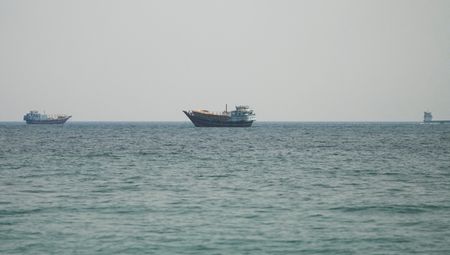
Alexander Maslennikov, who serves as deputy secretary of Russia’s Security Council, stated that fertilizer supply disruptions have created serious concerns for agricultural production globally. Approximately half of the world’s food production depends on fertilizer, with one-third of global fertilizer trade previously moving through Iran’s Strait of Hormuz shipping corridor, which has faced major disruptions since regional conflicts intensified.
“To ensure food security, it is highly important to expand cooperation with friendly countries, primarily the member states of the Eurasian Economic Union and BRICS, including through the creation of joint food reserves,” Maslennikov told Russian news outlets.
The Security Council, headed by President Vladimir Putin, plays a key role in shaping Russia’s major national security policies. Putin was scheduled to meet with Indonesian President Prabowo Subianto on Monday, with food security expected to be a primary discussion topic.
Maslennikov warned that continued fertilizer shortages extending into early summer could slash major crop production by 50 percent, potentially triggering the most severe global food price increases seen in recent years. He projected that worldwide hunger could affect a record 673 million people.
International financial institutions including the World Bank, International Monetary Fund, and United Nations World Food Programme issued warnings last week about escalating oil, natural gas, and fertilizer costs from Middle East warfare inevitably leading to higher food prices and increased food insecurity.
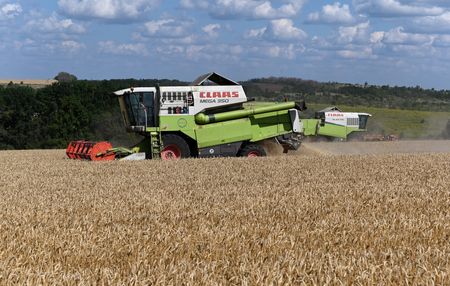
As the world’s top wheat exporter, Russia produces and ships significant amounts of fertilizer but cannot substantially boost production capacity this year. The country aims to increase agricultural exports by 50 percent before 2030.
While acknowledging risks to Russia’s domestic food security, Maslennikov described the current crisis as creating long-term export opportunities for Russian agricultural producers.
“Russia is in a strong position to increase food exports to the countries of the Middle East, as well as to Asia, Africa and Latin America,” he explained.
Egypt leads BRICS nations in purchasing Russian wheat, while Russia also supplies food to China and India, the trading bloc’s largest economies. Russia heads the Eurasian Economic Union alongside grain-producing Kazakhstan, Belarus, Armenia, and Kyrgyzstan.