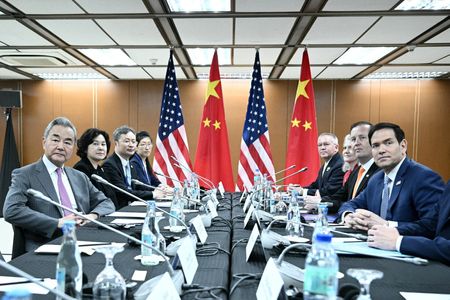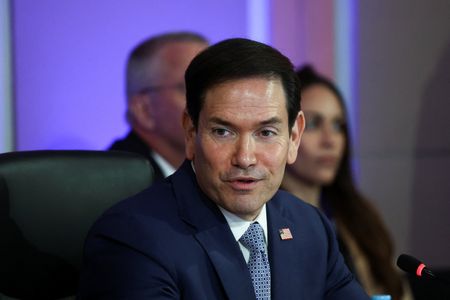

Secretary of State Marco Rubio has directed U.S. diplomats to counter growing international alarm over what critics are calling an American “kill switch” on technology products, according to a State Department cable recently reviewed by Reuters.
The worldwide guidance reveals how American diplomats are navigating the global fallout from the Trump administration’s attempts to regulate how and to whom U.S. artificial intelligence companies can distribute their models.
The State Department declined to offer any comment on the matter, and the White House did not respond to a request for a statement.
The controversy stems from a June 12 decision by the Trump administration to block non-U.S. residents from accessing Anthropic’s most advanced AI models, known as Mythos and Fable, citing national security concerns. The move prompted Anthropic to immediately cut off global access to those models. The episode gave Asian technology executives an opening to promote their own competing products, while European lawmakers intensified their push for digital independence from the United States.
The ban was reversed later in June, but the damage to trust persisted. Adding to the concern was a June 2 executive order from President Trump asking AI companies to voluntarily submit their models for 30 days of cybersecurity review before release — a signal that Washington was willing to intervene in AI distribution, even cutting off allies without warning.
European lawmaker Christophe Grudler said the events demonstrated that “the U.S. holds a real ‘kill-switch’ over essential technologies and that they are more than willing to use it.” Aura Salla, a member of the European People’s Party — the largest political group in the European Parliament — argued that the continent “cannot keep building its tech stack on access that can be switched off overnight by a foreign government.”
The July 16 State Department cable did not name Anthropic, nor did it directly reference the ban or the executive order. However, it equipped American diplomats with arguments designed to push back against the criticism those actions generated.
“Pausing narrow uses or requiring a 30-day testing window prior to the release of a highly potent new technology is not a ‘Kill Switch,’” the cable stated. “There is no government ‘magic button.’ This narrative is exaggerated and doesn’t capture the nuances of U.S. technology policy.”
Beyond defending against the kill switch narrative, Rubio’s cable also instructed diplomats to actively oppose what it called “so-called ‘digital sovereignty’” efforts — defined as moves by foreign governments to limit American tech companies’ market access, impose data localization rules, charge “network usage fees,” or require compliance with local content moderation standards. Reuters previously reported that Rubio had directed diplomats to fight similar data sovereignty measures earlier this year.
The cable further told diplomats to frame American AI products as the superior choice and characterize efforts by other nations to build their own AI systems from scratch as inefficient and wasteful.
“American AI companies can build large, independent AI infrastructure, with secure and robust supply chains that minimize backdoor risk,” the cable read. “They build it. It’s yours.”
Edward Fishman, director of the Maurice R. Greenberg Center for Geoeconomics at the Council on Foreign Relations, said he understood the security reasoning behind the initial restrictions on Anthropic’s models, which he noted can significantly enhance sophisticated hacking operations. But Fishman said the Trump administration’s pattern of using economic pressure — including tariffs and sanctions — against both adversaries and allies alike made the State Department’s reassurances a difficult sell.
He noted that European partners were especially worried that growing dependence on leading U.S. AI models “like those made by Anthropic and OpenAI” could eventually be exploited as “an economic weapon against them down the road.”
Salla, the European lawmaker, told Reuters that repeated threats from the Trump administration directed at countries like Denmark had created a climate of distrust that diplomatic messaging alone could not undo.
“They have not shown us any indication that they are reliable partners,” she said.