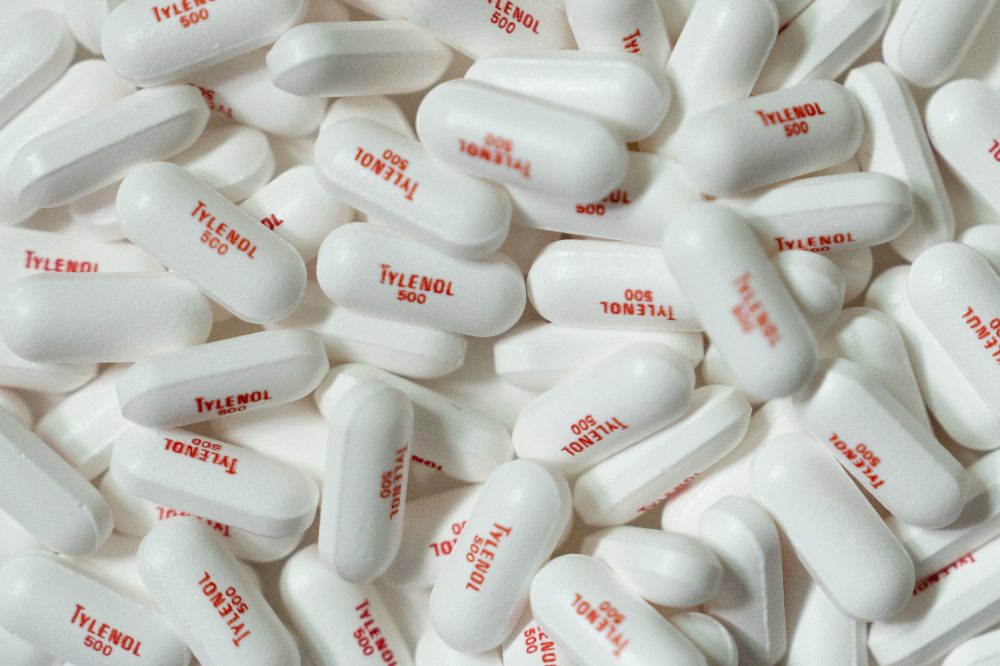

New research reveals that former President Donald Trump’s unfounded statements linking Tylenol to autism significantly changed how doctors prescribed medications nationwide last year.
During a White House briefing, Trump advised expectant mothers to avoid Tylenol, claiming without scientific backing that the common pain reliever causes autism. He simultaneously promoted leucovorin, an older generic medication, as an autism remedy.
Following those remarks, a study published Thursday in The Lancet shows dramatic shifts in prescribing practices occurred over nearly three months. Emergency department orders for Tylenol among pregnant women ages 15-44 fell 10% below expected levels. Meanwhile, leucovorin prescriptions for children between 5-17 years old jumped 71% higher than anticipated from late September through early December.
Medical organizations had immediately condemned the president’s statements, emphasizing that Tylenol remains safe during pregnancy and that leucovorin should not be widely prescribed for autism treatment.
“It just shows that in our country right now, health care has been politicized in a way that political messages are driving and impacting care — and not always for good,” said Dr. Susan Sirota, a pediatrician in Highland Park, Illinois, who wasn’t involved with the research.
The researchers analyzed prescription data changes against projected trends to determine what would have happened without the White House announcement. They found no comparable shifts in similar medications, indicating the changes directly resulted from Trump’s briefing.
Study co-author Dr. Michael Barnett from Brown University School of Public Health noted how unusual it was for a political leader’s unconventional press conference to influence both patient choices and medical prescribing habits.
In previous administrations, “there are lots of layers of approval and expert consensus” before officials make big announcements about medical topics, said Barnett.
The study had some limitations, including that it didn’t track all Tylenol usage since most people purchase the over-the-counter medication outside hospital settings.
Expectant mothers typically use Tylenol for pain relief or fever reduction. The Society for Maternal-Fetal Medicine warns that untreated fevers during pregnancy, especially in early stages, can increase risks for miscarriage, premature delivery and other complications. While some research has suggested possible links between prenatal Tylenol use and autism, many studies have found no such connection.
Leucovorin, derived from folic acid, is primarily used to counteract toxic effects from certain cancer treatments and address a rare blood condition. The American Academy of Pediatrics has noted studies examining its use for cerebral folate deficiency and certain autistic children.
However, the pediatrics organization does not recommend routine leucovorin treatment for autistic children. While early, limited studies have explored its potential benefits “in carefully selected cases,” the evidence remains insufficient. Additionally, the European Journal of Pediatrics retracted a study on leucovorin as autism treatment in late January.
After the federal announcement, Dr. Sirota said families in her practice inquired about obtaining leucovorin for their autistic children. She provided education about the limited evidence and potential side effects, which can include irritability, nausea, vomiting and skin conditions like dermatitis, and chose not to prescribe it.
Sirota expressed frustration with dealing with consequences from such government statements on autism.
“It feels like a pattern with our government, right? They keep building on these houses of cards that just fall down,” she said. “This politicizing of medicine just in general, and moving away from science, has been so challenging.”