
WASHINGTON — In an effort to keep a potential government shutdown off the table before this fall’s midterm elections, the House voted Tuesday to extend federal funding through December 4.
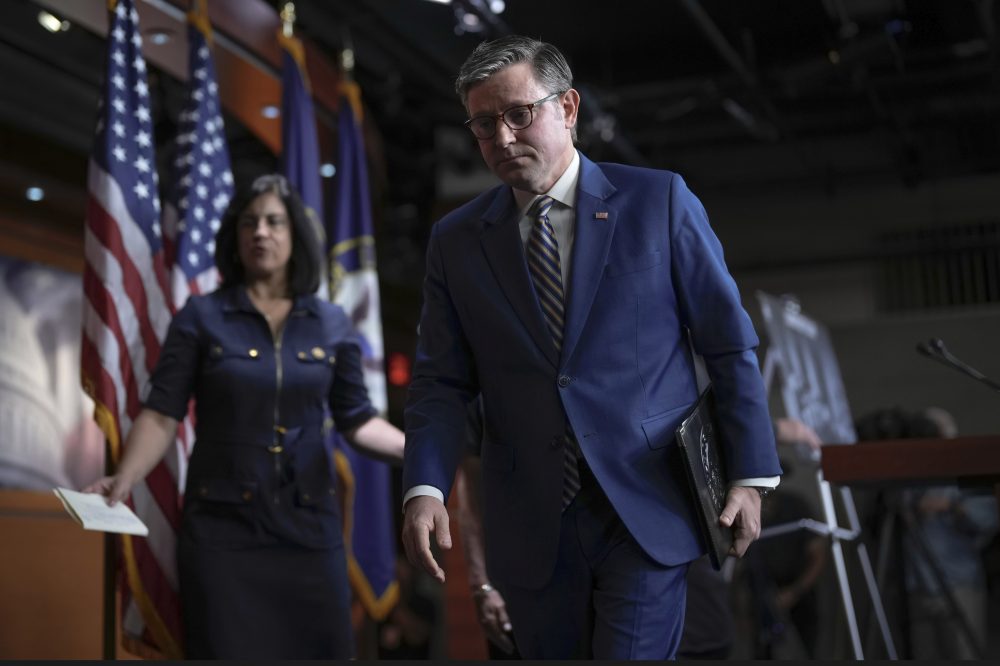
The current funding deadline is still more than two months away, but House GOP leaders are taking no chances on a shutdown dampening voter enthusiasm right before Election Day. House Speaker Mike Johnson challenged Democrats to vote against the bill, warning that if they did, “then they alone are going to own the chaos that ensues if the government shuts down after September 30.”
The measure cleared the House on a mostly party-line vote of 220-205.
Passing a temporary funding extension this far in advance of the fiscal year deadline is highly unusual — Congress typically waits until just days or even hours before the cutoff to act. However, once lawmakers depart Washington this week, the House is only scheduled to return for 16 more working days before the September 30 deadline arrives.
Republican leadership plans to use much of that limited time pushing a separate priority: a long-shot, party-line spending package totaling $95 billion aimed at strengthening national defense, supporting farmers, and advancing portions of President Donald Trump’s elections overhaul legislation.
Rep. Austin Scott, R-Ga., expressed support for the early action. “I think it’s kind of smart to go ahead and take the potential chaos of a shutdown off the table because of the amount of damage that does to the American citizens,” he said. Scott added that he believed a shutdown “probably works to the advantage of Democrats politically” and pointed blame at the press for that kind of outcome.
Democrats largely rejected the stopgap bill, which would maintain agency funding at existing spending levels without new negotiations.
Rep. Rosa DeLauro, the top Democrat on the House Appropriations Committee, said the legislation was handed to Democrats on Friday with no bipartisan input. She argued Democrats would have pushed to include language blocking a proposed federal rule that could allow agency heads to cut or cancel grants they believe don’t align with the president’s agenda.
Rather than a negotiated agreement, she said, “we are scrambling to jam through a one-sided stopgap measure two days before everyone leaves for the August recess.”
Republicans maintained that work on the 12 annual spending bills would continue in the coming months, and that locking in funding through December 4 could help avoid a repeat of recent history — which included both the longest full federal shutdown and the longest partial shutdown on record.
“We’ve seen that happen twice in this Congress already,” said Rep. Tom Cole, chairman of the House Appropriations Committee. “I’m not willing to risk a third time if we can avoid that.”
Some conservative Republicans also backed the continuing resolution. Rep. Eric Burlison, R-Mo., called it “the best way to spend the least amount of money,” noting that keeping spending levels static “for at least a period of time” was a fiscally responsible approach.
Whether the Senate will follow suit remains an open question. Spending legislation requires 60 votes in the Senate to advance, meaning some Democratic support would be necessary. Senate Majority Leader John Thune, R-S.D., told reporters that Senate Appropriations Committee Chair Susan Collins was working with Democratic colleagues on the committee to “find a path forward.”