
GDYNIA, Poland — The downtown core of Gdynia, a modernist port city on the Baltic Sea that was constructed nearly from scratch during the two decades separating World War One and World War Two, officially joined UNESCO’s World Heritage List on Monday — a milestone that coincides with the city’s centennial celebration.
Located just north of Gdansk, the historic city known as the birthplace of Poland’s Solidarity labor movement, and the coastal resort town of Sopot, Gdynia has long been considered the lesser-known sibling of its more famous neighbors. The UNESCO recognition changes that, placing the city alongside 1,273 other sites of global significance.
A UNESCO World Heritage designation identifies a landmark or area that carries legal protection due to its outstanding cultural or natural importance to humanity.
Gdynia stands as one of the most powerful symbols of Poland’s ambitions after the country reclaimed its independence in 1918, following 123 years of being divided among Russia, Prussia, and Austria-Hungary.
Poland’s Culture Minister Marta Cienkowska shared her reaction to the honor on the social media platform X, writing: “This is an honour for a city that did not look back, but instead boldly looked to the future — a city built of dreams, courage, and a belief that Poland is capable of creating extraordinary things.”
The city’s story also reflects the difficult circumstances facing the newly reborn Polish state, which found itself with only a narrow strip of Baltic coastline and no significant seaport to call its own.
In search of access to the sea, Polish leaders selected the small fishing village of Gdynia — home to just 1,200 people in 1920 — to become the country’s new gateway to the world. The gamble paid off dramatically: by 1939, the population had grown a hundredfold as Poles from all corners of the country arrived seeking opportunity and a new beginning.
Architectural historians frequently draw comparisons between Gdynia and other cities shaped by interwar modernism, such as Tel Aviv’s “White City” — itself a UNESCO World Heritage site — along with functionalist neighborhoods developed in cities like Rotterdam and Brno during the 1920s and 1930s.
What sets Gdynia apart, however, is that it was built almost entirely from the ground up around a brand-new seaport. That origin gives the city an unusually unified architectural identity and makes it one of the most complete examples in all of Europe of a modernist city constructed within a single generation.
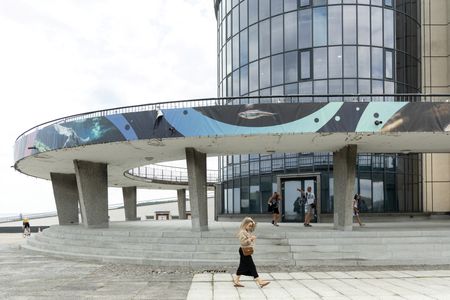
The city’s center is defined by sleek buildings featuring flat rooftops, rounded corners, wide horizontal windows, and balconies that evoke the look of ocean liners — a nod to Gdynia’s deep connection to the sea and the era’s enthusiasm for technology and forward progress.
UNESCO’s World Heritage Committee, made up of representatives from 21 nations, recently added other notable sites to the list as well, including the D-Day Landings beaches located in Normandy.