
MANILA, Philippines — Philippine President Ferdinand Marcos Jr. took the stage Monday for his annual state of the nation address against a turbulent backdrop: a major corruption scandal implicating his own allies, an ongoing impeachment trial against his estranged vice president, and economic shockwaves from a renewed war in the Middle East.
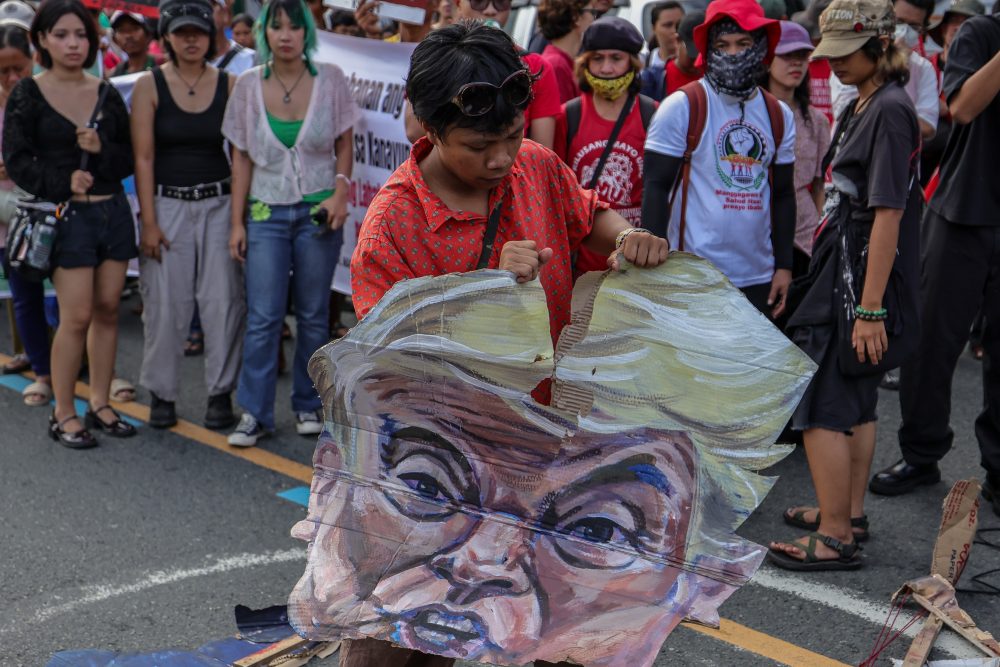
More than 23,000 police officers were stationed around the House of Representatives in suburban Quezon City, where Marcos delivered what will be his second-to-last annual address before his six-year term concludes in mid-2028. Roads leading to the presidential palace in Manila were blocked with barbed wire and riot police to keep protesters at bay.
Security concerns were already running high when a small homemade bomb went off just before sunrise Monday near the entrance of the Department of Justice in Manila. No one was injured and damage was minimal. Separately, unassembled bomb components were discovered near the Senate in suburban Pasay City. National police chief Gen. Jose Melencio Nartatez Jr. told reporters the device appeared designed only to frighten, saying it was aimed to “sow terror or fear.”
In his address, Marcos was expected to lay out new plans to cushion the blow of the escalating Middle East conflict on the Philippine economy. He had already declared a yearlong national energy emergency back in March as fighting in the region intensified, aiming to ensure adequate supplies of fuel, food, and agricultural goods while guarding against hoarding.
Last year’s state of the nation speech saw Marcos publicly condemn rampant corruption tied to flood-control infrastructure projects, as the country was still reeling from devastating floods and landslides that killed dozens of people and forced more than 200,000 from their homes.
The investigations that followed — conducted by both government agencies and Congress — ensnared dozens of House and Senate members, along with public works engineers and officials, who allegedly collected massive kickbacks from those projects. Revelations about their extravagant lifestyles, including private jets and fleets of luxury European vehicles, ignited widespread public fury and street protests.
One sitting and one former member of the 24-seat Senate have been formally charged and taken into custody on large-scale corruption counts. A prominent suspect who formerly served in the House fled to Europe. Former Public Works Secretary Manuel Bonoan, who held the position under Marcos, has denied any wrongdoing but has also been indicted and is currently held under hospital detention.
Despite the arrests, critics have called for faster action against more powerful figures. Among the loudest complaints is the question of why former House Speaker Martin Romualdez — the president’s cousin and a key political ally who denies any involvement — has not faced charges. Marcos has publicly insisted that even those close to him will face prison if evidence warrants it.
“We have done enough because we’re not done yet,” Marcos said. “Unfortunately, the more we look, the more we find.”
Adding to the political pressure, the impeachment trial of Vice President Sara Duterte — once Marcos’s close ally — is currently underway. She faces charges including corruption and allegedly threatening the president.