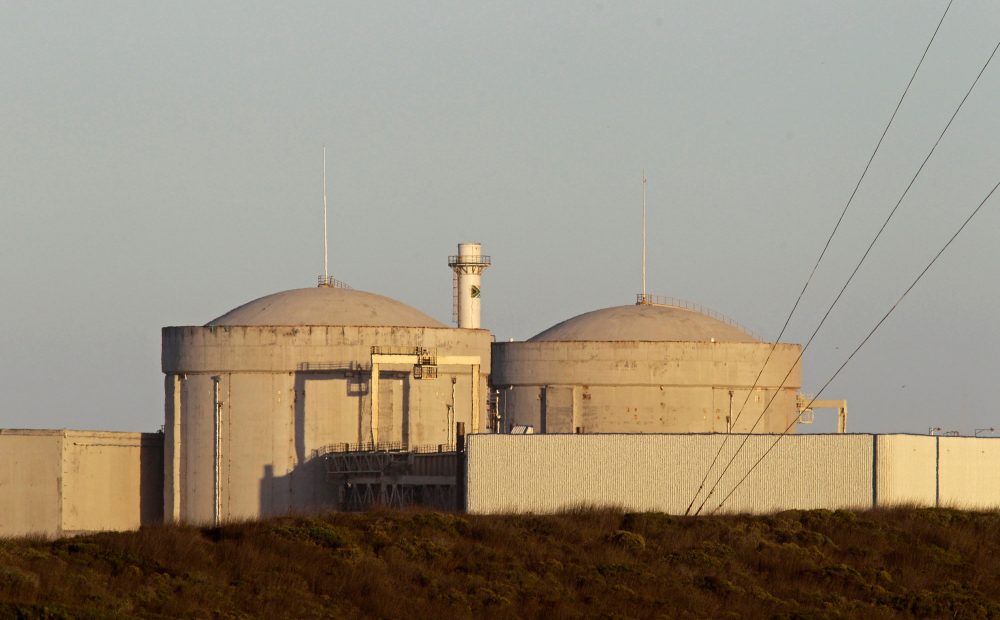

CAPE TOWN, South Africa — South Africa’s nuclear regulatory authority announced Thursday that three recent contamination events at the continent’s only nuclear power facility did not result in any radioactive material escaping into the outside environment.
According to the National Nuclear Regulator, the incidents involved elevated levels of airborne radioactive contamination inside the Koeberg Power Station, located on South Africa’s west coast. The contamination occurred when ventilation systems lost electrical power during ongoing maintenance work. Officials emphasized there was no threat to the general public at any point.
The three separate events took place on June 30, July 2, and July 7, and each one was fully contained within the boundaries of the station, the regulator said.
Any workers inside the plant who might have been exposed were screened and tested. The NNR reported that the radioactive contamination detected in those workers was lower than the level of radiation a person typically receives during a routine dental X-ray.
The regulator noted it is continuing to conduct further inspections, but stated that the events “did not meet the criteria for classification as a nuclear or radiological incident or emergency and did not result in any off-site radiological consequences.”
The Koeberg Power Station sits approximately 40 kilometers — about 25 miles — north of Cape Town, South Africa’s second-largest city. It is the only commercial nuclear power plant on the African continent and first came online during the 1980s under the apartheid government. The facility’s two reactors supply roughly 5% of South Africa’s total electricity and are operated by the country’s national electricity company, Eskom.
Both reactors recently received 20-year operational extensions, meaning they are now cleared to remain in service past the year 2040.
South Africa has broader ambitions to expand its nuclear energy capacity by building additional stations, as the country works to address an unreliable and heavily coal-dependent power supply that is struggling to keep pace with a growing population.
The trend toward nuclear energy is not limited to South Africa. Other nations around the world are increasingly turning to nuclear power to meet surging energy demands, even as critics continue to raise safety concerns, pointing to disasters such as Chernobyl and, more recently, the Fukushima disaster in Japan.
Several African nations are also moving forward with their own nuclear energy programs. Egypt, for example, is currently constructing its first nuclear power station, which will feature four large Russian-built reactors. According to the World Nuclear Association, Egypt hopes the plant will be operational around 2030 and eventually produce about 10% of the country’s electricity.