
NEW YORK (AP) — During a recent evening in the Bronx, three residents of a deteriorating apartment building shared their housing nightmares with a room full of city officials.
The gathering marked the third installment of what New York Mayor Zohran Mamdani calls “rental rip-off hearings” — a new initiative allowing frustrated tenants to voice their concerns directly to housing authorities and sometimes the mayor himself.
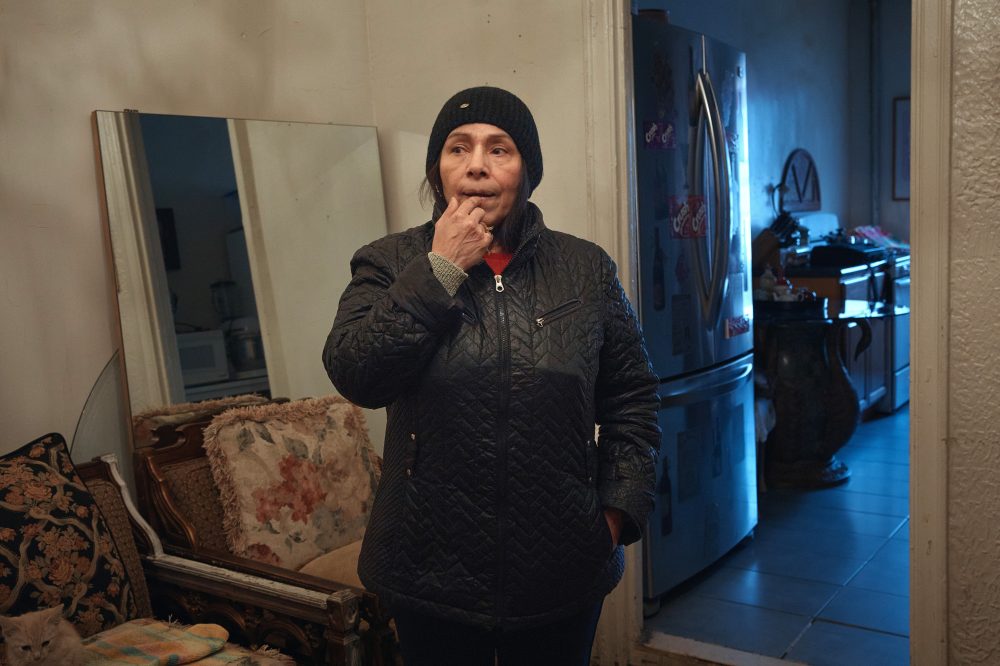
While standing in line, Gulhayo Yuldosheva expressed concern that toxic mold in her unit had aggravated her child’s breathing problems. Next to her, downstairs neighbor Marina Quiroz displayed cell phone footage of rodents running across her kitchen floor to a city tenant protection representative.
Ann Maitin, who has lived in the same building for years, had just finished speaking with the mayor.
“He allowed me to exceed my three-minute limit,” she explained, clutching a notebook filled with documented complaints.
Mamdani, a democratic socialist who won office promising aggressive tenant protection, described the event as an opportunity for renters to share experiences that would inform the city’s mission “to actually hold landlords accountable when they don’t follow the law.”
For the tenants at 705 Gerard Avenue, this created an immediate challenge: nobody appeared to know who actually controls their building.
“It seems like such a fundamental question,” explained Maitin, a former Verizon technician who recently established the building’s tenant organization. “You would expect we’d be entitled to that basic information.”
Their predicament reflects a widespread issue. As corporate entities and investment firms have expanded their presence in New York City’s rental market, they increasingly conceal their ownership through limited liability companies.
While this approach is perfectly legal and spreading across the country, housing experts say it could undermine Mamdani’s enforcement efforts by making it more difficult for the city and residents to identify consistently negligent owners whom the mayor has promised to target and potentially take control of.
“There are these major problem landlords that everyone recognizes are engaged in predatory practices, but tracking them down will be challenging because of the LLC issue,” said Oksana Mironova, who analyzes housing policy at the Community Service Society. “That creates problems for the administration, and it’s even more troublesome for tenants.”
For Yuldosheva and her fellow residents, identifying their property owner represents just one of numerous issues plaguing their six-floor building near Yankee Stadium.
Heating and hot water failures occur so frequently that some residents maintain thermometers on their refrigerators and keep the city’s complaint number readily available. Shared spaces remain dirty and have become gathering spots for drug users. Obtaining assistance with critical maintenance problems “feels like waiting for Christmas in July,” Maitin observed.
When the elevator broke down for months, wheelchair user Tommy Rodriguez said he was compelled to “slide down the steps, like a kid.” His attempts to contact building management about repair schedules went ignored, he reported.
Rodriguez remembered growing up in the building during the 1980s, when the previous owner was approachable and quick to address problems.
“This used to feel like a home,” Rodriguez said. “Now they treat us no better than the rats.”
A large rodent had recently gnawed through his sofa cushion. He took care of the pest control himself, using a piece of lumber.
Tenants recently discovered information about their landlord after another Bronx building partially collapsed. The person identified in media reports as that building’s owner, David Kleiner, operates from the same Brooklyn office as their property manager, Binyomin Herzl.
Several tenants surveyed all 72 units in their building, documenting various deteriorating conditions and questionable modifications.
“We didn’t want to become the next headline,” said Yuldosheva, indicating a crack in the bedroom wall shared by her three children — damage she suspected resulted from subway trains rumbling beneath her windows.
Court documents reveal that Herzl has been ordered to pay over $100,000 for code violations across at least six Bronx properties, several of which a judge determined posed immediate dangers.
When contacted by phone, Herzl said he didn’t own any of those buildings but simply served as an intermediary between residents and the actual owners, whose names he refused to provide. “There’s no single landlord,” he stated. “It’s a group of investors.”
Kleiner, who previously appeared on the city’s “worst landlord” roster, acknowledged his partial ownership of 705 Gerard during a brief phone conversation but refused additional comments.
Herzl dismissed the tenants’ concerns as “normal wear and tear” from a building nearly 100 years old. He suggested Mamdani should concentrate on improving the city’s public housing instead of targeting private property owners.
“Our buildings look like five star hotels compared to his,” he added.
When landlords fail to address serious violations like heating or hot water outages, the city can intervene to order repairs and directly charge the owner.
Over the past three years, inspectors have mandated emergency repairs at 38 buildings listing either Herzl or Kleiner as owners, according to city housing department records. The two men have been charged $446,521 for those repairs.
Mamdani has suggested using such penalties as a mechanism to bring troubled rental properties under city control by aggressively pursuing liens against delinquent landlords and acquiring their property portfolios through foreclosure sales.
Just as the city can close unsanitary restaurants, Mamdani has stated, landlords who “repeatedly put New Yorkers at risk will not be allowed to operate in New York City — with no exceptions.”
In practice, this process requires significant resources and faces legal complications. The web of LLCs commonly used by landlords to hide the true extent of their holdings makes it even more complex, according to Cea Weaver, director of the Mayor’s Office to Protect Tenants.
“It would be beneficial to have clearer insight into who owns the buildings we are regulating and monitoring,” she said.
Recent state legislation that would have simplified identifying LLC owners was vetoed by New York Governor Kathy Hochul following pressure from landlord groups.
Kenny Burgos, CEO of the New York Apartment Association, a landlord advocacy organization, argued that Mamdani’s tenant proposals — including rent freezes for regulated tenants — would force property owners to reduce maintenance and services.
“That’s going to impact the elevator budget, the boiler budget, the heating budget,” he said. “It’s a matter of mathematics: These buildings are deteriorating because of policy, not because of bad landlords.”
He described the rental complaint hearings as “show trials” that took a “tribal approach” to the city’s affordable housing crisis.
Despite the confrontational marketing — “New Yorkers vs. Bad Landlords,” reads one advertisement — the Bronx gathering largely resembled a typical community service event: City workers answered questions about local regulations, assisted residents with forms and connected them to service providers.
Maitin departed feeling “pleased to be heard by someone who can actually address the problem,” though she felt it was premature to determine “if it’s all talk.”
The following morning, she was surprised to discover the building’s superintendent painting a staircase. Outside, workers were dismantling scaffolding that had stood in front of the building for years.
“I believe they heard about the rental rip-off hearing,” Maitin said. “They’re worried.”