
Republican Party leaders are facing an unwelcome scenario as the midterm election season approaches.
Eighteen months after Trump captured the presidency with promises to reduce living expenses and avoid military conflicts, he now leads a nation at war while energy prices climb and overseas tensions intensify – developments that concern many within his own political party.
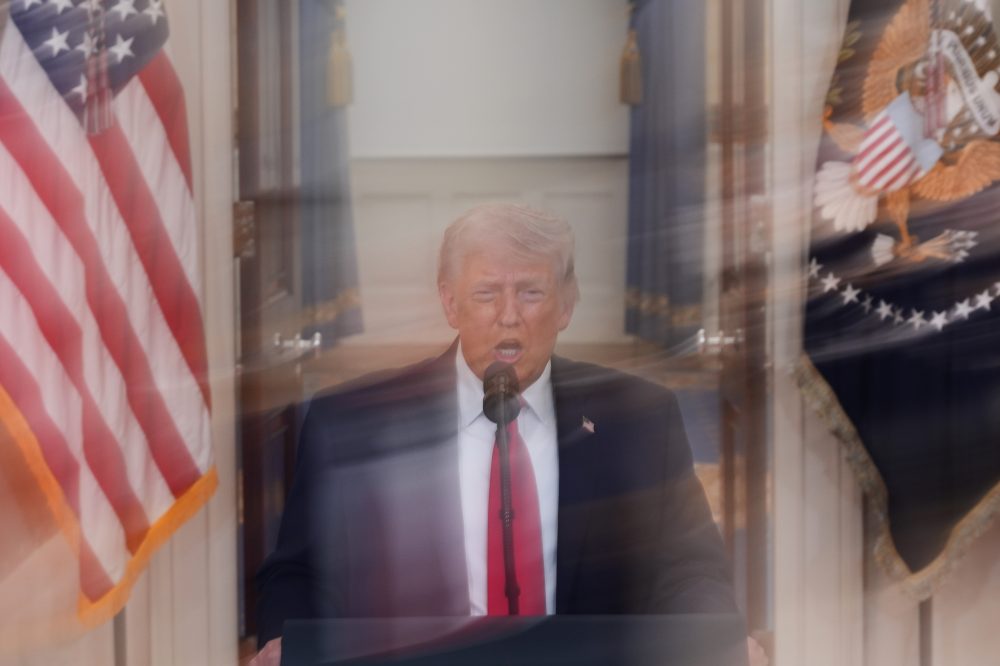
During a nationally televised White House speech this week – his first since U.S. and Israeli forces struck Iran over a month ago – Trump provided mixed signals about the conflict’s direction, simultaneously indicating the war was both concluding and expanding.
“Thanks to the progress we’ve made, I can say tonight that we are on track to complete all of America’s military objectives shortly, very shortly,” Trump said. “We’re going to hit them extremely hard over the next two to three weeks.”
These remarks arrive approximately six months before nationwide voting begins for elections that will determine Congressional control and key state leadership positions during Trump’s remaining term. Currently, Republicans maintain control across all federal government branches but are preparing for potential electoral consequences.
“You’re looking at an ugly November,” warned veteran Republican pollster Neil Newhouse. “At a point in time when we need every break possible to hold the House and Senate, our edge is being chipped away.”
The transformation of the political environment has been remarkable.
Twelve months ago, numerous Republican officials believed they could maintain their slim House advantage and comfortably retain Senate control. Today, they privately acknowledge the House appears lost while Democrats have genuine opportunities to capture the Senate.
Republicans are also finding it difficult to unite behind a consistent midterm election message regarding Iran.
The Republican National Committee has mostly avoided discussing the war in guidance provided to spokespersons during recent weeks. Leadership from the party’s House and Senate campaign organizations refused interview opportunities. Numerous at-risk Republican candidates avoid the topic, reluctant to either support or criticize Trump openly.
The president continues to enjoy strong support among Republican voters, with vocal advocates like Sen. Lindsey Graham of South Carolina.
“That was the best speech I could’ve hoped for,” he wrote on social media after Trump’s address on Wednesday evening. Graham said Trump “gave the American people a clear and coherent pathway forward.”
Trump provided minimal justification for the conflict to Americans before launching the initial strike. Five weeks afterward, at least 13 U.S. military personnel have died with hundreds more wounded. Thousands of additional troops have deployed to the region, while the Pentagon has requested $200 billion in additional funding.
The Strait of Hormuz, a critical pathway for twenty percent of global oil shipments, stays shut. Thursday’s average U.S. gasoline price reached $4.08 per gallon according to AAA, nearly one dollar above the cost on President Joe Biden’s final day in office.
During Wednesday’s address, Trump promised gasoline costs would decrease rapidly after the war’s conclusion but provided no plan for reopening the Strait of Hormuz. Instead, he suggested skeptical U.S. allies handle the task themselves.
He maintained the war’s importance.
“This is a true investment in your grandchildren and your grandchildren’s future,” Trump said. “When it’s all over, the United States will be safer, stronger, more prosperous and greater than it has ever been before.”
Former Rep. Marjorie Taylor Greene, a Georgia Republican who previously ranked among Trump’s strongest Congressional supporters, criticized his Iran strategy.
“I wanted so much for President Trump to put America First. That’s what I believed he would do. All I heard from his speech tonight was WAR WAR WAR,” she wrote on social media. “Nothing to lower the cost of living for Americans.”
Approximately 60 percent of U.S. adults believe the military action in Iran has “gone too far,” according to March AP-NORC polling. Roughly one-third approve of his overall Iran handling.
The prospect of deploying U.S. ground forces into Iran also seems politically unpopular.
About 60 percent of adults are “strongly” or “somewhat” opposed to sending U.S. troops for ground combat against Iran. This includes approximately half of Republicans. Only about 10 percent support troop deployment.
Meanwhile, Trump’s approval ratings have stayed consistently low. About 40 percent of Americans approve of his presidential performance, roughly matching levels throughout his second term.
Republican strategist Ari Fleischer, a senior aide during former President George W. Bush’s administration, noted that Trump has not experienced the polling boost Bush received after invading Iraq.
Bush, notably, worked to establish public support for the Iraq War beforehand. Following the 2003 invasion, Bush’s popularity jumped dramatically, along with stock markets.
Public opinion and economic conditions deteriorated only as the conflict continued. It eventually lasted over eight years, creating a generation of anti-war Republicans and influencing Trump’s “America First” foreign policy approach.
“My hope is that the Trump experience is the exact opposite of the Bush experience,” Fleischer said.
He emphasized Trump must achieve decisive, rapid victory to prevent further backlash, noting potential for “very significant political upside if things end well, oil comes down and markets rally.”
Fleischer stressed that Trump’s actions will prove more important than his rhetoric.
“Ultimately, he is not going to get judged on his persuasion or his explanations or his assertions, he’s going to get judged on results,” he said.