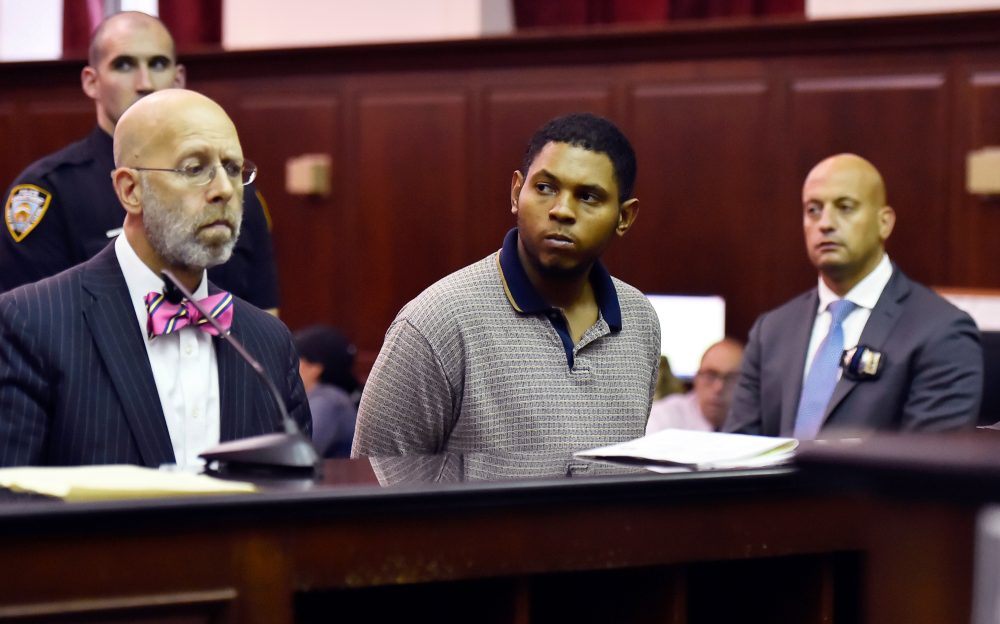

NEW YORK — A jury began deliberations Thursday to determine the fate of Randy Santos, who fatally attacked four homeless individuals while they slept on Manhattan streets, with his defense team conceding he carried out the violence but maintaining his severe mental illness should exempt him from criminal liability.
The jury’s initial request Thursday focused on revisiting portions of testimony from a defense mental health expert, specifically questioning whether Santos comprehended the moral implications of his violent acts.
The 31-year-old Santos was taken into custody clutching a blood-covered metal pipe following his October 2019 attack spree. The tragic incident highlighted New York City’s ongoing challenges in supporting and safeguarding its homeless community, which had grown to unprecedented numbers.
Santos himself was without housing, similar to several of his victims. The four deceased men — Chuen Kok, Anthony Manson, Florencio Moran and Nazario Vásquez Villegas — were between 39 and 83 years old. Santos faces murder charges for their deaths, plus attempted murder and assault counts related to attacks on other individuals in the days leading up to the Chinatown violence.
Medical professionals had diagnosed Santos with schizophrenia, and his legal team maintains he genuinely believed auditory hallucinations commanded him to kill 40 people or face death himself.
Defense counsel Arnold Levine argued during Wednesday’s closing statements that while Santos may have understood potential legal consequences, his condition prevented him from grasping the moral wrongness of his actions. This moral component could support an insanity verdict if jurors accept that mental illness caused this impairment.
“The only explanation was Randy’s psychosis. … It’s the only thing that explains what happened,” Levine told the panel, stating that “psychosis replaced Randy’s moral judgment.”
The prosecution contends Santos recognized both the illegality and immorality of his attacks. Manhattan Assistant District Attorney Alfred Peterson highlighted Wednesday that Santos occasionally watched for potential witnesses and later told a psychiatrist in 2024: “I know it’s not a good action.”
“Despite his illness, he was able to make a determination that what he was doing was wrong,” Peterson stated during his closing remarks.
Santos, who was born in the Dominican Republic and follows proceedings through a Spanish interpreter, remained largely expressionless during the attorneys’ final arguments. He briefly moved his hands near his face when Levine described how his delusions had previously led him to attack his own grandfather years before the Chinatown murders.
Should jurors reject the insanity claim and find Santos guilty, he faces potential life imprisonment. However, if they determine he was not mentally responsible, he could face indefinite psychiatric commitment as determined by medical professionals and the court.