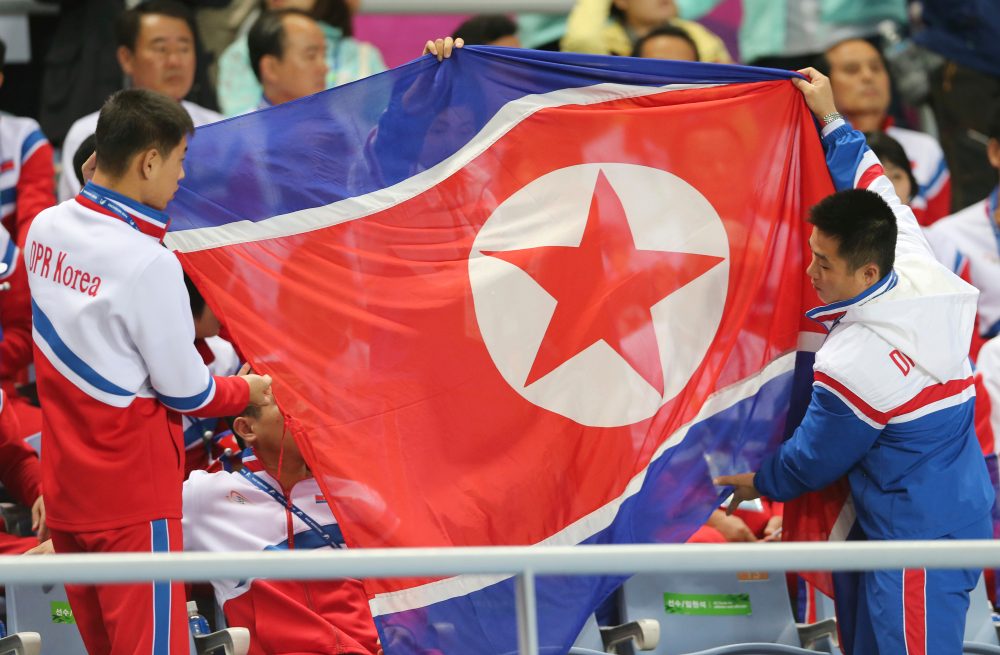

SEOUL, South Korea — In an uncommon display of athletic cooperation between the divided Korean nations, a women’s soccer club from North Korea will travel south to compete in a major tournament later this month.
South Korea’s Unification Ministry announced Monday that Naegohyang Women’s FC from Pyongyang will take on Suwon FC Women in the Asian Football Confederation Women’s Champions League semifinals on May 20 in Suwon, located south of Seoul.
According to the Korea Football Association, the AFC has received a roster submission from the North Korean team listing players and staff members who will make the journey to Suwon. Officials noted that North Korea faces financial penalties from the AFC should they fail to participate in the semifinal match.
North Korean state-controlled media outlets have remained silent about the soccer team’s planned visit to the South.
The last time North Korean athletes traveled to South Korea was in December 2018 for a table tennis competition. This came during a period of improved diplomatic relations that included North Korean participation in the Winter Olympics held in South Korea earlier that year. The North Korean women’s national soccer team previously competed in the South during the 2014 Asian Games in Incheon.
North Korea’s women’s soccer programs have achieved notable international success recently, currently holding both the Under-17 and Under-20 World Cup titles.
In this continental club competition, Naegohyang Women’s FC previously defeated their upcoming opponents Suwon FC Women by a score of 3-0 during group stage play in Myanmar last November. The North Korean team advanced by defeating a Vietnamese club in March’s quarterfinal round. The May 20 semifinal victor will advance to the championship match three days later in Suwon, while Melbourne City FC and Tokyo Verdy Beleza will compete in the other semifinal.
During previous periods of improved relations, athletes from both Korean nations have formed joint teams and participated together in Olympic opening ceremonies. However, such sporting collaborations have disappeared as diplomatic ties have deteriorated, with no inter-Korean activities occurring in recent years.
North Korea has rejected diplomatic overtures from both South Korea and the United States since leader Kim Jong Un’s nuclear negotiations with then-President Donald Trump fell apart in 2019 due to disputes over U.S.-imposed sanctions.
Regional tensions have escalated recently as Kim has expanded his nuclear weapons and missile development programs aimed at U.S. allies in Asia and the American mainland, while taking an increasingly hostile position toward South Korea. Kim has designated South Korea as his primary enemy and has demonstrated concern about South Korean cultural influence, aggressively working to prevent South Korean culture and language from spreading among North Koreans.