NOAA is forecasting a below normal 2026 Atlantic hurricane season, citing the expected development of El Niño conditions during the peak of the season as a major factor that could suppress tropical activity across the Atlantic Basin. Despite the quieter outlook, forecasters continue to stress that it only takes one storm impacting land to make a season devastating.

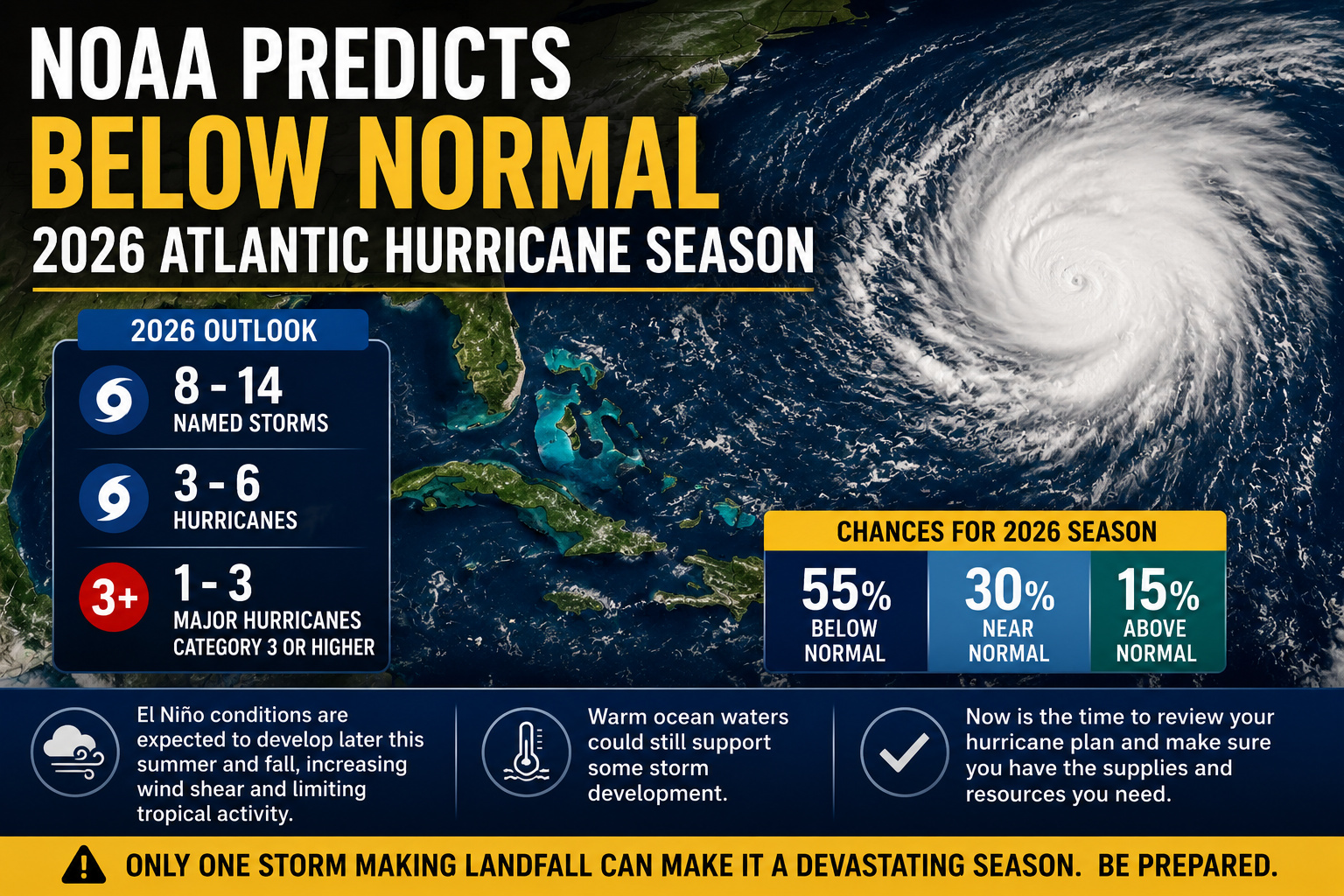
According to NOAA’s Climate Prediction Center, the 2026 Atlantic hurricane season is expected to produce between 8 and 14 named storms, with 3 to 6 hurricanes and 1 to 3 major hurricanes reaching Category 3 strength or higher. NOAA says there is a 55% chance of a below normal season, a 30% chance of a near normal season, and only a 15% chance of an above normal season.

The primary reason behind the reduced forecast is the anticipated transition into a moderate to potentially strong El Niño pattern later this summer and fall. El Niño typically increases upper level wind shear across the tropical Atlantic, which disrupts thunderstorm organization and makes it more difficult for tropical systems to strengthen into hurricanes.
While El Niño may help limit overall storm development, forecasters caution that sea surface temperatures across portions of the Atlantic remain warmer than average, which could still support tropical activity. Additionally, NOAA emphasized that seasonal outlooks do not predict where storms will track or whether any hurricanes will make landfall in the United States. Even below average hurricane seasons have historically produced catastrophic impacts along the Gulf Coast and East Coast.

The Atlantic hurricane season officially begins June 1 and runs through November 30, with climatological peak activity typically occurring from late August through September. On average, the Atlantic Basin sees around 14 named storms, 7 hurricanes, and 3 major hurricanes each season based on the 1991-2020 climate averages.

NOAA’s outlook closely aligns with several other preseason forecasts released by Colorado State University and other meteorological organizations earlier this spring, many of which also predicted near to below average activity due to the growing likelihood of El Niño development.