
EDGEWOOD, N.M. — During the 1970s, thousands of Native American women underwent sterilization procedures through the Indian Health Service without receiving proper informed consent, robbing them of their ability to have children or expand their families.
Now, after decades of silence, New Mexico officials are preparing to examine this dark chapter in medical history and its enduring consequences.
State lawmakers this week authorized the Indian Affairs Department and Commission on the Status of Women to conduct a comprehensive review of forced and coerced sterilizations performed on women of color by the Indian Health Service and other medical providers. Officials expect to deliver their conclusions to the governor before 2027 ends.
State Sen. Linda Lopez, who sponsored the legislation, emphasized the significance of the investigation. “It’s important for New Mexico to understand the atrocities that took place within the borders of our state,” Lopez stated.
New Mexico joins other states addressing similar historical wrongs. Vermont established a truth and reconciliation commission in 2023 to examine forced sterilizations of marginalized populations, including Native Americans. California started providing compensation in 2024 to individuals sterilized without consent in state facilities.
The New Mexico Legislature also established groundwork for creating a healing commission and formal recognition of this lesser-known historical trauma affecting Native families.
University of Kansas School of Law professor Sarah Deer believes this action comes far too late. “The women in these communities carry these stories,” Deer explained.
Beyond a 1976 Government Accountability Office report, federal authorities have never officially recognized what Deer describes as “systemic” sterilization campaigns targeting Native American communities.
Neither the Indian Health Service nor its parent organization, the Department of Health and Human Services, responded to requests for comment regarding New Mexico’s investigation.
Jean Whitehorse’s experience illustrates the trauma many women endured. In 1972, the 22-year-old new mother was rushed to an Indian Health Service facility in Gallup with a ruptured appendix. Whitehorse recalls suffering “extreme pain” while medical staff presented numerous consent documents before emergency surgery.
“The nurse held the pen in my hand. I just signed on the line,” recalled Whitehorse, who belongs to the Navajo Nation.
Years later, while trying to conceive another child, Whitehorse discovered she had received a tubal ligation during that emergency procedure. This revelation devastated her, damaged her relationship, and led to struggles with alcohol addiction.
Advocacy groups were already raising concerns about women like Whitehorse who visited IHS facilities for childbirth or medical procedures only to later discover their inability to conceive. The activist organization Women of All Red Nations, connected to the American Indian Movement, formed partly to expose these practices.
In 1974, Dr. Connie Redbird Uri, a physician of Choctaw and Cherokee heritage, examined IHS records and claimed the federal agency had sterilized up to 25% of women in their reproductive years. Some women Uri interviewed were unaware of their sterilizations, while others reported being pressured into consent or told the procedures could be reversed.
Uri’s findings led to the GAO investigation, which documented 3,406 sterilizations performed by the Indian Health Service across four of its 12 regions between 1973 and 1976, including the Albuquerque area. Investigators found many patients were under 21, and most signed documents that failed to meet federal standards for informed consent.
GAO investigators decided against interviewing sterilized women, claiming such conversations “would not be productive” based on a single study of heart surgery patients in New York who had difficulty remembering doctor conversations. Due to this limited approach and narrow scope, advocates argue the complete extent and impact remains unknown.
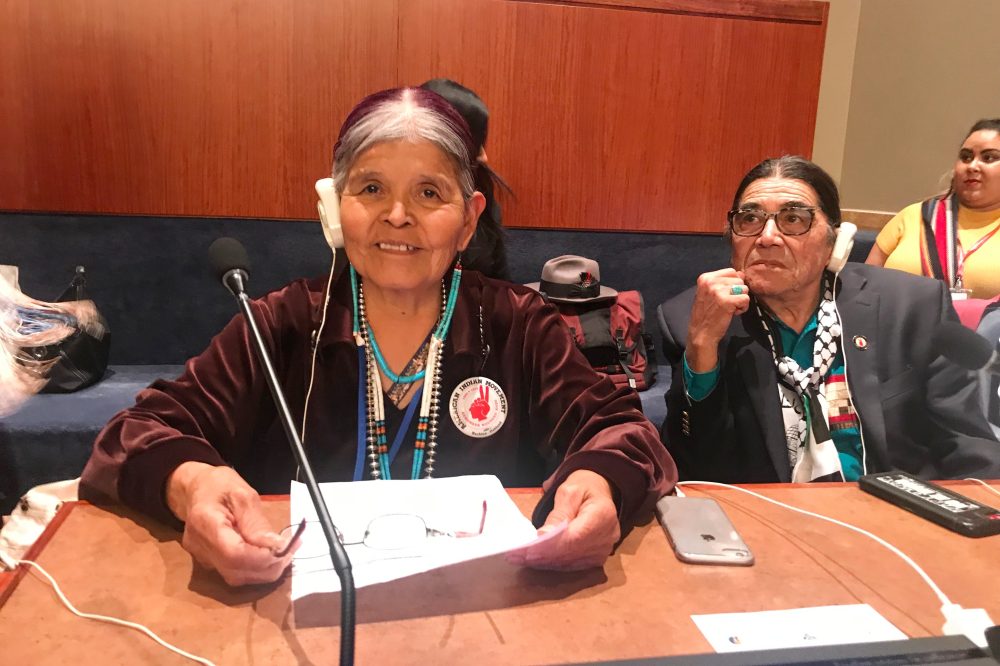
Whitehorse kept her experience secret for nearly four decades before first telling her daughter, then other relatives. “Each time I tell my story, it relieves the shame, the guilt,” Whitehorse shared. “Now I think, why should I be ashamed? It’s the government that should be ashamed of what they did to us.”
Today, Whitehorse publicly advocates for forced sterilization survivors. She testified before the United Nations Permanent Forum on Indigenous Issues in 2025, urging the United States to issue a formal apology.
While Whitehorse supports New Mexico’s investigation as a platform for survivor stories, advocates like Rachael Lorenzo warn about potential re-traumatization. Lorenzo leads Indigenous Women Rising, an Albuquerque reproductive health organization.
“It’s such a taboo topic. There’s a lot of support that needs to happen when we tell these traumatic stories,” Lorenzo noted.
During recent New Mexico legislative hearings, retired Indian Health Service physician Dr. Donald Clark testified about treating patients in their twenties and thirties who “seeking contraception but not trusting that they will not be irreversibly sterilized” due to family stories passed down through generations.
“It’s still an issue that is affecting women’s choice of birth control today,” Clark testified.
The 1927 Supreme Court case Buck v. Bell authorized states to sterilize individuals deemed “unfit” for reproduction, enabling forced sterilizations of immigrants, racial minorities, disabled individuals, and other marginalized groups throughout the 1900s.
According to Lorenzo and Deer, Native American women’s sterilizations represent part of broader federal policies designed to undermine Indigenous reproductive rights, including systematic removal of Native children to boarding schools and non-Native foster care, plus the 1976 Hyde Amendment preventing federally-funded tribal medical facilities from providing most abortion services.
Canadian doctors faced sanctions as recently as 2023 for sterilizing Indigenous women without consent.
Deer believes New Mexico’s investigation could establish precedent for accountability, though she warns that federal government cooperation will be essential for effective fact-finding.