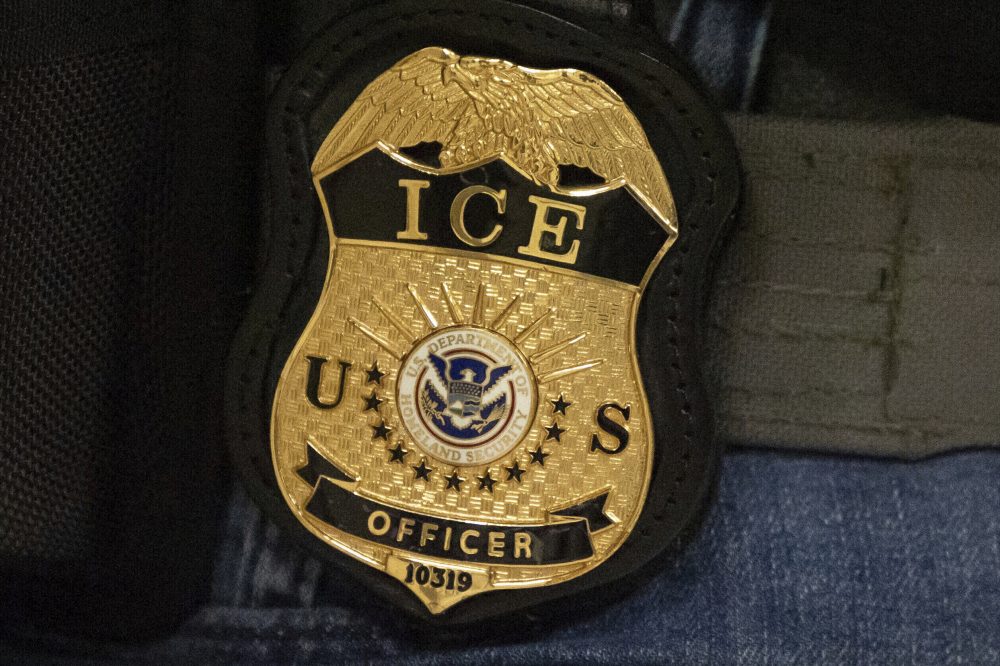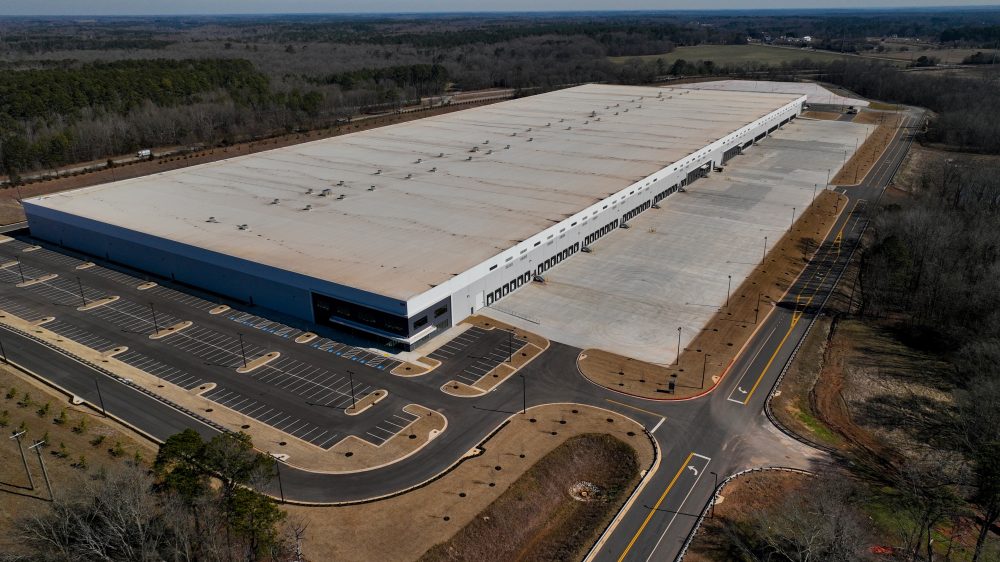

SOCORRO, Texas — Federal immigration authorities have been conducting a stealth campaign to acquire enormous warehouse facilities nationwide for detention purposes, frequently bypassing local government notification entirely.
The Department of Homeland Security completed a $122.8 million purchase of three massive warehouses totaling 826,000 square feet in Socorro, Texas, near the Mexican border. Local officials discovered the transaction only after the deed appeared in public records.
“Nobody from the federal government bothered to pick up the phone or even send us any type of correspondence letting us know what’s about to take place,” stated Rudy Cruz Jr., mayor of the 40,000-resident community located outside El Paso.
Socorro represents one of approximately 20 locations nationwide where Immigration and Customs Enforcement has targeted large warehouse properties as part of a $45-billion detention facility expansion program.
With declining public approval for the agency’s operations and the current administration’s immigration enforcement policies, numerous communities are voicing opposition to mass detention facilities. Local leaders express concerns about potential strain on water systems and municipal services, along with reduced property tax collections. Many mayors, county officials, governors and congressional representatives have learned about ICE’s acquisition plans only after purchases were finalized, creating surprise and anger even in regions that previously supported the administration.
“I just feel,” Cruz commented, whose spouse was born in Mexico, “that they do these things in silence so that they don’t get opposition.”
ICE, operating under DHS oversight, has acquired no fewer than seven warehouse properties across Arizona, Georgia, Maryland, Pennsylvania and Texas, according to filed deeds. Additional transactions have been announced but remain incomplete, while buyers have canceled eight other planned purchases.
DHS rejected characterizing these properties as warehouses, emphasizing in an official statement that they would become “very well structured detention facilities meeting our regular detention standards.”
The acquisition process has experienced significant confusion. ICE acknowledged this past week making an “error” regarding announced warehouse purchases in Chester, New York, and Roxbury, New Jersey. Roxbury subsequently confirmed Friday that their sale had been completed.
DHS has verified its search for additional detention space but has not revealed specific locations prior to acquisitions. Some municipalities learned of ICE warehouse scouting through media reports. Others received information from an online spreadsheet circulated by activists with unknown origins.
The warehouse project’s full extent became clear February 13th when New Hampshire’s governor’s office, responding to opposition against a planned 500-bed processing facility, released ICE documentation showing the agency’s plan to spend $38.3 billion expanding detention capacity to 92,000 beds.
Since the current administration began, ICE detention population has grown from 40,000 to 75,000 individuals housed across more than 225 locations.
ICE could utilize these warehouses for consolidation and capacity expansion. The documentation outlines a project including eight large-scale detention facilities housing 7,000 to 10,000 detainees each, plus 16 smaller regional processing centers. The document also mentions acquiring 10 existing “turnkey” facilities.
Funding comes from the comprehensive tax and spending legislation passed by Congress last year that nearly doubled DHS’s budget. The administration is utilizing military contracts for detention center construction.
These contracts permit considerable secrecy and enable DHS to proceed rapidly without standard processes and protections, according to Charles Tiefer, professor emeritus of law at the University of Baltimore Law School.
In Socorro, the ICE-purchased warehouses are so expansive that four and a half Walmart Supercenters could fit inside, contrasting sharply with the remaining Spanish colonial and mission architecture characterizing the community.
During a recent City Council session, public testimony continued for hours. “I think a lot of innocent people are getting caught up in their dragnet,” said Jorge Mendoza, an El Paso County retiree whose grandparents immigrated from Mexico.
Multiple speakers referenced concerns about three recent fatalities at an ICE detention facility at nearby Fort Bliss Army base.
Even communities that supported the administration in 2024 have been surprised by ICE’s plans and expressed concerns.
In rural Pennsylvania’s Berks County, commissioner Christian Leinbach contacted the district attorney, sheriff, jail warden and county emergency services director upon hearing ICE might purchase a warehouse in Upper Bern Township, located 3 miles from his residence.
None had any information.
Days later, a local land records official informed him that ICE had purchased the building — marketed by developers as a “state-of-the art logistics center” — for $87.4 million.
“There was absolutely no warning,” Leinbach stated during a meeting where he expressed concerns that converting the warehouse into a federal facility would eliminate over $800,000 in local tax revenue.
ICE has promoted the income taxes its employees would generate, though the facilities themselves will be property tax-exempt.
In Social Circle, Georgia, which also strongly backed the administration in 2024, officials were shocked by ICE’s plans for a facility potentially housing 7,500 to 10,000 individuals after learning about it through a reporter.
The city, with just 5,000 residents and concerns about infrastructure requirements for such a detention center, only heard from DHS after the $128.6 million sale of a 1 million-square-foot warehouse was completed. Like Socorro and Berks County, Social Circle questioned whether water and sewage systems could handle the demand.
ICE has stated it conducted proper analysis to ensure sites wouldn’t overwhelm municipal utilities. However, Social Circle said the agency’s assessment depended on a not-yet-constructed sewer treatment plant.
“To be clear, the City has repeatedly communicated that it does not have the capacity or resources to accommodate this demand, and no proposal presented to date has demonstrated otherwise,” the city stated.
In the Phoenix suburb of Surprise, officials sent a harsh letter to Homeland Security Secretary Kristi Noem after ICE purchased a large warehouse in a residential neighborhood approximately one mile from a high school without advance notice. Arizona Attorney General Kris Mayes, a Democrat, suggested potential legal action to have the location declared a public nuisance.
Back in Socorro, residents waiting to oppose the ICE facility filled the City Council chambers and spilled into hallways, some standing near murals honoring the World War II-era Braceros Program that permitted Mexican agricultural workers to serve as guest workers in the U.S. The program boosted Socorro’s economy and population before President Dwight D. Eisenhower’s administration began mass deportations in the 1950s targeting individuals who had crossed the border illegally.
Eduardo Castillo, formerly an attorney for the U.S. Department of Justice, told city officials that challenging the federal government is intimidating but “not impossible.”
“If you don’t at least try,” he stated, “you will end up with another inhumane detention facility built in your jurisdiction and under your watch.”