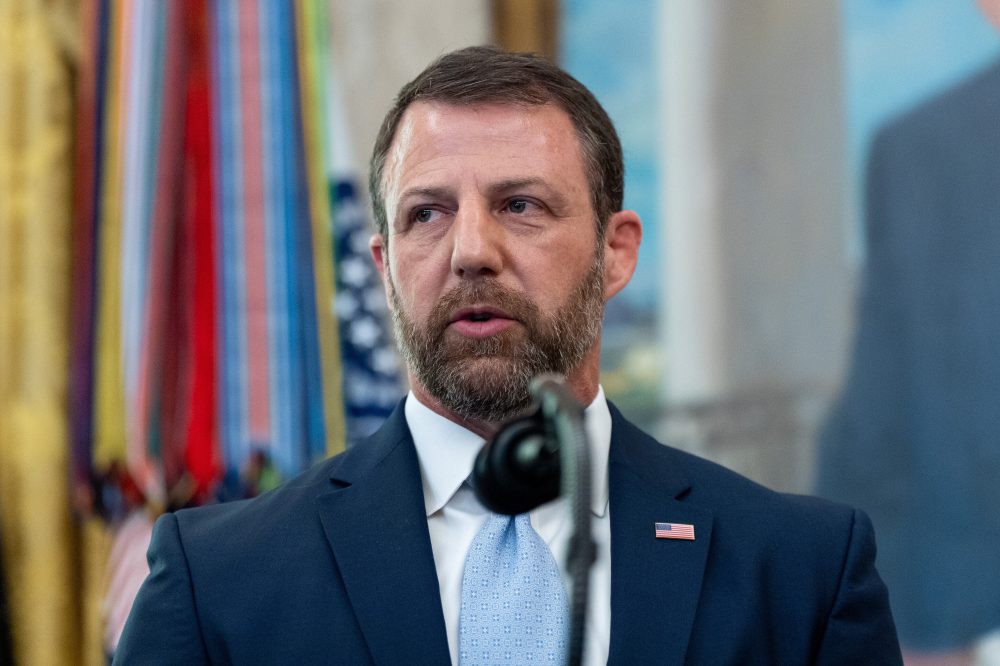

WASHINGTON — In his first significant policy change since taking office, Homeland Security Secretary Markwayne Mullin eliminated a controversial spending restriction Wednesday that had created delays in federal disaster relief efforts across the country.
The newly sworn-in secretary reversed a directive requiring his personal sign-off on any Department of Homeland Security expenditure exceeding $100,000, a policy his predecessor Kristi Noem had put in place last June before President Donald Trump dismissed her in March.
Emergency management officials and lawmakers had heavily criticized the approval requirement, arguing it created significant delays in FEMA’s ability to distribute disaster response and recovery funding to communities in need.
A Department of Homeland Security representative confirmed Mullin’s decision to The Associated Press, stating the secretary “re-evaluated the contract processes to make sure DHS is serving the American taxpayer efficiently.”
According to the spokesperson, removing this requirement will make the contracting process more efficient and help distribute aid more effectively.
Josh Morton, who leads the International Association of Emergency Managers, welcomed the change. “We appreciate Secretary Mullin’s common-sense approach to this matter, and we look forward to working with him,” Morton stated.
The previous approval system had particularly impacted FEMA operations, since the agency regularly handles contracts and reimbursements far exceeding the $100,000 threshold when responding to natural disasters and other emergencies nationwide.
Morton described the former policy as creating “an untenable situation for emergency managers” and establishing obstacles that also affected disaster preparation and prevention programs, “putting Americans at increased risk from disasters.”
According to a recent analysis by Democratic Senate Homeland Security Committee members, the approval requirement had caused delays in at least 1,000 FEMA contracts, grants, and disaster reimbursements by September.
The policy faced intense criticism after media reports connected it to unstaffed emergency call centers and delays in sending FEMA Urban Search and Rescue teams to Texas during fatal flooding last July. Republican Senator Thom Tillis of North Carolina, whose state continues recovering from Hurricane Helene’s 2024 damage, was among the harshest critics.
“You’ve failed at FEMA,” Tillis confronted Noem during a Senate hearing one day before her dismissal.
FEMA data reviewed by the AP shows approximately $2.2 billion in recovery and mitigation funding was awaiting DHS approval as of Wednesday.
During his March confirmation hearing, Mullin expressed optimism about FEMA’s mission. “It’s got a great mission, and I think people at FEMA want to do their job,” he told lawmakers, raising hopes he would address the agency’s recent challenges.
Mullin committed to maintaining “adequate staffing” at the agency after it lost more than 2,400 employees last year and indicated he was already reviewing candidates for a permanent FEMA administrator position, which remains vacant.
President Trump has repeatedly suggested eliminating FEMA entirely, calling the agency “very expensive and it really doesn’t get the job done” as recently as Tuesday.
Michael Coen, who served as FEMA chief of staff under the Obama and Biden administrations, said, “Hopefully this a step toward transparency and stability between FEMA and states.”
The department is conducting broader policy reviews, including halting purchases of new immigration detention warehouses this week while examining contracts approved under Noem’s leadership.
However, eliminating the spending approval rule may not immediately accelerate FEMA reimbursements to states, tribes, and territories, as the agency remains affected by the ongoing DHS funding standoff, now the longest government shutdown in American history at 46 days.
Although FEMA’s disaster response and recovery operations receive funding from a separate Disaster Relief Fund, that money is nearly depleted, a FEMA official warned lawmakers during a House hearing last week, with roughly $3.6 billion remaining. The pending DHS appropriations bill would add just over $26 billion to the fund.
Republican lawmakers indicated Wednesday that an agreement to end the shutdown could emerge within days.