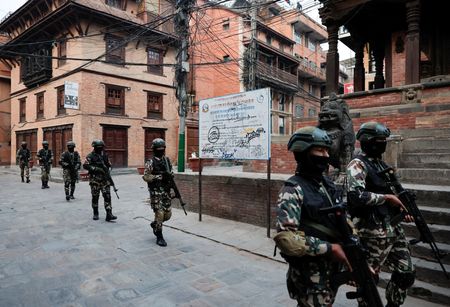

The Himalayan nation of Nepal went to the polls Thursday in a historic general election – the country’s first since deadly youth-driven demonstrations forced the government from power last September.
The protests, spearheaded by Generation Z activists demanding corruption reforms, job creation, and political accountability, claimed 77 lives before ultimately compelling government officials to resign.
Nepal, a small country positioned between China and India, has struggled with chronic political turmoil for years. Since 1990, the nation has experienced 32 different government changes, crippling its farm-based economy and driving millions of citizens to find employment in other countries.
Approximately 19 million citizens out of Nepal’s total population of 30 million were registered to cast ballots for the 275-seat parliament. The legislative body consists of 165 directly-elected positions and 110 seats filled through proportional representation.
Following last year’s demonstrations, roughly one million new voters – predominantly young people – joined the electoral rolls, intensifying demands for systematic political reform and economic restructuring to generate stable, well-paying employment opportunities.
Bibas Pariyar, a 22-year-old painter working in Kathmandu, planned to travel back to his native Gorkha district – renowned for producing soldiers who have served British and Indian armed forces – to participate in Thursday’s voting.
“We need new people who can give work to people, reform agriculture and pay adequate remuneration for workers,” Pariyar said.
“The old politicians only amassed money for themselves through corruption and did nothing for the people.”
The electoral competition featured established political parties, including the moderate Nepali Congress (NC) and the Communist Party of Nepal (Unified Marxist-Leninist or UML), both of which have controlled national governance for decades.
However, political observers suggest the moderate Rastriya Swatantra Party (RSP) has emerged as the leading contender. Balendra Shah, a 35-year-old former rapper turned politician, became the three-year-old party’s prime ministerial nominee in January.
Shah, who previously served as Kathmandu’s mayor and became a prominent figure during September’s protests, faced off against UML candidate K.P. Sharma Oli, the 74-year-old former prime minister who stepped down after the deadly crackdown on demonstrators.
This election marks the second in the region – after Bangladesh – to result from Generation Z-led activism, though the circumstances differ significantly, according to Jay Nishaant, who founded the Nepal Democracy Foundation think tank.
“For any election, three things decide the outcome: agenda, leadership and organisation,” Nishaant said.
“That’s where Nepal may diverge from Bangladesh. Bangladesh’s July 2024 student leaders had a clear agenda and recognisable faces, but not a time-tested grassroots machine.”
During Bangladesh’s February general election, the primary youth-oriented political party secured just six seats in the 300-member parliament, highlighting the difficulty of converting protest energy into electoral success.