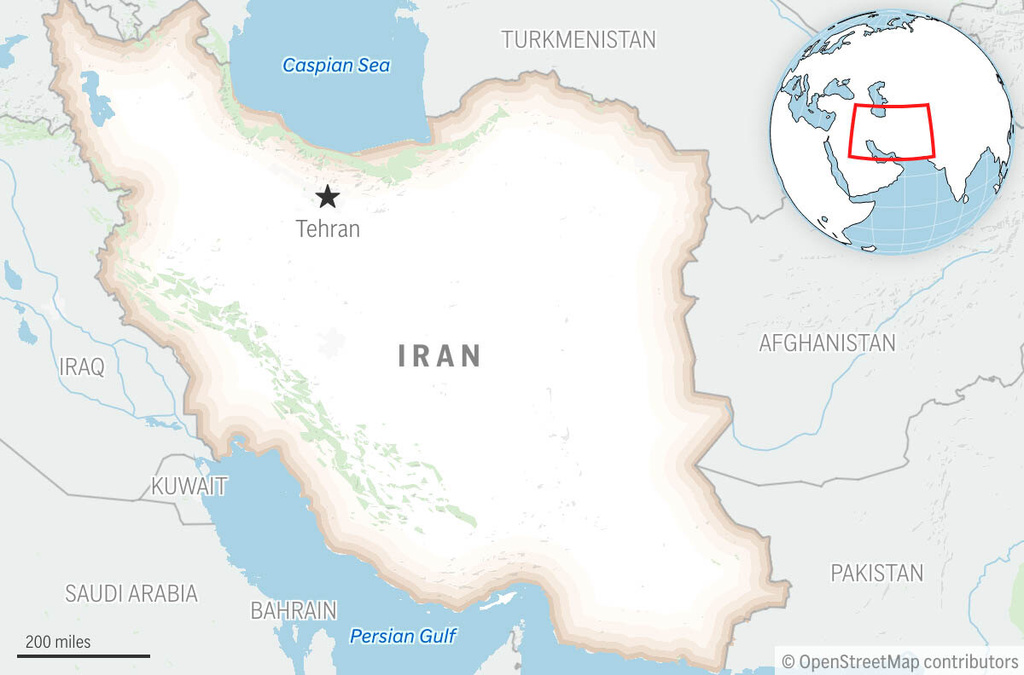

Diplomats from America and Iran have crafted a preliminary arrangement to prolong their current ceasefire by two months while launching fresh negotiations regarding Iran’s nuclear activities, a U.S. official with knowledge of the discussions revealed Thursday.
Iranian officials have not yet confirmed any such agreement, and the source emphasized that President Donald Trump still needs to approve the proposal.
This potential memorandum of understanding develops as the delicate ceasefire in the conflict between America and Iran shows signs of strain. Fighting erupted again less than 24 hours before the announcement, with Kuwait’s forces stopping missiles launched from Iran, U.S. Central Command reported.
Waterway Access Key Component
The proposed memorandum stipulates that Iran cannot charge fees for passage through the Strait of Hormuz and must clear all explosive devices from this critical waterway within one month, the official said, speaking anonymously because they lacked authorization for public statements.
Throughout the conflict, Iran has essentially blocked the strait, which previously carried roughly one-fifth of global oil and natural gas trade. This blockade has driven petroleum prices dramatically higher worldwide. U.S. Treasury Secretary Scott Bessent stated Thursday during a press conference that oil costs might “come down very quickly” after finalizing an agreement.
Iran claims it permits some merchant ships through — approximately 24 daily recently, compared to over 100 before hostilities began — though the Islamic Republic has imposed charges on certain vessels. Officials established a formal oversight agency this month, prompting fresh American sanctions this week.
According to the preliminary terms, America would slowly end its naval blockade of Iranian harbors. The U.S. would additionally consent to easing sanctions, permitting Iran to increase oil sales.
Another U.S. official, also speaking anonymously about confidential negotiations, confirmed that general agreement terms exist but emphasized that no deal exists until Trump approves it. This source expressed uncertainty about whether Trump will accept the proposal.
Nuclear Questions Persist
Initial negotiations during the two-month ceasefire will address Iran’s highly enriched uranium stockpile, the first official explained. The Islamic Republic possesses 440.9 kilograms (972 pounds) of uranium enriched to 60% purity, requiring only minor technical steps to reach weapons-grade 90% levels, according to the International Atomic Energy Agency.
Iran has not publicly agreed to surrender this stockpile. Officials believe it remains buried beneath three nuclear facilities severely damaged by American airstrikes last year.
Nuclear experts suggest Iran might accept China or Russia, both maintaining strong Tehran relationships, as potential third parties to secure the enriched uranium. However, Trump stated Wednesday that he “wouldn’t be comfortable” with such arrangements.
The news outlet Axios initially reported details of this tentative agreement.
Recent Military Action
Kuwait reported Thursday that its defense systems stopped incoming missiles and drones, without specifying targets. Iran claimed it retaliated for earlier weekly strikes by attacking an American base in an unnamed Gulf nation.
Kuwait’s Foreign Ministry criticized Iran for what officials termed “blatant aggression,” while U.S. Central Command labeled the assault on one of America’s closest Persian Gulf partners an “egregious ceasefire violation.” Kuwait faced repeated attacks from Iran and Iranian-supported Shiite militias in Iraq before the April ceasefire took effect.
This exchange followed late Wednesday reports that American forces conducted additional strikes against Iran, destroying four attack drones threatening the strait area and hitting an Iranian control station in Bandar Abbas preparing to launch another drone.
Iran’s paramilitary Revolutionary Guard confirmed the Bandar Abbas International Airport area attack and announced through state-run IRNA news agency that it launched counter-strikes against the air base responsible for the assaults. The Revolutionary Guard did not identify whether their response targeted Kuwait, which hosts U.S. Army Central’s forward headquarters, air facilities and naval installations.
Monday saw what the Pentagon described as “self-defense” strikes against missile sites and mine-laying vessels in southern Iran.
Despite exchanging attacks and ceasefire violation accusations, Washington and Tehran have avoided returning to full combat while continuing negotiations.
Regional Complications
These developments occur amid Middle Eastern tensions.
Beyond sanctions relief and asset releases, Iran demands any agreement include ending Israel’s military operations in Lebanon against Iranian-backed militant group Hezbollah. Thursday tensions escalated in Lebanon as Israel struck a southern Beirut suburb and conducted additional attacks in the southern coastal city of Tyre. At least 14 people died across the country’s southern region.