
Despite a setback involving an unmanned rocket explosion earlier this year, NASA says its Artemis III mission is still on course for 2027, according to NASA Administrator Jared Isaacman.
Isaacman made the remarks Monday at the Farnborough Airshow in England, telling Reuters that preparations for the mission are progressing well. The Artemis program is designed to return astronauts to the moon by 2028, combining NASA’s own spacecraft with technology developed by private companies.
NASA’s Space Launch System rocket will carry a crew inside the Orion deep-space capsule, which is being built by Lockheed Martin. Meanwhile, SpaceX and Blue Origin are each developing lunar landers that will transport astronauts between orbit around the moon and the lunar surface.
Before any crewed moon landing takes place, Artemis III will serve as a practice run in low Earth orbit. A crew of four astronauts will fly aboard Orion and rehearse docking and rendezvous procedures with versions of SpaceX’s Starship Human Landing System and Blue Origin’s Blue Moon lander.
“We are still very much planning for that,” Isaacman said, referring to the 2027 timeline. “The parts that are in NASA’s greatest control, which would be all things SLS and Orion related, are doing incredibly well.”
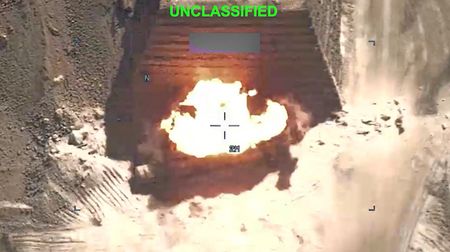
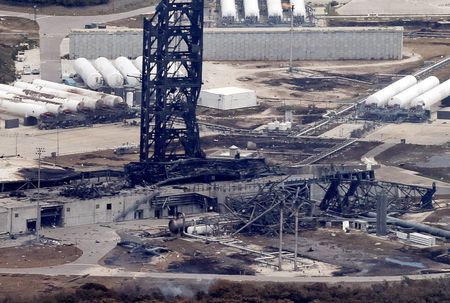
Both landers have already experienced delays, and some industry insiders have questioned whether they will be ready in time. Concerns grew in May when an uncrewed Blue Origin New Glenn rocket blew up during a hot-fire test at the company’s only launch facility in Florida. Blue Origin has stated it plans to finish repairs and get back to flying by the end of this year.
Isaacman said NASA has contingency plans ready if New Glenn encounters additional setbacks. “Plan A is launching on New Glenn, and they have a year to do that. So I’m very confident they’ll be able to achieve it,” he said.
NASA is also keeping a close eye on SpaceX’s upcoming Starship test flight this week, particularly the performance of its Raptor engines and heat shield — both essential to making the rocket reusable.
Isaacman also noted that SpaceX’s $75 billion initial public offering in June could be a positive development for NASA, since it gives one of the agency’s most important partners more financial resources. “We have a critical partner of NASA that’s now very well capitalized,” he said. “The more firepower and resources they have available to throw at a problem is a good thing.”
At the airshow, Isaacman also weighed in on Europe’s desire to develop its own space capabilities, arguing that international partners should focus on filling gaps rather than duplicating what the U.S. is already doing. “Every contribution has to help us achieve our goal faster,” he said. “We need our international partners to contribute in ways that enable the mission that are not overlapping.”