
NEW YORK — Oil prices soared past $110 per barrel on Monday, marking the highest levels witnessed since 2022, as the ongoing conflict involving Iran continues to disrupt global energy markets and impact Delaware consumers.
Delaware drivers are experiencing immediate financial pressure as fuel costs rise at service stations across the state.
However, the impact extends far beyond vehicle owners. Virtually every product purchased by consumers — from groceries to household items — requires transportation from manufacturing locations. These shipping expenses will increase alongside rising gasoline, diesel, and aviation fuel costs.
The oil price surge is expected to become a major contributor to U.S. inflation rates. Industry analysts warn that if the military conflict persists, the cost of virtually all consumer products could rise.
“The longer this lasts, the more significant the shock would be,” stated Gregory Daco, chief economist at consulting firm EY-Parthenon.
The following details explain how escalating oil and gasoline expenses may affect Delaware consumers while the conflict continues.
Crude oil serves as the raw material for gasoline, diesel, and aviation fuel production. When crude prices increase, the cost of these essential fuels that power vehicles, equipment, buses, delivery vehicles, and aircraft also rises.
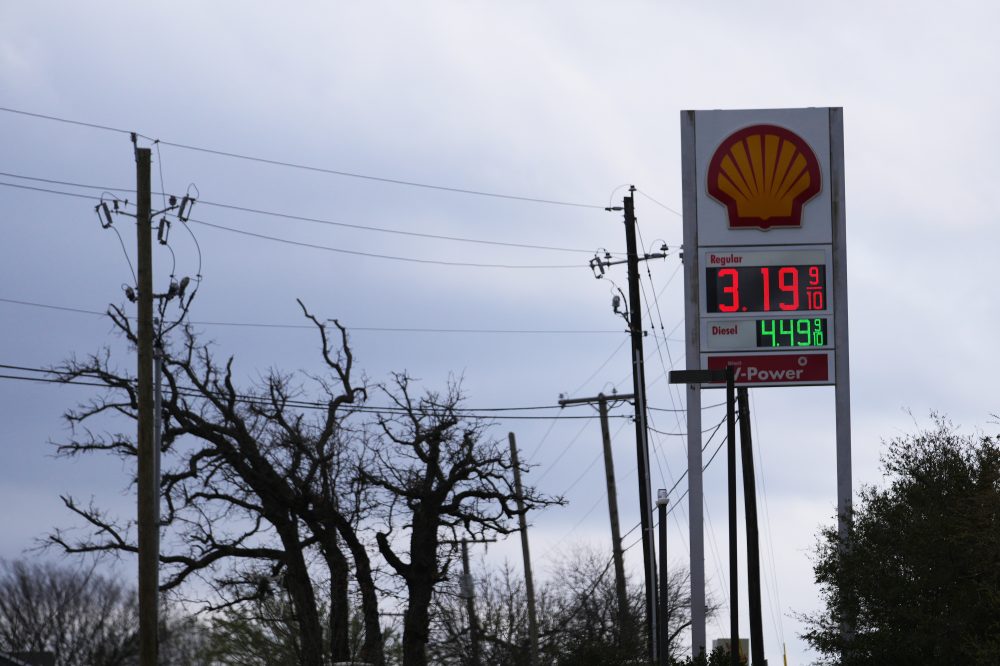
Throughout the United States, motorists paid an average of $3.48 per gallon for regular gasoline on Monday, compared to $2.98 before hostilities commenced. Fuel prices have jumped approximately 17% since the U.S. and Israel launched attacks against Iran.
Regional variations exist across different states. California drivers faced $5.20 per gallon, representing a 12% increase from the previous week. Several California refineries have ceased operations in recent years, forcing the large state to import gasoline and other refined petroleum products from Asian markets.
In contrast, Louisiana’s average price reached $3.04, benefiting from local oil production and refining facilities.
The current oil price increase will likely drive gasoline costs even higher, with Asia and Europe potentially experiencing more severe impacts due to their greater reliance on Middle Eastern oil and natural gas compared to the United States.
Diesel fuel prices — which power large commercial trucks — also climbed on Monday to $4.65 per gallon nationally, representing a 23% increase since the war began.
“Can’t underscore what a massive jolt this is to the logistics, trucking, (agriculture) sectors,” wrote Patrick De Haan, a petroleum analyst at GasBuddy, on X Monday.
The practical shutdown of the Strait of Hormuz, the critical waterway transporting one-fifth of global crude oil and liquified natural gas, has already created shipping industry challenges. Rapidly increasing oil and gas prices will compound these difficulties.
According to Patrick Penfield, professor of supply chain practice at Syracuse University, fuel expenses represent 50% to 60% of total shipping operation costs, meaning higher fuel prices significantly impact the entire industry.
“When fuel prices start to go up, everything starts to slow down,” Penfield explained. “So your ships slow down, your trucks slow down. People are less apt to ship things via air. And it really kind of causes a drag on the economy when fuel price go up.”
Fuel surcharges will also increase as shipping companies attempt to transfer higher expenses to customers, ultimately raising product prices for consumers.
Home heating and cooking expenses using natural gas will likely increase as the military conflict continues.
Europe’s benchmark natural gas prices have risen 75% since the war started, based on Intercontinental Exchange data.
This could also impact costs for products manufactured from natural gas, including petrochemical feedstock used in plastic and rubber production, as well as nitrogen fertilizer.
The oil price spike probably won’t immediately affect U.S. grocery store prices, according to David Ortega, a professor of food economics and policy at Michigan State University. However, if oil prices stay elevated for a month or longer, he noted, “we’re in different territory.”
Rising oil prices impact agriculture through two mechanisms, Ortega explained. They increase input costs including fuel for farming equipment and fertilizer derived from natural gas. They also boost demand for soybean oil, palm oil, and other vegetable oils that serve as petroleum-based fuel alternatives.
However, Ortega noted that farm production costs represent only a small portion of supermarket prices. Processing and food transportation, which require substantial energy, account for larger shares.
“Food gets to the grocery store on diesel, whether it’s on a truck or on a boat,” Ortega said.
If oil prices remain high, fresh foods requiring rapid transportation could experience price increases more quickly than packaged foods with longer shelf lives, Ortega predicted.
With U.S. oil prices climbing roughly 42% from pre-war levels — reaching approximately $95 per barrel from about $67 before the conflict — JPMorgan economists roughly estimate this could increase U.S. inflation from 2.4% in January to 3% or higher in upcoming months.
EY-Parthenon economist Daco estimated that rising gas prices could drive monthly inflation as high as 1% in March, which would represent the largest monthly increase in four years. Annual inflation would approach 3% under this scenario.
“That’s a significant shock in and of itself,” Daco stated.
Mark Mathews, chief economist and executive director of research at the National Retail Federation, indicated that higher gas prices would likely impact consumer spending, particularly affecting lower-income shoppers.
U.S. households spend an average of $2,500 annually, or nearly $50 weekly, on gasoline, he noted. If consumers pay an additional $10 per week, their budgets face definite strain.
“How do they offset that?” he questioned. “Going out to a movie theater or going to a theme park or going out to eat — all those areas would be … more likely see cuts.”
Mathews anticipates that retailers will absorb increased transportation costs temporarily — similar to their approach with higher tariffs — before raising prices.
Italian Finance Minister Giancarlo Giorgetti cautioned against transferring higher energy costs to consumers, referencing lessons from Russia’s Ukraine invasion.
“We must act immediately to stop energy prices from spreading to all consumer goods, as happened in 2022,” he stated during a Monday G7 meeting in Brussels, according to his office’s statement.
Ed Anderson, a professor of supply chain and operations management for the McCombs School of Business at the University of Texas, indicated that shipping companies won’t immediately transfer costs to customers.
“If the conflict is only in the short run, companies will eat it,” he said.