
Iranian state-affiliated media outlets released information Thursday indicating that the nation’s Revolutionary Guard forces deployed naval mines in the Strait of Hormuz amid ongoing hostilities, appearing to be a strategic move to apply pressure during a fragile two-week truce between Iran, Israel and the United States that precedes potential talks in Islamabad.
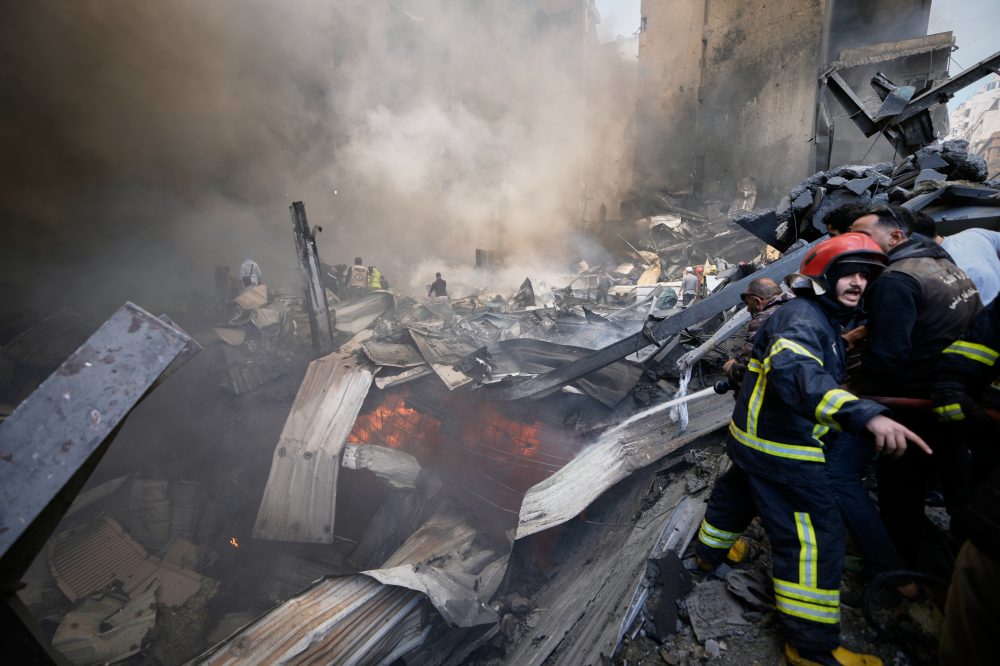
In a rare display of forceful criticism, United Nations Secretary-General António Guterres issued an “unequivocal” condemnation of Israeli military operations in Lebanon that resulted in hundreds of casualties Wednesday following the ceasefire announcement, his spokesperson Stéphane Dujarric confirmed.
Israeli officials maintain that their ceasefire deal does not cover their ongoing conflict in Lebanon against Hezbollah, the militant organization backed by Iran, though both Iran and mediating nation Pakistan assert it should. Warning sirens echoed across northern Israel early Thursday as Hezbollah announced rocket attacks on the region.
Iran responded to Israeli military actions against Hezbollah in Lebanon by shutting down the Strait of Hormuz once again on Wednesday.
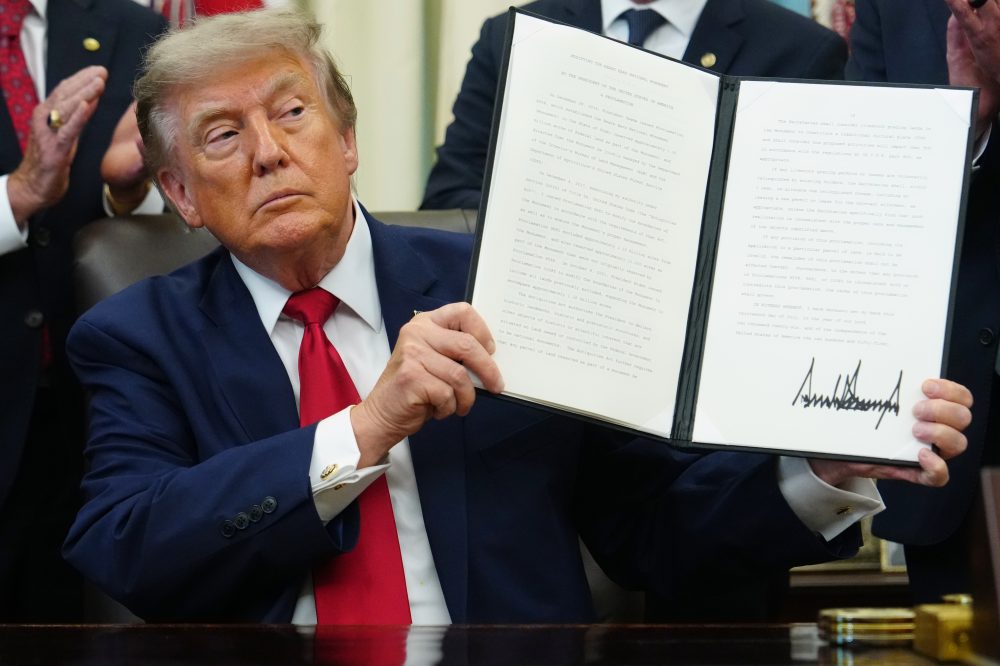
President Donald Trump posted on his Truth Social platform Thursday, declaring that American naval forces and military personnel will stay positioned near Iran “until such time as the REAL AGREEMENT reached is fully complied with.”
Trump’s social media remarks seem designed to maintain pressure on Iran while questions surround the temporary two-week halt in fighting currently in effect.
“If for any reason it is not, which is highly unlikely, then the ‘Shootin’ Starts,’ bigger, and better, and stronger than anyone has ever seen before,” Trump wrote.
The president also emphasized that Iran would be prevented from developing nuclear capabilities and declared that “the Strait of Hormuz WILL BE OPEN & SAFE.” His statement comes while maritime traffic remains halted through the strategic waterway that serves as the narrow entrance to the Persian Gulf, previously handling 20% of global oil and natural gas shipments.
A New York-based research organization has issued a warning that the temporary halt in the Iran conflict “hovers on the verge of collapse.”
The Soufan Center indicated that Wednesday’s Israeli military operations in Lebanon could cause the agreement to unravel.
“Even if Lebanon was formally outside the deal, the scale of Israel’s strikes was likely to be viewed as escalatory, nonetheless,” the organization stated in Thursday’s analysis.
“Israel’s strikes can be understood both as an effort to drive a wedge between Iran and its proxies and as a response to being allegedly sidelined in the original ceasefire discussions.”
The Al-Aqsa Mosque complex welcomed worshippers for dawn prayers Thursday after remaining shuttered throughout the Iran conflict, according to Jerusalem’s Islamic Waqf, the Jordanian religious body overseeing the site.
Jerusalem police announced Wednesday that access limitations would be removed from all religious sites in the Old City beginning Thursday morning, with hundreds of officers and volunteers deployed throughout the area.
During the now-suspended fighting, entry to Christian, Jewish and Muslim holy places was either completely banned or limited to small groups of worshippers, as Iranian missile strikes frequently forced Jerusalem residents to seek shelter.
These limitations dampened Lent, Passover and Ramadan observances for many believers at some of the most sacred locations for Christianity, Islam and Judaism.
However, the timing allows Orthodox Christians to celebrate Easter (Pascha) on Sunday, one week following Catholic and Protestant commemorations.