
MEXICO CITY — Mexican military forces achieved a significant victory against organized crime on Sunday by killing the nation’s most influential drug cartel boss, who was also among America’s most sought-after criminals. However, the operation triggered widespread violent retaliation throughout Mexico.
Nemesio Oseguera Cervantes, who led the Jalisco New Generation Cartel, died during a military operation aimed at capturing him in Jalisco state. This represents the most significant success against criminal organizations since authorities recaptured former Sinaloa cartel chief Joaquín “El Chapo” Guzmán ten years ago.
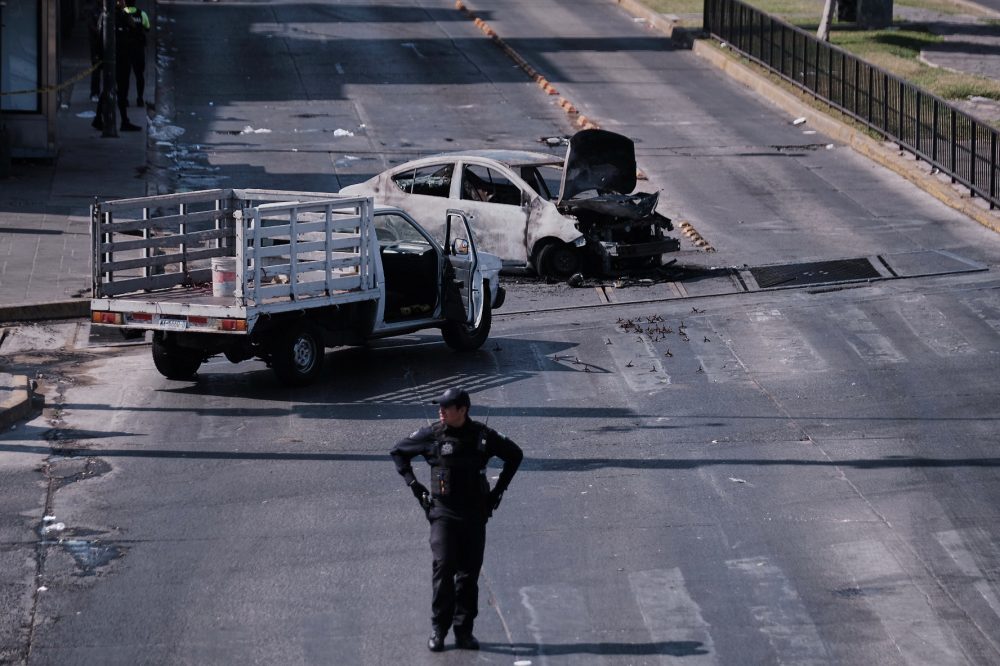
In response to Oseguera Cervantes’ death, armed groups launched violent attacks nationwide. Criminal members set vehicles ablaze to block highways in approximately twelve Mexican states, sending smoke clouds into the sky. Residents barricaded themselves inside their homes in Guadalajara, the nation’s second-most populous city and Jalisco’s state capital, while Monday classes were suspended in multiple states as security personnel went on high alert across the country. Guatemala even strengthened border security along its Mexican frontier.
This success could strengthen Mexico’s position in negotiations with the incoming Trump administration, which has threatened economic sanctions or direct military intervention unless Mexico demonstrates progress in combating criminal organizations.
However, experts remain uncertain about the long-term impact on Mexico’s security situation.
Oseguera Cervantes, commonly called “El Mencho,” was 59 years old and originally from Michoacan state in western Mexico. His involvement in criminal enterprises spanned at least thirty years.
In 1994, American courts convicted him of heroin trafficking, resulting in a three-year prison sentence. After returning to Mexico, he rapidly advanced through the country’s drug trafficking hierarchy.
Approximately in 2009, he established the Jalisco New Generation Cartel, which developed into Mexico’s most rapidly expanding criminal enterprise. The organization trafficked cocaine, methamphetamines, fentanyl and migrants into the United States while pioneering violent tactics including drone warfare and homemade explosive devices.
The organization gained notoriety for bold assaults on Mexican law enforcement, including shooting down a military helicopter in Jalisco during 2015 and orchestrating a failed but dramatic attempt to assassinate Mexico City Police Chief Omar García Harfuch, who currently serves as Mexico’s federal security secretary.
The cartel recruited members aggressively and explored innovative online methods to attract potential recruits.
Oseguera Cervantes died while his supporters battled Mexican troops attempting to arrest him.
Mexico’s Defense Department released a statement explaining that army units initiated an operation in southern Jalisco state to apprehend Oseguera Cervantes, deploying the Mexican Air Force and elite military units.
Criminal forces launched a counteroffensive, and during the resulting battle, federal troops killed four criminal organization members, including their leader, while wounding three others who later died during helicopter transport to Mexico City, the statement indicated.
Three military personnel sustained injuries and two individuals were arrested during the action. Authorities confiscated rocket launchers capable of destroying aircraft and armored vehicles at the location.
Oseguera Cervantes’ elimination will assist Mexico’s government in demonstrating results to the United States, which is demanding more aggressive action against drug cartels from its southern neighbor. Officials from both nations confirmed that intelligence sharing contributed to Sunday’s successful operation.
Oseguera Cervantes faced numerous criminal charges in the United States, and the State Department had established a $15 million bounty for information leading to his capture. The Trump administration classified his cartel and similar organizations as foreign terrorist groups one year ago.
U.S. Deputy Secretary of State Christopher Landau, who previously served as U.S. ambassador to Mexico during Trump’s first presidency, praised the operation on X, stating “The good guys are stronger than the bad guys. Congratulations to the forces of law and order in the great Mexican nation.”
Mike Vigil, former chief of international operations for the DEA, explained that Mexico had delivered “a strong message to Donald Trump’s administration that they are fighting aggressively and effectively” against the most powerful cartels. He emphasized that “the majority of the information came from the Mexican armed forces and all credit goes to Mexico.”
The identity of Oseguera Cervantes’ successor remains unknown, and it’s uncertain whether any single individual can fill his role.
According to the U.S. Drug Enforcement Administration, the Jalisco cartel operates in at least 21 of Mexico’s 32 states and maintains activity throughout nearly all American territory. The organization also functions globally, meaning their leader’s death could impact operations far beyond Mexico.
“El Mencho controlled everything, he was like a country’s dictator,” Vigil explained.
His death could decelerate the cartel’s aggressive growth and territorial expansion while initially weakening it against the Sinaloa cartel across multiple conflict zones where they or their allies are engaged. However, the Sinaloa organization faces its own internal leadership conflict between “El Chapo’s” sons and supporters of Ismael “El Mayo” Zambada, who remains in American custody.
Vigil urged Mexico to capitalize on this opportunity by launching “an effective frontal assault based on intelligence.”
“This is a big opportunity for Mexico and the United States if they work together,” he stated.
Security expert David Saucedo warned that if Oseguera Cervantes’ family members assume cartel leadership, the violence witnessed Sunday could persist. If other individuals seize control, they might be more inclined to move forward and maintain operations.
The most concerning scenario would involve the cartel adopting indiscriminate violence tactics. They could choose to “launch narcoterrorism attacks … and generate a scenario similar to what Colombia lived in the 1990s,” launching comprehensive attacks against the government including “car bombs, assassinations and attacks on aircraft.”