
ST. AUGUSTINE, Fla. — A 28-year-old Mexican man who lost his life after fleeing federal immigration officers in Florida had entered the country legally on a tourist visa, a Mexican government official and an advocacy organization assisting his widow have confirmed.
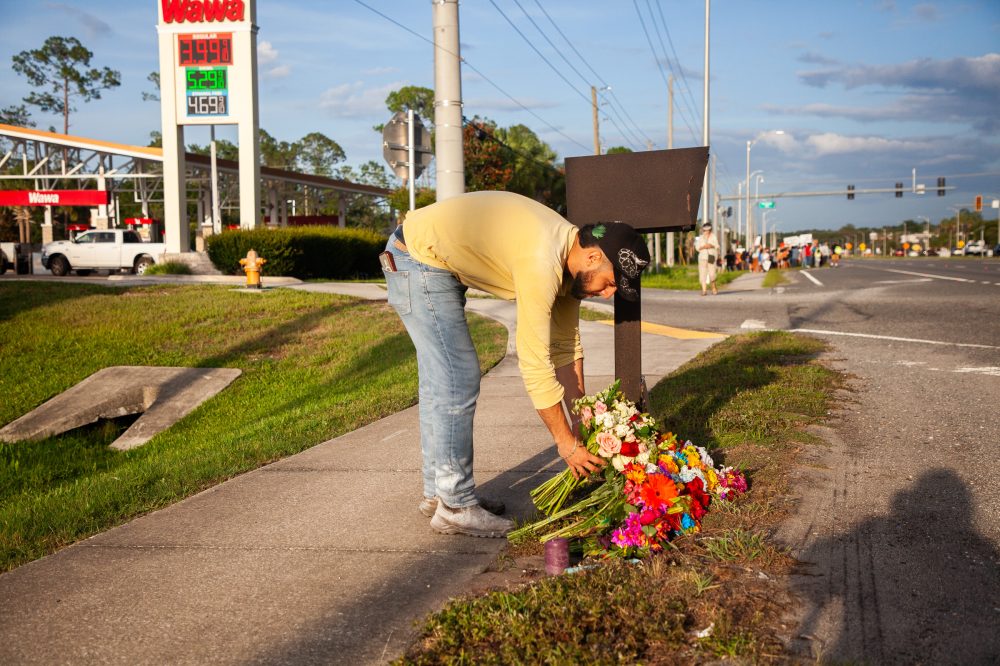
Juan Jairo Coronilla Durán died on July 14 after he bolted across a heavily trafficked road in St. Augustine and was struck by a semi-truck. His death marked the third fatality in approximately one week connected to encounters with Immigration and Customs Enforcement agents, following deadly shootings in Texas and Maine.
According to Isaret Jeffers, founder of Colectivo Arbol, a farmworkers advocacy group, Coronilla Durán had traveled from his home in San Luis de la Paz — a farming town in the central Mexican state of Guanajuato — to Atlanta to spend time with family and friends. After three weeks in Georgia, he made his way to Florida’s east coast to visit the beaches, Jeffers said Tuesday.
While U.S. authorities have not publicly released the man’s identity, a Mexican official confirmed his name. Jeffers said the man’s wife, Yezzika Alamilla, told the group that her husband had been traveling on a valid tourist visa.
The Department of Homeland Security did not respond by Tuesday to a request for comment regarding whether Coronilla Durán held a valid visa at the time of his death.
On the morning he died, Coronilla Durán was one of four people in a vehicle that pulled into a gas station parking lot before 7 a.m. When agents from U.S. Immigration and Customs Enforcement and Homeland Security Investigations approached, all four occupants fled on foot. Coronilla Durán ran into the path of an oncoming semi-truck on a busy road and was fatally struck, according to the Florida Highway Patrol. The fate of the other three people in the vehicle remains unknown.
Both the Florida Highway Patrol and the Department of Homeland Security have declined to share further details, pointing to the ongoing investigation.
Alamilla reached out to Colectivo Arbol — an organization that offers legal guidance and support to farmworkers in Central Florida — the day after her husband’s death, Jeffers said. She was looking for help traveling from Mexico to recover her husband’s remains. The group purchased her a plane ticket and provided housing for three days until Monday, after which the Mexican consulate took over assisting her.