
NEW YORK — During a sweltering summer afternoon in Brooklyn, designer Michaela Stark stepped into an unusual photography session that would transform how one of the world’s premier museums displays fashion.
Wearing only her distinctive corsetry designs, Stark positioned herself within a circle of 175 cameras that captured every angle of her form through a sophisticated technique called photogrammetry. The purpose was to create digital scans for building mannequins destined for the Metropolitan Museum of Art’s prestigious spring exhibition.
“It was definitely a bit nerve-wracking,” Stark remembers about the “intimate and vulnerable” session. However, she adds with humor, “something about being naked on a 40-degree (Celsius) day in a corset that isn’t hiding anything kind of takes the awkwardness away from the situation, actually.”
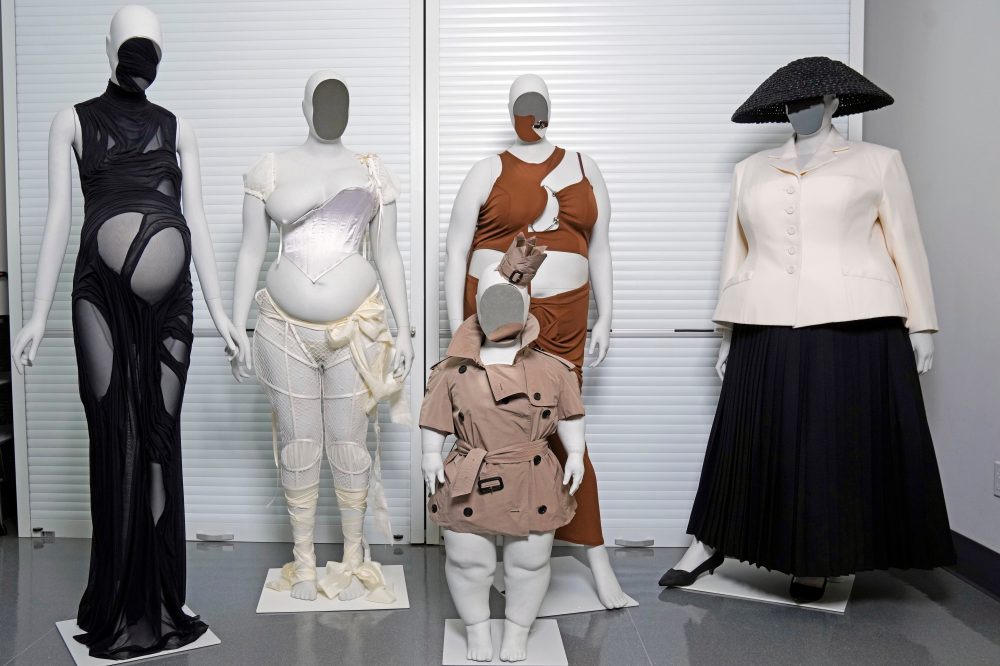
These specially crafted mannequins will appear in “Costume Art,” the Costume Institute’s spring exhibition launching with the celebrated May 4 gala. The project represents a deliberate move toward body inclusivity in a display examining how the human form has been portrayed through clothing across centuries, explains curator Andrew Bolton.
Traditional fashion mannequins typically reflect a women’s size 2, Bolton observes. These innovative displays, which will complement conventional forms, aim to highlight how art history has overlooked or dismissed certain physiques — including larger bodies, disabled forms, and aging figures. These excluded types deserve recognition in the narrative as well. The exhibition features approximately 400 pieces, split evenly between artistic works and garments from the museum’s archives, presented in matching pairs.
The objective involved “to challenge a history of museum mannequin display that’s very much characterized by thin, abled and standardized bodies,” Bolton explains. Instead of modifying existing displays, curators chose to base new mannequins “on a diverse range of real bodies with real, lived experiences.”
Beyond Stark, Bolton enlisted participants including Sinéad Burke, an Irish disability advocate born with dwarfism; Aimee Mullins, an athlete, performer, and activist who uses prosthetic legs; and Aariana Rose Philip, a musician and model who relies on a wheelchair. Nine individuals contributed to creating 18 new mannequins, while seven additional forms represent shapes like pregnancy and slender male physiques without being modeled on specific people.
These 25 innovative mannequins won’t face retirement when the exhibition concludes. After “Costume Art” closes in January 2027, they’ll become part of the museum’s permanent inventory for ongoing use.
This lasting impact excites Stark, who has designed pieces for Beyoncé and operates her own body-positive lingerie brand called Panty. Her three mannequins will showcase her original creations in the Reclaimed Body and Corpulent Body galleries.
Stark has consistently employed corsetry methods in non-traditional ways. While corsets historically shaped bodies toward conventional beauty standards, Stark applies identical techniques “to actually emphasize those parts of the body that we’ve been conditioned to hide. It’s using the corsets to bring back power to the female form.”
The designer believes her involvement in the Met’s showcase arrives at a critical time, as fashion industry dedication to body diversity seems to be retreating.
“It’s a really interesting moment in time for the Met to be doing this show because obviously we’ve seen the complete rapid decline of the body positivity industry,” she observes. “Designers left, right, and center are just starting more and more to refuse to work with plus-size models.” Recent data from a Vogue Business Size Inclusivity Report supports her observations, documenting decreased plus-size representation on runways across four major Fashion Week locations for Fall/Winter 2026.
Burke agrees, describing that regression as “shameful and embarrassing.”
Her organization, Tilting the Lens, works to position disabled individuals in leadership roles throughout the industry — “whether they are creative directors and designers, whether they’re CEOs, whether they are chief marketing officers,” she explains.
Burke, attending the Met Gala as a host committee member, posed for two mannequins for the Disabled Body section — one wearing a custom Burberry trench coat, another in a Vivienne Westwood and Malcolm McLaren dress.
“You stood in this cage of cameras,” she described the modeling process. “It’s deeply uncomfortable and really vulnerable in the sense that you are in your skin and in very little else … your body is photographed, observed, recorded from every angle, angles which you yourself may not even be familiar with.”
Despite the discomfort, she embraces participating in the exhibition, particularly the chance to advise the museum on respectful disability representation. This includes careful word choices. “There’s so many ways in which we could have called the disabled body something else, using euphemisms that create a distance from being disabled,” she noted.
Burke also participates in educating museum guides and volunteers, helping them “make people feel seen, challenge people gently, and have a broader conversation about the connection between embodiment, fashion and art.”
The scanning process at Brooklyn’s New York Capture marked just the initial step. Artist Frank Benson transformed the scans into digital modeling material, shaped to better accommodate the garments. Italian company Bonaveri then manufactured the physical mannequins from the digital specifications.
All mannequins in “Costume Art” — numbering just over 200 — feature another distinctive element: polished steel surfaces that function like mirrors, allowing visitors to see their own reflections.
Bolton explains the concept involves viewing both the person the mannequin represents and yourself simultaneously.
Additionally, roughly one-third of the mannequins stand on elevated platforms, while others remain at floor level. Burke’s mannequin receives pedestal placement, which Bolton says was deliberate.
“Andrew, my entire life, I’ve been looked down on, both literally and metaphorically,” Bolton recalls the activist telling him. She expressed deep appreciation that people would now — literally — look up to her.
The exhibition will certainly include traditional body forms, and Bolton emphasizes the goal “is not to reject what came before.”
“We’re using it as an opportunity to add new voices and new silhouettes and new presences,” he states. “The figures don’t deny the past, but in a way, I suppose they complete the picture.”