
ATLANTA (AP) — Media mogul Ted Turner, who passed away Wednesday, left an indelible mark on professional sports as both an accomplished sailor and groundbreaking baseball team owner.
Turner gained widespread recognition for his ownership of the Atlanta Braves, using his TBS superstation to beam their games nationwide while displaying his colorful personality during an era when most franchise owners preferred to remain out of the spotlight.
After purchasing the financially troubled Braves during the 1970s, Turner placed the team on his small television station and distributed the programming to cable providers throughout the nation.
“He effectively transformed the Braves into a team with a national reach and set the table for ways that local teams have now gained more of a national footprint,” said Travis Vogan, a sports media professor at the University of Iowa.
The strategy created a massive fan following that extended well beyond the southeastern United States, helping the Braves become perennial World Series contenders throughout the 1990s. Turner celebrated a championship victory in 1995 before divesting the team the following year.
MLB Commissioner Rob Manfred released a statement Wednesday describing Turner as a “visionary whose impact on the media landscape transformed how fans experience sports.”
Turner’s sports portfolio also included ownership of the NBA’s Atlanta Hawks and NHL’s Atlanta Thrashers, along with diverse interests spanning professional wrestling, sailing competitions, and Olympic events.
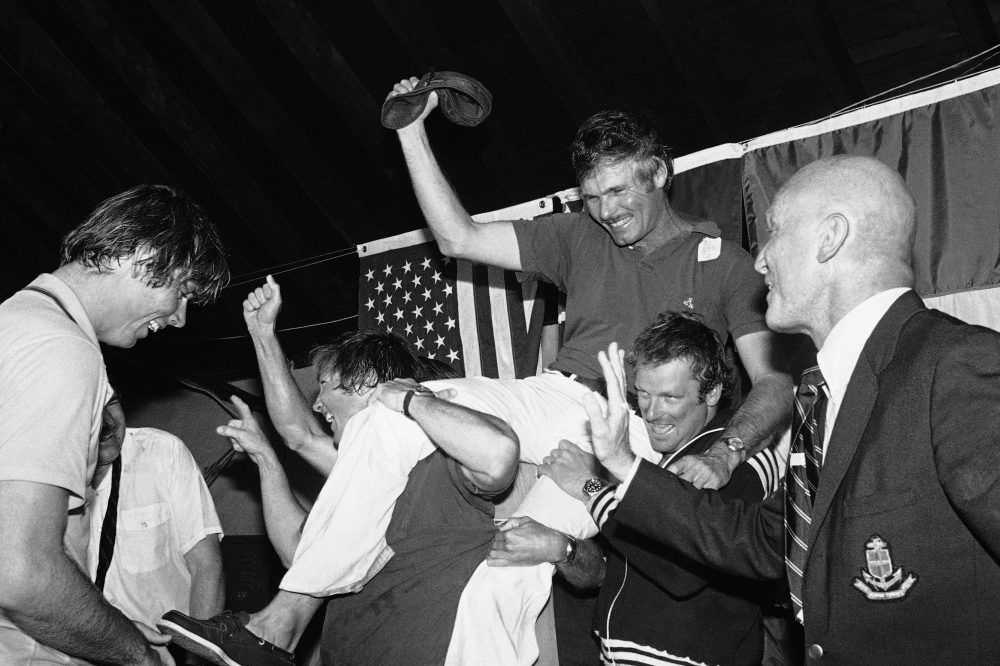
His sailing accomplishments included an unsuccessful bid for the 1964 Olympic team, capturing a world championship in 1971 near Long Island, and commanding the victorious vessel in the prestigious 1977 America’s Cup competition.
“There will never be a time in my life as good as this time,” he said when told he would skipper in the America’s Cup that year. “I can’t believe all this is really happening to me.”
Turner’s desire for hands-on involvement reached its peak in 1977 when he appointed himself as the Braves’ manager. Following 16 consecutive losses, Turner gave manager Dave Bristol time off and took control of the team. The Braves fell 2-1 to the Pittsburgh Pirates under Turner’s leadership, extending their losing streak.
“I wanted to see what it’s like down in the trenches,” Turner said that night.
Baseball officials quickly ended Turner’s brief managerial stint after just one game, similar to how they had previously stopped him from placing “Channel” on pitcher Andy Messersmith’s jersey, who wore number 17.
Despite these setbacks, Turner embraced his “Captain Outrageous” persona, establishing a blueprint for today’s high-profile “swashbuckling” owners who leverage their franchises to enhance their public personas, according to Professor Vogan.
Contemporary sports figures like Dallas Cowboys owner Jerry Jones, former Dallas Mavericks owner Mark Cuban, and Los Angeles Clippers owner Steve Ballmer “have all emulated Turner by being these kinds of celebrity entrepreneurs that use sports to build their own identities and to build their own kind of brands in the popular imagination,” Vogan said.
“Our good friend and former owner, Ted Turner, was one of a kind,” read a statement from the Braves on Wednesday.
Turner’s competitive nature extended beyond team ownership to creating new sporting events.
He established the Goodwill Games, primarily motivated by his disappointment with the United States boycotting the 1980 Moscow Olympics and the Soviet Union’s retaliatory boycott of the 1984 Los Angeles Games. The first Goodwill Games took place in Moscow in 1986, featuring approximately 3,000 athletes from 79 nations.
The competition was held five times total before concluding in 2001. A Winter Goodwill Games was also organized once, taking place in Lake Placid, New York, during 2000.
“There’s nothing better for kids than sport,” Turner said at the opening ceremony of those Lake Placid Games.
Professor Vogan noted that the Goodwill Games demonstrated Turner’s “audacity,” despite the event’s ultimate lack of long-term success.
“The fact that he was involved in an initiative like that says a lot about his ambitions and his role as a disruptive force in media,” Vogan said.