
PROVIDENCE, R.I. — Electrical outages, towering snow drifts reaching waist-deep levels, and additional flurries continued to plague Northeast communities Wednesday following a historic winter storm that blanketed the region from Maryland through Maine with massive accumulations of snow and ice.
The storm’s impact continued to disrupt daily life throughout the area: Rhode Island residents faced their third consecutive day trapped in homes as neighborhood roads stayed impassable, garbage collection services were delayed across multiple communities, and educational institutions shifted to remote learning after receiving 3 feet of snowfall that exceeded records established during the legendary 1978 blizzard.
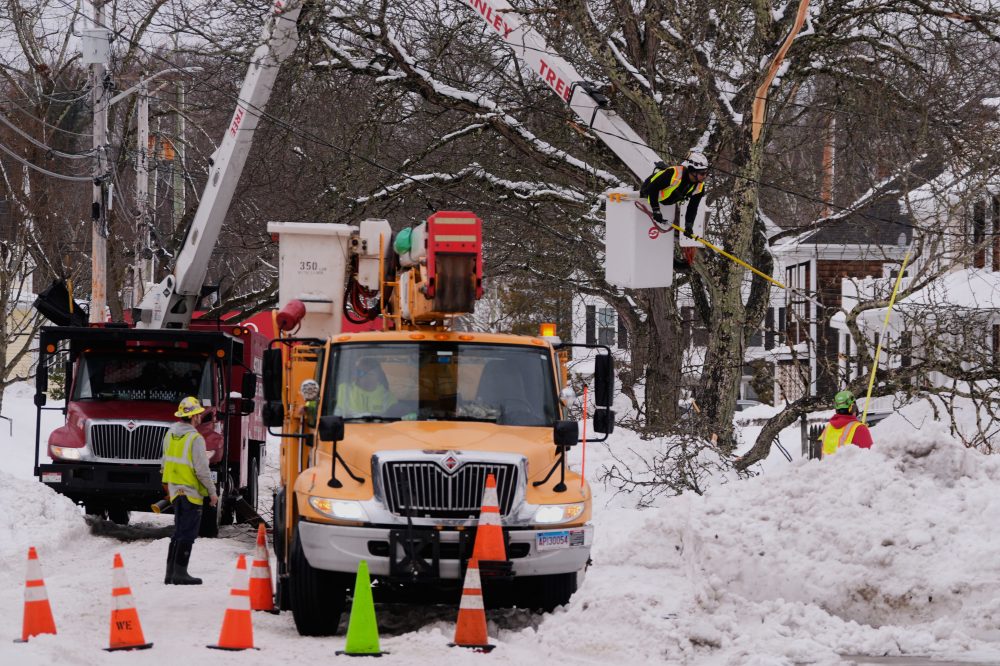
Electrical service remained disrupted for over 138,000 customers Wednesday afternoon, with Massachusetts bearing the brunt of outages, especially throughout Cape Cod, data from poweroutage.us showed. Energy company workers maintained 18-hour work schedules to reconnect service while residents sought refuge in emergency warming facilities to stay warm and charge electronic devices.
Anny Enos brought her three grandchildren to a warming facility in Barnstable, Massachusetts, Wednesday to power up their electronics and escape their cold home. Without electricity since Sunday afternoon, she worried restoration might not occur until Friday.
After discarding most refrigerated items Tuesday, she remained hopeful for the best outcome.
“I hate to say it but it doesn’t seem like they were ready,” she said.
The winter weather event generated “thousands” of locations requiring repair work that demanded crews use heavy machinery to clear massive snow accumulations before installing replacement utility poles or fixing existing infrastructure, explained Doug Foley, president of electric operations for Eversource in Massachusetts. Additional repair teams from neighboring states arrived Wednesday to assist recovery efforts.
Adding to difficulties, an unwelcome additional 3 inches of snow accumulated early Wednesday, worsening hazardous travel conditions before rising temperatures created slushy road surfaces.
This week’s enormous snowstorm has municipal crews working extended hours to remove towering accumulations.
New York City Mayor Zohran Mamdani implemented innovative solutions: beyond distributing 143 million pounds of road salt by Tuesday evening, city officials recruited approximately 3,500 individuals as temporary snow removal workers, paying $30 hourly to clear transit stops and roadways.
Authorities reported that carbon monoxide exposure claimed the life of a man in a Rhode Island community that had lost electrical service. Joseph Boutrous, 21, had informed a Salve Regina University classmate about plans to charge his phone inside his vehicle, Newport Police Capt. Joseph Carroll stated. Snow blocking the exhaust system caused the accidental death of the sophomore from Bohemia, New York, who played offensive line for the football team. Social media messages indicated his teammates were devastated by the loss.
Significant cleanup work remained ahead. New York areas have residents feeling isolated, according to Jeff Peters, spokesperson for the Center for Independence of the Disabled, New York.
“You’ll find a portion of a sidewalk that is clear, and then there’s maybe a 6-inch pathway that can only be walked with one foot in front of the other and no room for a stroller, rollator, walker or crutches,” Peters said. “Then you get to the corner and not only is it unshoveled, but you have basically a glacier at the end of it.”
Tina Guenette, who relies on a motorized wheelchair, spent time this week clearing snow from her property after more than 33 inches accumulated in Harrisville, Rhode Island, located approximately 17 miles northwest of Providence.
“I really have no choice if my service dog wants to go outside,” Guenette said. Harrisville’s volunteer snow-shoveling program hasn’t had volunteers for years, she said.
Monday’s weather system covered the region with heavy snowfall, grounded aircraft, interrupted public transportation, and toppled electrical infrastructure.
Analyzing the storm’s scope, meteorologist Ryan Maue, former chief scientist at the National Oceanic and Atmospheric Administration, determined the total snowfall contained approximately 2.5 trillion gallons of water equivalent.
If all accumulation from Maryland to Maine had fallen exclusively on Manhattan, it would have created a pile exceeding one mile in height. Concentrated solely on Rhode Island, the hardest-hit state, the snowfall would have buried the entire Ocean State under more than 92 feet, The Associated Press calculated.
In liquid form, the amount could fill the Empire State Building with water over 9,000 times. New York State received water equivalent to 680 billion gallons, Pennsylvania accumulated 410 billion gallons, and Massachusetts collected 28 billion.
Eventually, the melting snow will help address drought conditions affecting Northeast regions, Maue noted, though currently it’s compounding difficulties during an already challenging winter season.
“I think this storm took a severe winter and turned it into an extreme winter or a record extreme winter,” he said.
New York City crews established large heated water basins where substantial amounts of snow and ice will be deposited for melting, acting Sanitation Commissioner Javier Lojan announced. These facilities processed 23 million pounds of snow during last month’s winter storm.
Snow-covered Providence, Rhode Island, is transporting accumulations to five designated sites, with additional disposal locations potentially being established, according to Josh Estrella, communications director for city government.
Several major school districts resumed classroom instruction Wednesday, including Philadelphia, which had conducted online education during the week’s first two days. Boston schools reopened following closure since last week’s winter vacation period. However, in severely affected Rhode Island, Providence schools remained closed for a third day as the district implemented “virtual learning” Wednesday.
New York City maintained regular school operations for more than 900,000 students in the nation’s largest public education system, though many students and families navigated enormous snow barriers and avoided salt-spreading vehicles during morning arrival.
Thousands of flights throughout the United States faced cancellation in recent days. By Wednesday, travel disruptions appeared to decrease, with nearly 200 flights grounded, flight tracking website FlightAware reported. Rhode Island’s T.F. Green International Airport resumed operations Tuesday. Some Wednesday flights departed while others were canceled.
When Jamie Meyers’ flight touched down in New York from Buenos Aires, Argentina, Tuesday evening, the cabin filled with relieved passengers who broke into applause. The Manhattan resident had originally planned to arrive home Sunday but experienced a cancellation and substantial delay.