
Local governments and organizations across Maryland now have the chance to apply for state funding aimed at protecting waterways, strengthening communities against flooding, and supporting environmental education. The Maryland Department of Natural Resources opened its Grants Gateway on July 15, 2026, for Fiscal Year 2028 applications.
The program serves as a one-stop hub connecting communities to multiple funding streams for projects that clean up local waterways, build resilience against storms and rising water levels, boost local economies, promote beneficial use of dredged material, and cultivate the next generation of environmental stewards.
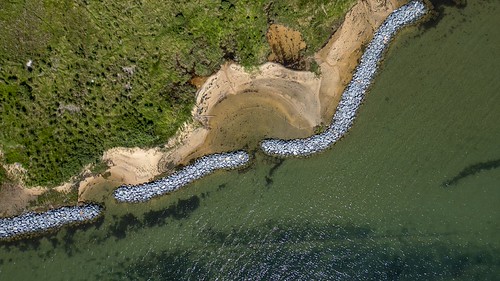
Several recently completed projects show what the funding can accomplish. On Tilghman Island in Talbot County, a 665-linear-foot living shoreline was built, featuring 60 concrete oyster structures along with dune and marsh plantings. Behind it sits a nontidal wetland and meadow that support wildlife and improve water quality. The project, backed by DNR’s Resilience through Restoration program, also served as a pilot effort for Talbot County’s Green Infrastructure Plan.
Another completed effort — the Middle Branch Resiliency Initiative Demonstration Project — stabilized roughly 2,000 linear feet of eroding shoreline and restored about 8.5 acres of tidal marsh and aquatic habitat. The project expanded the amount and variety of urban aquatic habitat in the Middle Branch area while offering protection from coastal flooding and storm damage. Funding came through the Chesapeake and Atlantic Coastal Bays Trust Fund, with additional financial support from Baltimore City and the National Fish and Wildlife Foundation.
In St. Michaels, a Community Flood Planning grant paid for a feasibility study to examine whether a tide gate could help reduce the effects of sea level rise and storm surge on San Domingo Creek, where daily flooding is expected to increase. The study also produced a concept design and identified potential funding sources for moving forward with implementation.
Grants available through the program are funded by the Chesapeake and Atlantic Coastal Bays Trust Fund, the National Oceanic and Atmospheric Administration, the Resilience through Restoration Initiative, the U.S. Environmental Protection Agency’s Chesapeake Bay Program, and the Shore Erosion Loan Program.
Prospective applicants can browse funding options by individual program on the Grants Gateway page. A virtual webinar covering each available funding program is set for August 20, 2026 at 2 p.m. Those interested in applying are encouraged to register online through DNR’s Grants Gateway page for more details.