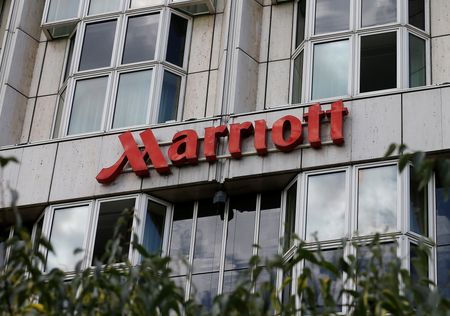

Marriott International has upgraded its annual revenue projections following a surge in travel demand that’s driving bookings at hotels nationwide, the company announced Wednesday.
The hospitality giant’s optimistic outlook reflects a broader recovery in the U.S. travel industry after a difficult period marked by inflation concerns and economic uncertainty that previously strained consumer spending habits.
The hotel chain expressed continued confidence in international tourism growth, particularly with the FIFA World Cup providing additional momentum that’s expected to extend through the third quarter.
Marriott now projects its 2026 revenue per available room – a critical industry benchmark measuring pricing strength – will increase between 2% and 3%. This represents an improvement from the company’s previous forecast of 1.5% to 2.5% growth. Following the announcement, Marriott shares climbed approximately 2%.
According to CEO Anthony Capuano, consumers across all income levels continue prioritizing travel and experiences over purchasing physical goods, with this trend evident even among lower-income families.
The company saw its budget hotel segment bounce back during the first quarter, while luxury properties in the United States and Canada maintained strong performance thanks to continued spending by wealthy travelers.
Marriott exceeded Wall Street expectations with adjusted earnings of $2.72 per share, surpassing analyst predictions of $2.55 according to LSEG data.
However, ongoing Middle East tensions present challenges that could potentially increase consumer costs and reduce travel spending. While Marriott has factored these continued impacts into its projections, competitors including Hilton and Booking Holdings have also noted effects from the regional conflict.
Truist analyst Patrick Scholes noted that Marriott faces the highest Middle East exposure among major U.S. hotel corporations at approximately 4%.
The company reported a 1.9% decline in room revenue for the Middle East and Africa region during the first quarter, with occupancy rates dropping 5.4%.
New Chief Financial Officer Jen Mason indicated that booking patterns are showing improvement since hitting lows in March. “We are back to kind of pre-conflict trends in terms of domestic versus international travel bookings from the U.S.,” Mason stated.