
PEA RIDGE, Ark. (AP) — Two retail powerhouses are engaged in an intense competition to accelerate online delivery services to America’s rural regions, targeting an underexploited market that major companies previously dismissed as too scattered, distant, or economically challenged to serve cost-effectively.
The big-box retailer holds an advantage in this battle for rural customer loyalty. About 90% of Americans reside within 10 miles of one of their locations, while 45% of their full-service Supercenters operate in communities with fewer than 20,000 people, based on investment bank Morgan Stanley’s analysis.
The fight for this underserved marketplace, which banking analysts believe could generate up to $1 trillion yearly in revenue, has grown more fierce as telecommuting workers increase populations in small towns and communities at the outer edges of metro regions.
The identical technology enabling more Americans to perform office duties from any location is also allowing the country’s two largest retail corporations to transport products to these customers more effectively.
The online retail giant invested $4 billion last year to deliver same-day or next-day service to 4,000 smaller cities, towns and rural areas. These locations included coastal Lewes, Delaware, Milton, Florida – a city recognized as the state’s canoe capital, Padre Island, Texas, situated roughly 37 miles from Corpus Christi, and Abbeville, Louisiana, famous for its Cajun cuisine.
In correspondence to shareholders last month, CEO Andy Jassy reported that the monthly average of customers receiving same-day deliveries doubled in 2025 versus the previous year. The company employs artificial intelligence-powered tools for improved demand predictions while establishing small micro hubs in rural locations.
“While other companies have been backing away from these customers, we’ve been running to them,” Jassy wrote.
This territorial competition between the e-commerce giant and the retail chain unfolds as FedEx, UPS and the U.S. Postal Service reduce or delay deliveries to certain rural locations to lower expenses or focus on more lucrative operations.
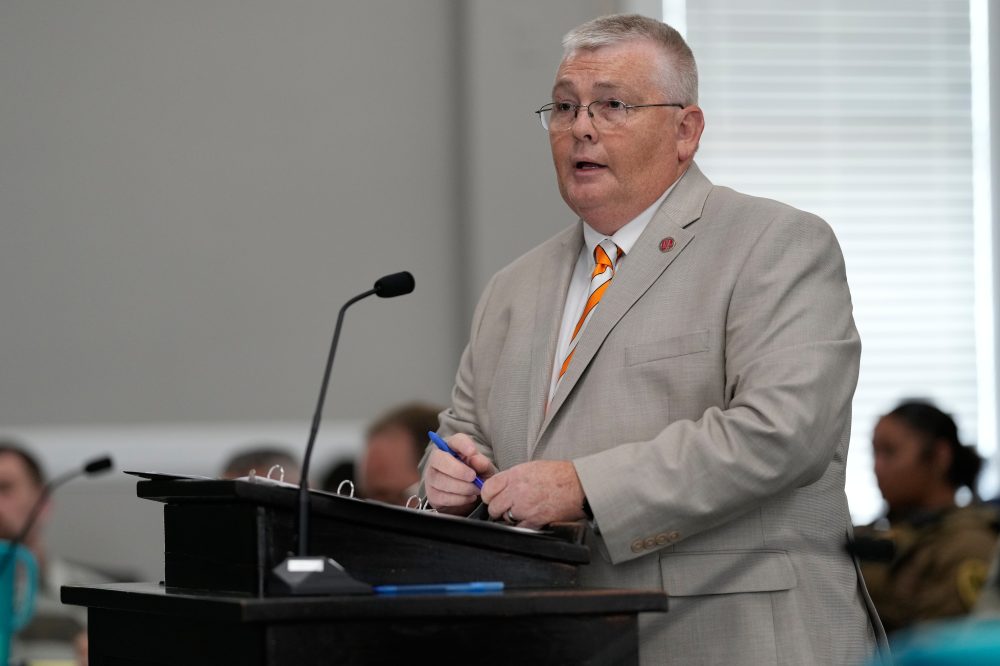
“These folks want the same types of opportunities, services, experiences, as folks that maybe are more familiar with things like ultra-fast delivery that have been available in places like Manhattan,” David Guggina, now the CEO of Walmart U.S, told The Associated Press last fall.
Here’s an examination of why and how these retailers are developing rural American customers:
The concluding phase of a package’s trip from distribution centers to customers’ residences has consistently created obstacles in rural regions. Delivery personnel must cover greater distances between deliveries and occasionally navigate narrow or dirt roads in sparsely settled areas, extending time that raises per-package labor and fuel expenses, according to experts.
Rural regions were also previously considered less financially prosperous and thus less attractive for retailers. However, during the last decade, rural counties have demonstrated consistent growth in productivity and earnings, according to consulting firm McKinsey.
The median household earnings in rural counties increased 43% from 2010 to 2022, achieving a record high of almost $60,000 annually, McKinsey reported. Following the pandemic, more exurban communities positioned up to 60 miles from major city centers have ranked among America’s fastest-growing areas, the U.S. Census Bureau documented.
The $1 trillion rural consumers spend yearly on electronics, apparel, home goods and other products represents 20% of all U.S. retail spending excluding automobiles and gasoline, Morgan Stanley found.
These two retailers aren’t the only businesses recognizing potential demand from former urban residents who became accustomed to receiving groceries, clothing and other items delivered quickly to their homes.
In what appears to be a defensive strategy against competitors in countryside and small towns where it established presence, Dollar General expanded its same-day delivery service in January to over 17,000 of the discount retailer’s 20,000 locations. More than 80% of Dollar General’s same-day orders arrived within an hour or less, CEO Todd Vasos informed investment analysts in March.
Rural lifestyle retailer Tractor Supply is expanding its direct delivery options to customers, especially for large items like fence panels and riding lawnmowers. The company announced plans in January to establish over 150 additional delivery hubs this year for 375 total, covering more than half its stores and serving over 15 million customers.
Both retail giants are expanding drone delivery usage to accelerate shipments from stores or fulfillment facilities. They’re also employing strategies that reflect their individual backgrounds while adopting elements from each other’s approaches.
Consistent with its traditional retail background, the big-box chain is outfitting its physical locations with robotic systems that select and package online orders from storage areas stocked with each location’s most popular delivery products.
The automated retrieval technology enabled a Supercenter in Bentonville, Arkansas, home to the company’s headquarters, to deliver groceries within a 30-mile radius, expanded from 10 miles just a few years earlier, Doug Sanders, the company’s senior director of e-commerce store fulfillment, reported late last year.
The retailer also attributes adopting a hexagonal mapping approach with making same-day deliveries accessible to 12 million additional households. This system replaced conventional service boundaries like ZIP codes, which can exclude small areas at the periphery, executives explained.
The transition also provides an expanded perspective of which nearby locations might stock items needed for customer orders. Rather than shoppers placing separate orders from multiple sites to obtain everything desired, drivers can now collect packages from several stores within their service territory.
The online retailer, which began as a digital bookstore and this year shuttered its Fresh supermarkets and Go convenience stores, is establishing local infrastructure to reduce distances between warehouses and rural areas.
The corporation is creating small delivery stations to serve clusters of nearby communities based on travel time, customer demand, and delivery effectiveness, the company stated. Packages assembled at massive fulfillment centers are transported to hubs for sorting before local gig workers and contractors collect them for delivery.
The objective is cutting in half the duration from order placement to arrival, from up to five days to under two days, according to Holly Sullivan, the company’s vice president of worldwide economic development.
For instance, a recently opened station in Roanoke, Virginia, delivers tens of thousands of packages daily that previously weren’t reaching customers nearly as quickly, station manager Patrick Hamilton noted. Delivery routes from the facility can reach customers roughly 90 minutes away by road, covering both the city and surrounding rural communities.
Dalton Klinger serves as operations manager of the Chamber of Commerce for St. George, Utah, a city with 100,000 residents located in the northeastern Mojave Desert. The city’s mountainous terrain creates delivery challenges, but a local station has accelerated service.
Klinger, who has resided in St. George since 2021, said his orders of essentials like canned tuna and tomato sauce jars that previously required four days now arrive in two.
“People are wanting faster deliveries,” he said. “It’s all about instant gratification.”