
Skywatchers across the Delmarva region have a great opportunity tonight as the annual Lyrids meteor shower reaches its peak. This reliable springtime meteor shower, active each year in mid to late April, is expected to produce a steady display of shooting stars under the right viewing conditions.
The Lyrids originate from debris left behind by Comet C/1861 G1 (Thatcher), a long-period comet that orbits the Sun roughly every 415 years. As Earth passes through this stream of dust and debris, tiny particles burn up in the atmosphere, creating the bright streaks we see as meteors. Under ideal dark-sky conditions, viewers can typically expect around 10 to 20 meteors per hour, though occasional surges have been known to produce higher rates.
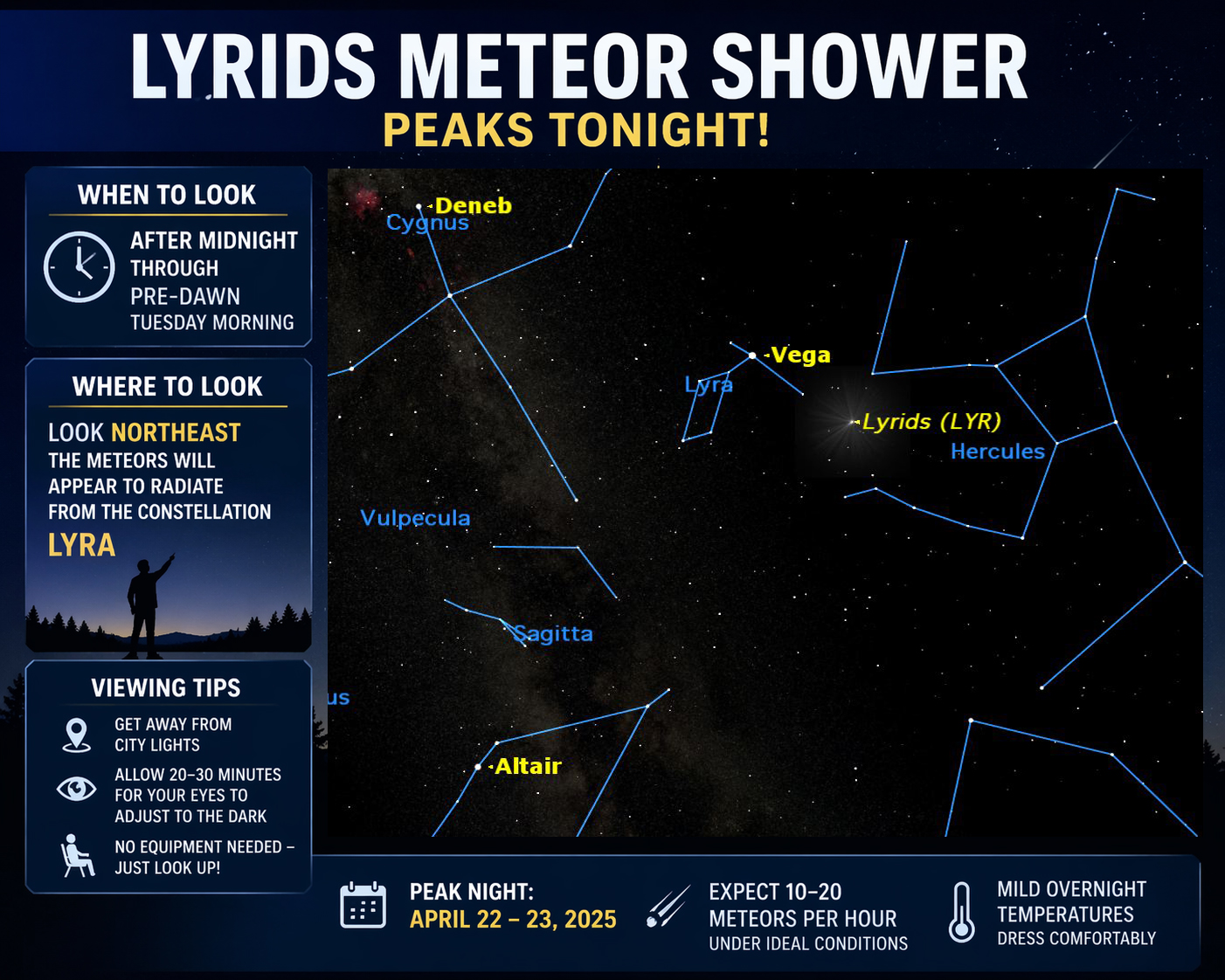
For Delmarva observers, the best viewing window begins after midnight and continues through the pre-dawn hours Tuesday morning. The meteors will appear to radiate from the constellation Lyra, which rises in the northeastern sky during the late evening. However, you do not need to look directly at Lyra. In fact, some of the longest and brightest meteors will appear farther away from the radiant.
Viewing conditions will play a key role. To maximize visibility, head away from city lights and allow your eyes about 20 to 30 minutes to fully adjust to the darkness. No special equipment is needed. Just look up and scan the sky. While the Lyrids are not the most intense meteor shower of the year, they are known for producing occasional bright fireballs, which can make the show worthwhile.
With relatively mild overnight temperatures and a quieter weather pattern in place, conditions across much of Delmarva should be favorable for at least some viewing. If clouds cooperate, tonight offers a solid chance to catch one of the oldest recorded meteor showers, with observations dating back more than 2,700 years.
If you miss the peak tonight, the Lyrids will remain active for a few more nights, though activity will gradually decrease.