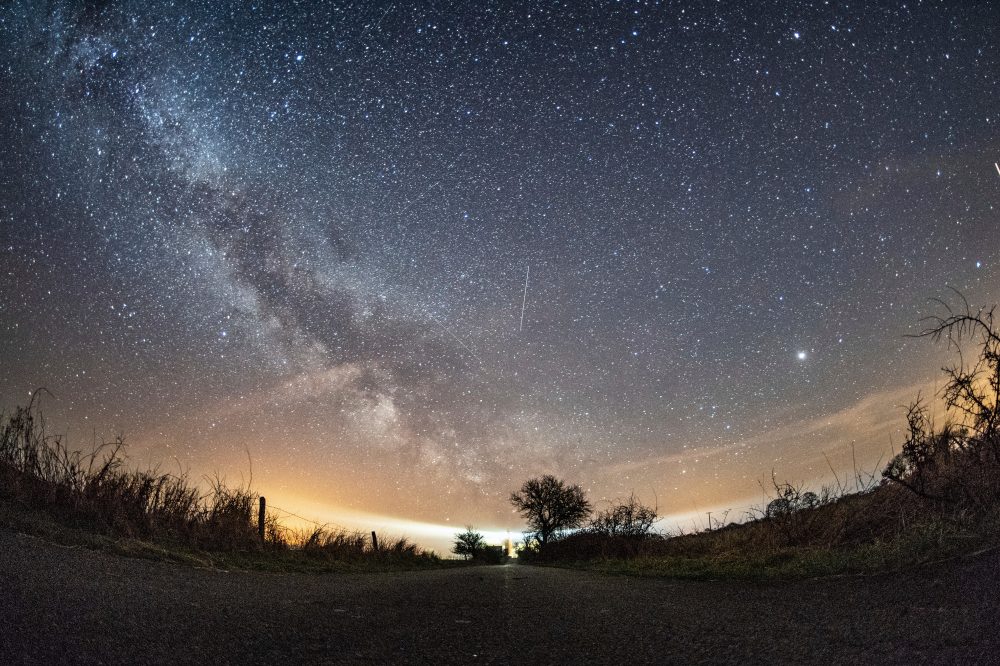

Stargazers are in for a treat as the annual Lyrid meteor shower reaches its peak Tuesday night into Wednesday morning, with optimal viewing conditions thanks to a faint crescent moon. According to NASA, observers may witness between 10 and 20 meteors streaking across the sky each hour during the celestial event’s climax.
The astronomical display will be observable worldwide, though Northern Hemisphere locations will offer the best vantage points. The timing couldn’t be better, as the crescent moon will disappear below the horizon before the meteor activity intensifies, eliminating light interference.
These cosmic light shows occur when our planet passes through debris fields left by traveling space objects. As these particles enter Earth’s atmosphere, they heat up and create the brilliant streaks we call shooting stars or meteors.
Despite their name suggesting otherwise, most meteor displays originate from comet remnants rather than asteroids. The Lyrid shower consists of particles from comet Thatcher, an icy celestial body with a lengthy orbital period.
“We only get to see the actual comet once every 415 years. But we pass through the grains that have been left in its wake every year around the same time,” explained Maria Valdes, a meteorite researcher at the School of the Art Institute of Chicago.
While a few random meteors can be spotted on any clear night, certain times of year produce concentrated displays that create more spectacular viewing opportunities. The Lyrid shower holds historical significance as one of the earliest documented meteor events, with recorded observations spanning more than 2,500 years.
For optimal viewing, head outdoors after midnight and find a location away from urban lighting and tall structures. Allow your vision to adapt to darkness for 15 to 30 minutes, and avoid checking your phone to maintain night vision.
Set up comfortable seating or bring a sleeping bag, then watch patiently as the meteors emerge. The shooting stars will appear to radiate from the Lyra constellation in the northeastern portion of the sky.
“A meteor looks like a trail of light in the sky. What you tend to detect is the motion against the background,” noted astronomer Lisa Will from San Diego City College.
The next significant meteor shower approaches in early May with the Eta Aquarids, created by debris from the famous Halley’s comet.