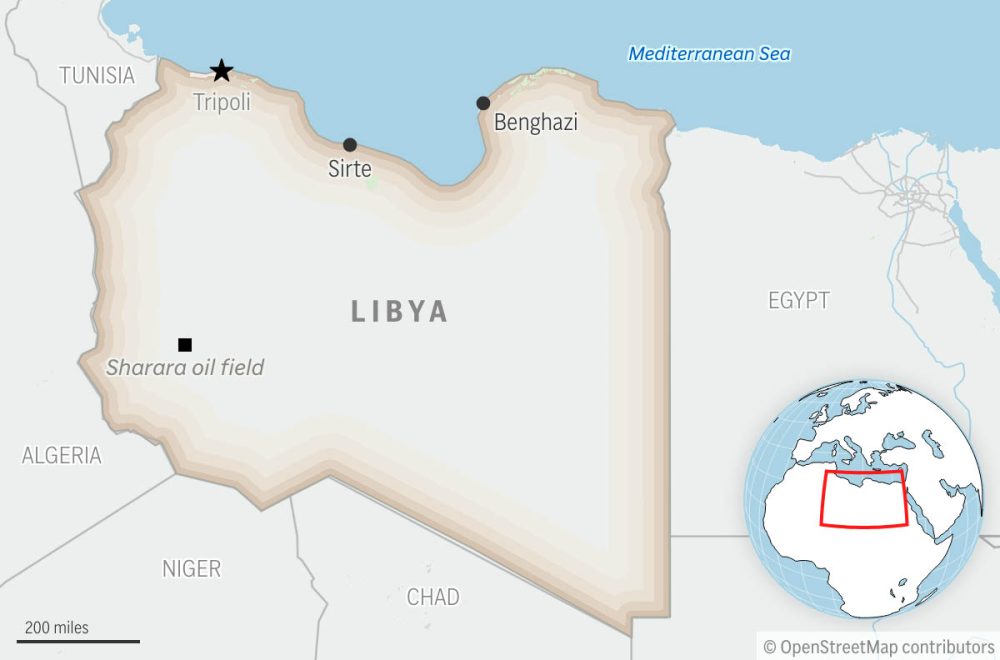

Authorities governing the eastern portion of divided Libya have officially closed their borders to citizens of four neighboring African nations, in what appears to be an effort to reduce the flow of migrants using the country as a stepping stone to reach Europe.
Libya’s northern coastline has long served as one of the primary departure points for migrants from across Africa hoping to reach European shores. Smugglers routinely load these individuals onto overcrowded and dangerous vessels, and thousands have lost their lives making the treacherous journey across the Mediterranean.
The ban, which was announced late Tuesday, formally states that nationals from Sudan, Eritrea, Ethiopia, and Somalia are “prohibited from entering Libyan territory through all land, sea, and air ports.” The government noted that exceptions would apply to diplomats as well as workers in the health and education fields.
In a separate but related development, hostility toward refugee resettlement has been growing in both eastern and western Libya over recent months. Large-scale crackdowns have resulted in thousands of refugees being arrested, according to Amnesty International.
The United Nations reports that more than 900,000 migrants and refugees are currently living in Libya, with Sudanese nationals making up the largest group. While many of these individuals are attempting to reach Europe, boats are frequently intercepted and returned to Libya, where migrants are often placed in government-run detention facilities. Those facilities have been documented as sites of serious abuses — including forced labor, beatings, sexual violence, and torture — conduct that U.N.-commissioned investigators have characterized as crimes against humanity.
Libya has been in a state of instability since the NATO-supported overthrow of longtime ruler Moammar Gadhafi in 2011. The nation currently operates under two separate governments — one in the west and one in the east — with no unified authority in place.