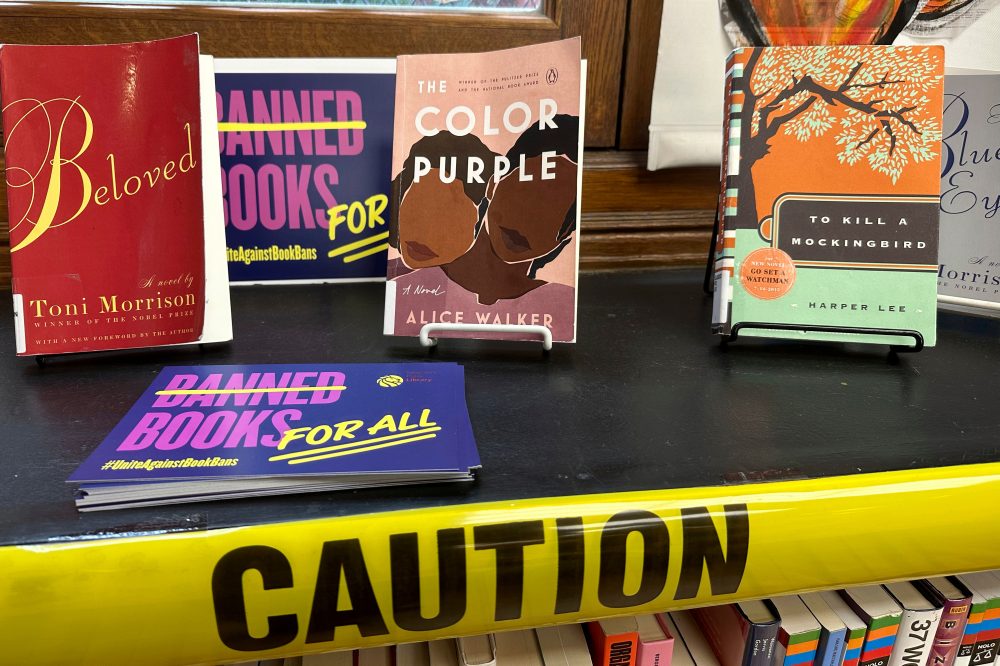

NEW YORK — Efforts to remove books from public libraries across the nation have reached unprecedented levels, with organized political movements driving most challenges rather than concerned local parents, according to new data from the American Library Association.
The library association released its yearly compilation of most frequently challenged books on Monday as part of its comprehensive report on America’s libraries. Patricia McCormick’s 2006 work “Sold,” which tells the story of human trafficking for sexual exploitation in India, claimed the number one spot for 2025. The list also features Stephen Chbosky’s coming-of-age story “The Perks of Being a Wallflower,” Maia Kobabe’s illustrated personal account “Gender Queer,” and Sarah J. Maas’ fantasy romance “Empire of Storms.”
This year’s compilation expanded beyond the typical ten titles to include eleven books, with four works sharing the eighth position: Anthony Burgess’ futuristic tale “A Clockwork Orange,” Ellen Hopkins’ family story “Identical,” John Green’s prep school novel “Looking for Alaska,” and Jennifer L. Armentrout’s supernatural romance “Storm and Fury.”
Complaints against these works center on LGBTQ+ content (“Gender Queer,” “The Perks of Being a Wallflower”), depictions of sexual assault (“Sold” and “A Clockwork Orange”), and substance use portrayals (“Looking for Alaska”). The association’s intellectual freedom office documented objections to 4,235 distinct titles, falling just short of the 4,240 recorded in 2023, which represents the highest figure since tracking began over three decades ago.
According to the association’s definition, a challenge constitutes “an attempt to have a library resource removed, or access to it restricted, based on the objections of a person or group.” The announcement coincides with National Library Week, continuing through April 25.
“Libraries exist to make space for every story and every lived experience,” stated ALA President Sam Helmick. “As we celebrate National Library Week, we reaffirm that libraries are places for knowledge, for access, and for all.”
The organization gathers its data through news coverage and direct reports from libraries. Officials acknowledge the true scope likely exceeds these figures since many incidents go unreported.
Historically, objections to library materials originated from individual parents or community members. However, recent years have witnessed a dramatic transformation toward coordinated efforts by government authorities and conservative advocacy groups like Moms for Liberty, who promote “parental choice” in determining what educational institutions and libraries should offer.
States including Florida, Texas, and Utah have enacted legislation restricting books or called for widespread removals. Earlier this month, an Iowa appeals court upheld state law preventing teachers from discussing LGBTQ+ subjects with elementary students through sixth grade while prohibiting certain books.
More than 90% of last year’s challenges originated from activist organizations and government officials, the ALA reports, up from 72% in 2024.
“In 2025, book bans were not sparked by concerned parents, and they were not the result of local grassroots efforts,” explained Sarah Lamdan, who heads the ALA’s Office for Intellectual Freedom. “They were part of a well-funded, politically-driven campaign.”
Lamdan explained to The Associated Press that advocacy groups distribute target lists of books across the country. Supporting findings from PEN America’s previous research documenting multiple bans of titles like “Sold” and “A Clockwork Orange,” the ALA discovered that actual book removals — exceeding 5,600 — far surpassed the number of formal challenges.
“I think this reflects the reality that these lists are getting disseminated widely,” Lamdan noted. “You can see video footage from various library board meetings where the same books are singled out over and over again.”
The complete ranking includes:
1. “Sold” by Patricia McCormick
2. “The Perks of Being a Wallflower” by Stephen Chbosky
3. “Gender Queer: A Memoir” by Maia Kobabe
4. “Empire of Storms” by Sarah J. Maas
5. (tie) “Last Night at the Telegraph Club” by Malinda Lo
5. (tie) “Tricks” by Ellen Hopkins
7. “A Court of Thorns and Roses” by Sarah J. Maas
8. (tie) “A Clockwork Orange” by Anthony Burgess
8. (tie) “Identical” by Ellen Hopkins
8. (tie) “Looking for Alaska” by John Green
8. (tie) “Storm and Fury” by Jennifer L. Armentrout