
Major U.S. restaurant chains don’t frequently find themselves at the center of foodborne illness outbreaks, but when contamination does occur, the consequences can be widespread — affecting hundreds of customers and sometimes reshaping the way food safety is regulated across the country.
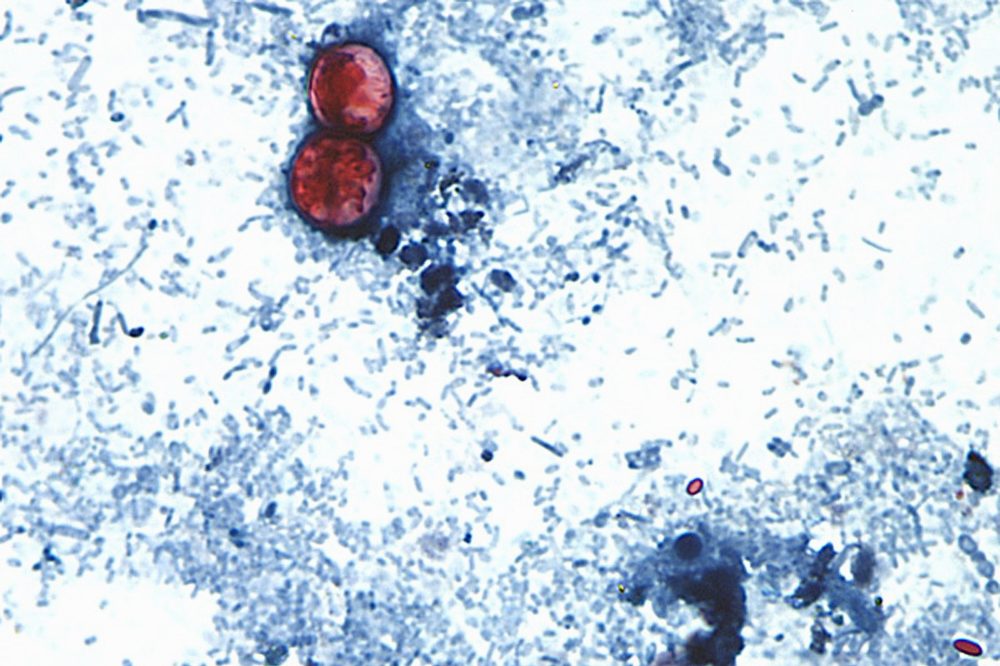
Federal health officials have now linked iceberg lettuce sourced from Mexico and served at Taco Bell locations across five states to a wave of infections caused by cyclospora, a parasite known to cause diarrhea. An investigation by the U.S. Food and Drug Administration traced the contaminated lettuce back to a single supplier.
Taco Bell released a statement Thursday announcing that “the affected ingredient from our supplier is being indefinitely removed from our supply chain nationwide and will be replaced within 24 hours in select states,” calling the action a precautionary measure.
A federal official who was briefed on the investigation but not authorized to speak publicly identified the supplier as Taylor Farms, a Salinas, California-based company that grows and packages fresh vegetables for commercial buyers, meal kit services, and grocery store shelves. Federal health officials cautioned that additional “brands, restaurants, retailers, or distribution channels” may be implicated as the investigation moves forward.
Below is a look at some notable foodborne illness outbreaks that have hit restaurant chains in recent years — and in some cases, changed the way the U.S. regulates food safety.
In 2024, raw onions on McDonald’s Quarter Pounder burgers were connected to an E. coli outbreak that left at least 104 people sick across 14 states. The FDA reported that 34 of those individuals required hospitalization, and one person in Colorado died. McDonald’s identified Taylor Farms as the source of the onions and pulled the Quarter Pounder from menus in the affected states. Several other national chains also stopped using fresh onions at some of their locations during that period.
In August 2022, Wendy’s removed lettuce from sandwiches at its restaurants in Michigan, Ohio, and Pennsylvania after customers reported becoming ill. The Centers for Disease Control and Prevention said it was working to determine whether romaine lettuce was behind an E. coli outbreak that had sickened at least 37 people, and whether romaine served at Wendy’s locations was also being used elsewhere. One additional case was reported in Indiana.
Chipotle faced one of the most damaging stretches in its history beginning in 2015, when an E. coli outbreak sickened more than 50 people and forced the temporary closure of dozens of West Coast locations. Just a month later, 30 Boston College students — including at least eight players from the men’s basketball team — reported gastrointestinal symptoms after eating at a Chipotle restaurant. Federal officials declared that outbreak over in February 2016, but the chain closed all of its locations simultaneously to retrain staff. By the end of that year, Chipotle Co-CEO Montgomery Moran had stepped down as sales dropped sharply.
In 2020, Chipotle Mexican Grille agreed to pay a record $25 million fine to settle criminal charges stemming from serving contaminated food that made more than 1,100 people ill between 2015 and 2018. The company acknowledged that inadequate food safety practices — including failing to store food at temperatures that prevent bacterial growth — led to illnesses at locations in Los Angeles, nearby Simi Valley, Boston, Sterling, Virginia, and Powell, Ohio.
In December 2006, Taco Bell pulled green onions from all 5,800 of its restaurants nationwide after samples collected by investigators appeared to contain a dangerous strain of E. coli. According to the CDC, the outbreak sickened at least 71 people in New Jersey, New York, Pennsylvania, and Delaware, with most requiring hospitalization. Eight victims developed hemolytic-uremic syndrome, a serious form of kidney failure. Investigators ultimately determined that contaminated lettuce — used in many of the chain’s dishes — was the most likely culprit. Taco Bell responded quickly with a newspaper advertising campaign and had its president appear in a series of media interviews to reassure the public about food safety.
One of the most consequential outbreaks in U.S. food safety history occurred between 1992 and 1993, when undercooked hamburgers at Jack in the Box restaurants contaminated with E. coli were blamed for four deaths and more than 700 illnesses across Washington, Idaho, California, and Nevada. The federal investigation that followed identified five slaughter facilities in the U.S. and one in Canada as likely sources of the contaminated meat, and traced the animals to farms and auctions in six western states. No single plant or farm was pinpointed as the origin.
In the aftermath, the U.S. Department of Agriculture required the food industry to adopt a Hazard Analysis and Critical Control Point system — a framework designed to identify and reduce risks throughout the food production process and enable faster responses to contamination. Jack in the Box lost more than $44 million in 1993 and did not return to annual profitability for three years.