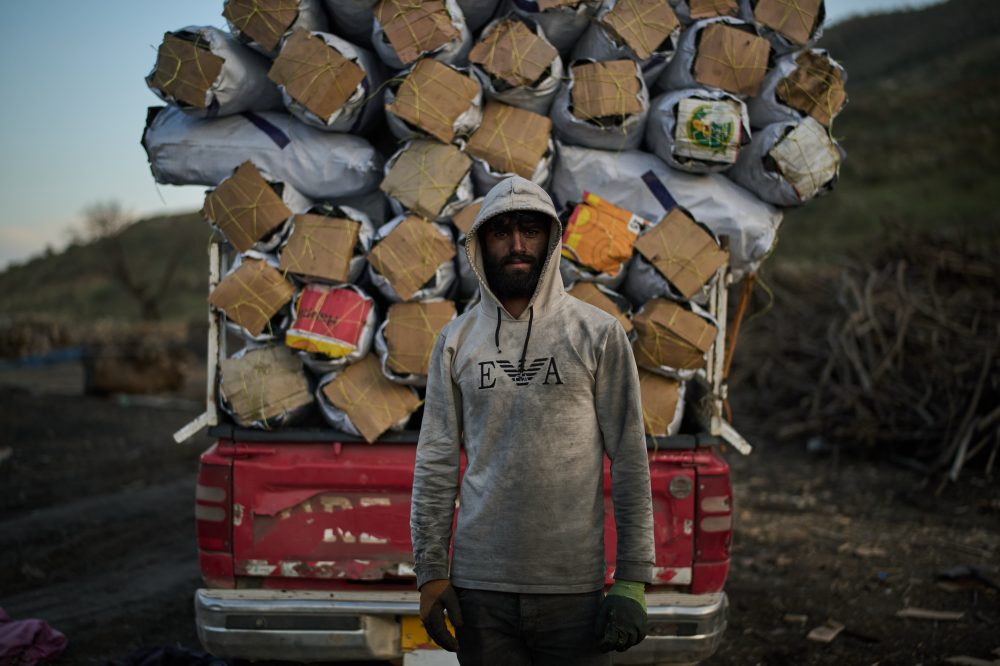

SARKAND, Iraq — While conflict continues in neighboring Iran, daily routines persist in Iraq’s Kurdistan region. Workers in the remote mountain village of Sarkand maintain their traditional charcoal-making operations along a winding river that flows through small rural settlements.
The laborers arrange hardwood logs and enclose them within earthen chambers where the material slowly transforms into charcoal through controlled burning. Workers use shovels to tend the dark earth surrounding these chambers while smoke rises through small openings.
When taking breaks from their labor, several workers pause for prayer while observing Ramadan fasting traditions. One man can be seen kneeling in prayer on a stone in the river, while another prays next to a truck filled with charcoal bags after performing ritual washing of his feet, face and hands.
One worker, Zana, a 22-year-old student from Koya University, grins and requests to be photographed. Educational institutions throughout the Kurdistan region have remained shuttered since fighting began between the United States, Israel and Iran.
“I’m afraid of the rockets and drones, but I need to work,” he says. “From Brazil to anywhere in the world, whether in the U.S. or here, war is not good for anyone.”