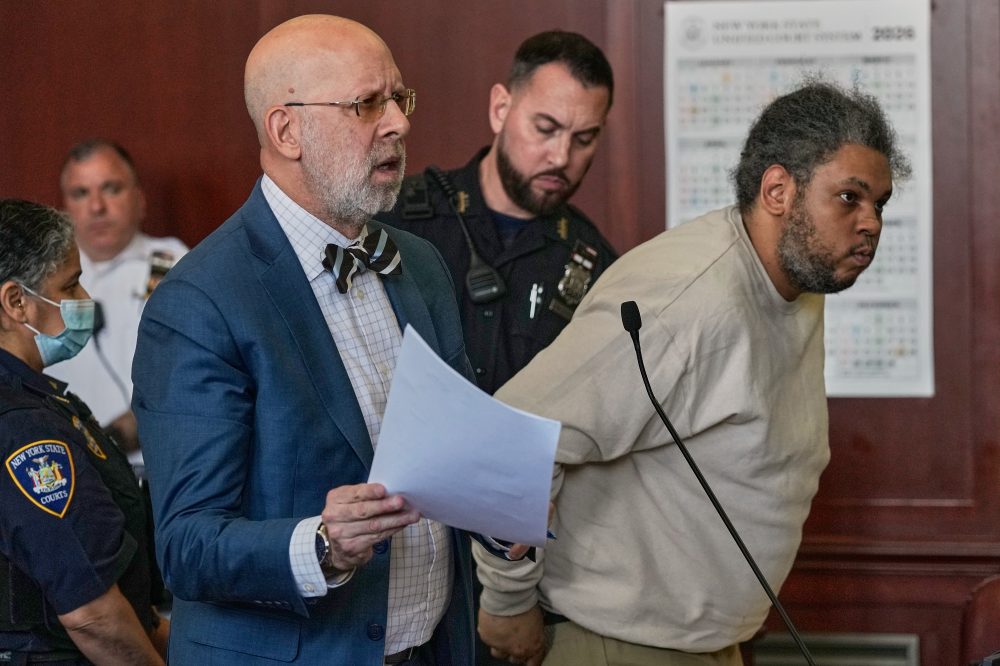

A Manhattan courtroom was notably empty Thursday when Randy Santos received his sentence for the brutal murders of four homeless men he attacked with a metal pipe while they slept on city streets.
No family members or friends were present to share memories of Florencio Moran, Nazario Vásquez Villegas, Anthony Manson, or Chuen Kok, whose lives were cut short during Santos’ violent spree through Manhattan’s Chinatown area nearly seven years ago. Nobody was there to confront Santos directly about his mental illness-driven attacks or witness his apology.
Nobody watched as he received a sentence of 40 years to life behind bars.
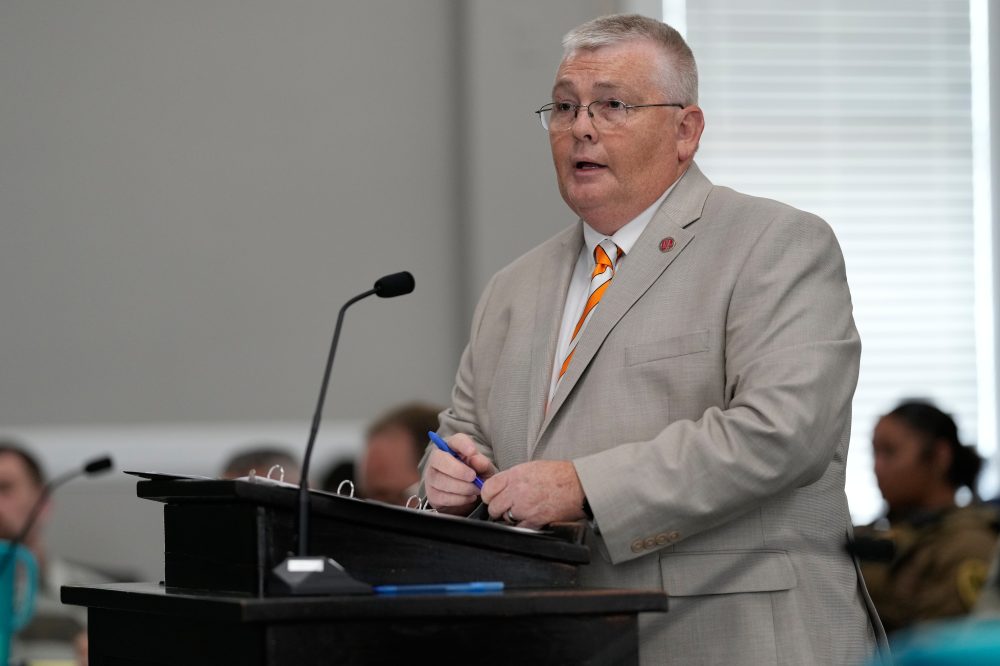
“There are no victim impact statements here today. There’s nobody here to tell this court about their lives and how their absence is a loss,” Manhattan Assistant District Attorney Alfred Peterson told Judge Laura A. Ward.
“But I’m certain this court and this city understands the value of every life, and the gift of life that we’re afforded to live and make choices and have free will,” Peterson said, haltingly and emotionally at times. “That gift was taken away by Randy Santos.”
Santos, who was found guilty in February of first-degree murder, sat quietly with his court-appointed attorneys, using headphones to hear a Spanish interpreter translate the proceedings. A Chinatown activist who had organized Kok’s funeral observed from the gallery, sitting near Santos’ family members.
Speaking to the court in English, the 31-year-old defendant asked for a shorter sentence that would give him the chance to “be somebody” once released from prison.
Santos explained to the judge that his mental state — which defense attorneys said had convinced him he needed to murder 40 people or face death himself — “is much better now” thanks to daily medication. He vowed to spend his incarceration completing his education, improving his English skills, and learning job skills.
“I just want to say, I’m very sorry for what I did,” Santos said. “I apologize to the people for what I did. I feel very bad about what I did. I wish it never happened.”
Ward characterized Santos’ situation as representing the “coming together of three horrible symptoms of this city: homelessness, mental illness and narcotics abuse.” She noted these factors “are the constant in all our violent crime cases.”
Peterson described the case as “a study in how the life of a young man can go off track so horribly,” adding that Santos “clearly has his own challenges in life, much like the victims.”
During the trial, Santos’ defense team contended that his schizophrenia diagnosis, which came months prior to the killings, had filled his mind with irrational beliefs and made him violent. They unsuccessfully attempted to persuade jurors that he bore no criminal responsibility for the murders and should receive psychiatric treatment rather than imprisonment.
Since his arrest, Santos has moved between jail and psychiatric facilities multiple times.
“We ask that Mr. Santos not be sentenced to die in prison,” defense lawyer Arnold Levine told Ward, requesting a 20-year to life sentence. “He is not incorrigible or beyond redemption or hope.”
Ward expressed sympathy for Santos but said she struggled with the “difficult time getting past the fact that Mr. Santos targeted the most vulnerable people in our society. People who were doing nothing but sleeping on the street, homeless.”
The prosecution had sought a 50-year to life sentence. Beyond the murder convictions, Santos was also found guilty of attempted murder for attacks that seriously wounded two additional men.
Prior to announcing the sentence, Ward reviewed surveillance footage of the assaults. The video evidence included scenes of Santos repeatedly raising a 4-foot (1.2 meter) metal bar above his head before striking one victim’s head.
Witnesses included a couple on a date who observed Santos attacking another man with the same weapon, which he had picked up from the street, according to prosecutors. The only person to survive the 30-minute attack spree, 49-year-old David Hernandez, who was critically wounded, managed to reach a nearby street where officers were attempting to save another Santos victim.
Officers apprehended Santos while he was still carrying the blood-covered bar. Laboratory analysis revealed his DNA on one end and victims’ blood on the other, prosecutors stated. The victims’ ages spanned from 39 to 83 years old.
Following Santos’ removal from the courtroom in handcuffs, Chinatown activist Karlin Chan expressed that the sentencing provides the community with closure.
“He knew what he was doing,” Chan said, rejecting Santos’ apology as insincere. “At the end of the day here, he’s going to a place where he deserves to be: jail.”