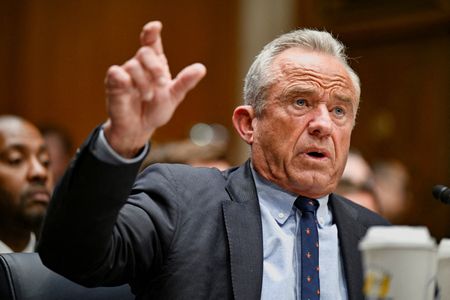

Health Secretary Robert F. Kennedy Jr. is shifting his strategy toward achieving rapid health policy victories that could benefit Republican candidates in the upcoming November midterm elections, according to senior administration officials who spoke with Reuters. This strategic pivot comes after White House officials urged him to step back from his controversial efforts to overhaul the nation’s vaccine policies.
Recent initiatives rolled out over the past several weeks have been crafted to resonate with Trump’s political base, including an executive directive that strengthens psychedelic research and the approval of innovative gene therapy for children suffering from a specific form of hearing loss. Administration sources indicate they are actively seeking additional opportunities for similar wins.
President Trump is eager to highlight prescription drug cost reductions achieved through his appointees’ negotiations, while Kennedy and his staff are developing a series of food policy measures and investigating the possibility of fast-tracking approval for other childhood disease treatments, according to three individuals with knowledge of the plans. Officials noted that it remains uncertain which of these potential actions under consideration will ultimately be implemented.
Much of the information regarding efforts to synchronize Kennedy’s approach with White House midterm priorities is being disclosed for the first time, drawing from conversations with over a dozen current and former senior administration officials and external advisors. These adjustments follow months of tension between the two groups over staffing decisions and policy directions.
The political implications are significant for Trump’s Republican party, which polling suggests could lose control of both congressional chambers. Kennedy’s previous actions, including his decision to eliminate vaccines from the recommended childhood immunization schedule in the United States, represent policies that might damage the party’s electoral prospects. Consequently, White House officials have demanded that he avoid taking further anti-vaccine measures this year before the election, four senior administration officials confirmed.
Simultaneously, the White House recognizes Kennedy’s celebrity appeal and his ability to attract Americans who might not typically support Republican candidates as a valuable political asset, three senior officials indicated. The health secretary is scheduled to participate in campaign activities in competitive congressional districts throughout the coming months.
Kennedy demonstrates “a good grasp” of the electoral dynamics, according to one senior administration official. The health secretary can identify numerous policy options “that don’t cause consternation” between his department and the White House.
Republican pollster Whit Ayres cautioned that it remains uncertain whether voters will overlook their opinions of Kennedy after his years of promoting skepticism about vaccine safety and effectiveness, which contradicts established scientific evidence.
“The vast majority of Americans view effective vaccines as one of the great miracles of modern medicine. An anti-vaccine message is political poison,” Ayres stated.
Kennedy “is trying to be a team player, but he is so widely associated with an anti-vaccine message that I don’t know that he can effectively pivot away from that,” he added.
When asked for comment by Reuters, Health and Human Services Department spokesman Andrew Nixon stated that Kennedy “remains focused on the priorities Americans consistently say matter most to them, including chronic disease prevention, food quality, and affordable health care.”
White House spokesman Kush Desai characterized Kennedy as “an invaluable asset for President Trump since Day One.” Neither official provided commentary on vaccine policies or midterm election strategy.
Kennedy occupies a distinctive position within Trump’s circle. He stands as the sole cabinet secretary whose agenda differs from, and occasionally conflicts with, the president’s “Make America Great Again” (MAGA) movement, according to Republican strategists and administration officials.
Multiple administration officials characterized this tension as a “red hat-green hat” division. A “red hat” staff member — referring to Trump’s signature red Make America Great Again caps — demonstrates loyalty to the president’s political priorities. A “green hat” staff member indicates devotion and often admiration for Kennedy, whose “Make America Healthy Again” presidential campaign motto appeared on forest green caps.
When Kennedy withdrew from the 2024 presidential race to endorse Trump, his political supporters — a combination of vaccine skeptics and critics of pesticides and processed foods — were seen by some Trump allies as beneficial to the president’s reelection campaign. The health secretary was granted considerable freedom to implement his policies during the new administration’s first year.
The MAHA “green hats” celebrated when Kennedy replaced a federal immunization advisory board with new members who shared his vaccine perspectives. His appointees restricted COVID vaccine eligibility, eliminated universal hepatitis B shot recommendations, and advanced the scientifically unsupported theory that Tylenol use by pregnant women might contribute to autism in their children.
However, the White House eventually became worried about potential political ramifications, current and former officials revealed.
In December, fresh polling data released by Tony Fabrizio, a pollster working with Trump, demonstrated strong bipartisan backing for routine childhood vaccines, even among some MAHA voters who consider Kennedy their leader.
A Republican or Democratic candidate opposing current childhood vaccine recommendations would “pay a price in the election,” Fabrizio wrote in a published analysis, concluding that “vaccine skepticism is bad politics.”
During that period, Kennedy and his senior staff were planning to eliminate additional vaccines from the recommended U.S. schedule, according to three people familiar with the conversations. Kennedy argued to the White House for proceeding, claiming he needed to maintain MAHA supporter loyalty, four senior administration officials reported.
Trump advisors, concerned about Fabrizio’s research, informed Kennedy this would be his final major vaccine initiative before the November midterms, the four officials said. On January 5, the federal government eliminated recommendations for childhood immunizations against flu, rotavirus, meningococcal disease, and hepatitis A, stating families should make these decisions with their physicians.
Public criticism was immediate, including from major medical organizations that had already filed lawsuits to stop Kennedy. The White House compared this criticism to the largely positive reception of Kennedy’s nutrition initiatives, such as new dietary guidelines promoting whole foods and protein over sugar and heavily processed products, a senior administration official noted.
The response in both the White House and health secretary’s office to the new food guidelines was “‘You know what? this is pretty cool,” the official said. “They thought, ‘Enough already with the negativity, let’s move forward with (food policy). This is where the year begins.’”
Since January, the White House has assumed a larger role in filling key health department positions to ensure Trump’s priorities are implemented and to prevent negative media coverage of controversial appointments and policies. Last week, Trump nominated a new surgeon general who has endorsed vaccines after it became apparent that Kennedy ally Casey Means, a wellness influencer and non-practicing physician, would not receive Senate confirmation.
The process has not been entirely smooth. Senior White House advisors attempted to remove Kennedy’s chief of staff and longtime advisor, Stefanie Spear, and relocate her elsewhere in the administration, creating conflict between the teams. In a White House confrontation — which Trump did not attend — Kennedy refused, according to three people familiar with the incident.
Spear continues as a top advisor to the secretary, but her influence has been reduced, two senior administration officials said. Trump officials promoted Chris Klomp, former head of the U.S. Medicare program, in February to help enforce the president’s priorities at the agency as Kennedy’s deputy. This change, requested by Trump officials to bring organization to the health department, has improved the working relationship with the White House, four officials confirmed. Spear and Klomp did not respond to comment requests.
Klomp has been instrumental in advancing more traditional health appointees, such as Erica Schwartz, the former deputy surgeon general selected to lead the Centers for Disease Control and Prevention, three officials said.
Several close advisors to Kennedy helped persuade him that Schwartz would not undermine his previous vaccine work, and White House advisors clearly indicated their support for her nomination, one official said.
Kennedy and his team have also sought greater coordination with the White House in recent weeks as they finalize new announcements unrelated to vaccines, four senior officials said, while cautioning it was premature to determine whether fundamental differences between MAHA and MAGA will generate new tensions in the future.