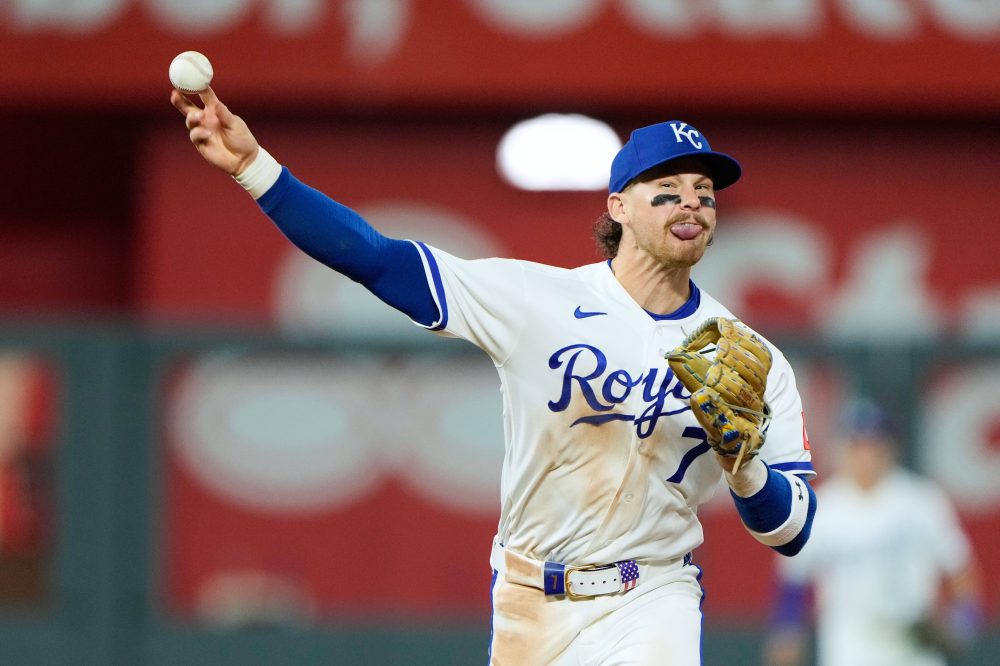

KANSAS CITY, Mo. — The Kansas City Royals announced Wednesday they will abandon their current home at Kauffman Stadium in favor of a brand-new downtown ballpark, teaming up with Hallmark Cards for an ambitious $3 billion development project.
Team owner John Sherman joined Hallmark chairman Don Hall Jr., Missouri Governor Mike Kehoe, and Kansas City Mayor Quinton Lucas at Hallmark’s headquarters to unveil the massive undertaking that will transform the Crown Center district.
Though the complete master plan remains in development, Sherman revealed the $1.9 billion stadium will begin construction next year at the heart of Crown Center, serving as the focal point of an 85-acre development’s initial phase. Private investors will provide two-thirds of the financing, with the remaining third coming from public partners, including state funds designated for stadium construction.
“This is a partnership between two treasured Kansas City institutions,” Sherman stated. “We are committed to creating a vision which honors our history, the rich past of both organizations, while reinvigorating and reimagining what our future can be together.”
The revelation followed Kansas City officials’ recent approval of an ordinance allowing City Manager Mario Vasquez to negotiate a $600 million agreement supporting the Royals’ downtown relocation. Many expected the venue would occupy Washington Square Park near Union Station, but the stadium will actually sit just south of that location, incorporating the park into the broader development.
Hallmark plans to construct new corporate headquarters within the area, which connects via streetcar to the Power & Light District anchored by T-Mobile Center. That downtown Kansas City skyline will create the scenic backdrop beyond the stadium’s outfield walls.
City leaders emphasized the area’s existing public parking availability and easy highway access for traffic management.
Missouri’s financial contribution stems from legislation passed last year authorizing bonds covering up to half the cost of new or renovated state stadiums, plus $50 million in tax credits per facility and additional local government assistance.
“We think it’s a great investment for our Missouri taxpayers, because this does not affect existing programs,” Kehoe explained. “The ripple effect from this facility will truly be far-reaching into rural Missouri and other parts of the state.”
The Royals have maintained they would vacate Kauffman Stadium when their Truman Sports Complex lease ends in 2031, with Sherman pursuing a downtown ballpark replacement since acquiring the team in 2019.
However, Wednesday’s announcement followed numerous obstacles and setbacks.
The most significant hurdle occurred in April 2024, when the Chiefs partnered with the Royals on a proposal to renovate Arrowhead Stadium while replacing Kauffman Stadium. The plan required extending a sales tax funding stadium maintenance, but Jackson County, Missouri voters decisively rejected the measure, forcing both franchises to pursue separate solutions.
Kansas lawmakers aggressively courted the Chiefs, approving $2.4 billion in bonds last December to fund 60% of a new $3 billion domed stadium in Kansas City, Kansas. The NFL team ultimately chose to relocate across state lines, also planning a new training facility in nearby Olathe, Kansas.
Kansas officials briefly showed interest in the Royals as well, though their pursuit of the MLB team remained halfhearted.
The Royals considered multiple locations in recent months, ultimately declining an Overland Park, Kansas option and missing a deadline for a site north of downtown across the Missouri River in Clay County, Missouri.
Economic experts have consistently determined that stadium subsidies don’t justify their community costs, as these facilities typically redirect economic activity from other local areas rather than growing the overall economy. Despite this, states and cities regularly fund stadium renovations or new construction — 49 of 60 venues used by MLB or NFL teams are publicly owned or built on public property.
Sherman has referenced Truist Park in Atlanta as a model for Kansas City’s potential.
That stadium represented a public-private partnership where the Cobb-Marietta Coliseum & Exhibit Hall Authority issued up to $397 million in bonds, the county generated additional millions through transportation taxes, and businesses contributed cash. The Braves funded the remaining costs for both the park and The Battery mixed-use development, totaling over $1.1 billion.
“There are many great ballpark neighborhoods in Major League Baseball,” Sherman noted, “but this is a bigger project with more land in downtown and in the heart of the city. We are bringing a modern, state-of-the-art ballpark experience to our fans, closer to our public transportation and where more people work and live.”