
KABUL, Afghanistan (AP) — A doorway that previously opened into a family living space now leads to empty air. The flooring has been removed, along with the walls and ceiling.
This was once the residence of Syed Murtaza Sadar in Afghanistan’s capital, situated above the barbershop and bathhouse that served as his family’s livelihood. These structures have also been almost entirely eliminated, reduced to debris and broken masonry. Sadar and his relatives were compelled to dismantle most of the structure by themselves.
“This was our house and now I am destroying it with my own hands,” the 25-year-old explained while taking a moment’s rest from tearing down a brick barrier. “It will be very difficult for us.”
Two months prior, city officials visited this neighborhood and informed property and business owners that their buildings would be seized to create space for a broader roadway, as part of initiatives to upgrade the Afghan capital’s severely congested transportation network.
Initially, no one took them seriously, Sadar explained. However, demolition teams subsequently appeared.
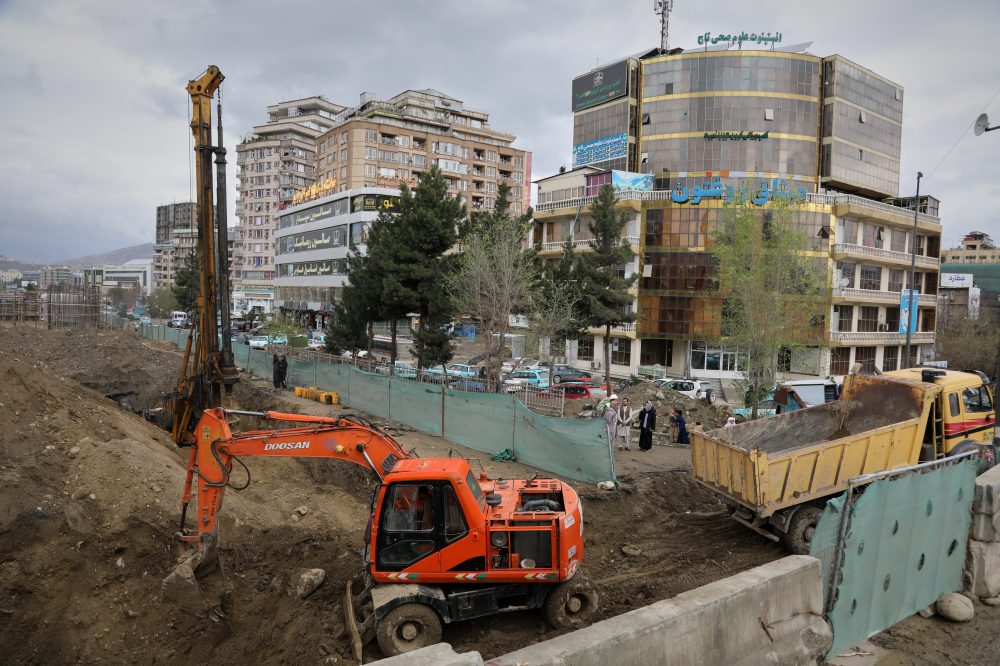
Residences, commercial establishments, and even burial grounds are being destroyed throughout Kabul to accommodate street construction. Expanded roadways, overpasses and underground passages are quickly replacing narrow and frequently pothole-riddled streets.
Much of the blueprint was developed years earlier, during Afghanistan’s period under a U.S.-supported administration. However, most construction never began, becoming entangled in bureaucratic delays, corruption, and security threats from the Taliban resistance.
Soon after the Taliban took control of Afghanistan in 2021, following the disorderly departure of U.S.-led forces, Kabul’s new city leadership began restarting these initiatives.
Over the past four and a half years, approximately 450 kilometers (280 miles) of streets have been constructed in the capital, according to Naimatullah Barakzai, Kabul municipality’s cultural affairs representative, during a recent press briefing. Throughout this period, 11,278 properties were seized.
An additional 233 projects are scheduled for this year, with more than 1.9 billion afghanis ($29 million) designated, according to Mohammad Qasim Afghan, the municipality’s planning director.
The street construction initiatives are funded completely through municipal resources, Barakzai stated, mentioning that over the previous 4½ years, Kabul municipality had generated more than 28 billion afghanis (approximately $434 million).
Property holders receive roughly three months’ warning and receive payment at rates determined by the municipality. In the previous year, more than 1.2 billion afghanis ($18.6 million) were distributed as compensation, Barakzai reported.
Opposition is not truly possible.
Sadar, the building owner, explained that demolition teams destroyed the front portions of structures on his street. Subsequently, officials informed owners they must complete the destruction themselves.
His enterprise provided employment for approximately 25 individuals, Sadar noted. It supported his extended family — five households total, each containing three or four children.
“If the government gives us money (in compensation) then God willing, I will be able to go back to work and I will be able to buy a house or build a house for myself,” he stated. Currently, they are residing in rental housing, depleting their savings.
Nevertheless, Sadar expressed satisfaction about the road expansion. The current street, with only one lane in each direction, becomes so packed with vehicles that traveling anywhere requires spending an hour in traffic, he observed.
At a different construction location in the city, project supervisor and engineer Obaidullah Elham reported that crews operate continuously, seven days weekly, to construct a Turkish-designed 1.5 billion afghani ($23 million) overpass and tunnel to replace the heavily congested Baraki intersection.
Five hundred employees, both trained and untrained, are working on the project, Elham stated, creating essential employment in a nation experiencing widespread poverty.
Construction on the 470-meter (1,540-foot) long tunnel started last July and is 80% finished, the project supervisor said, while an excavator worked the soil nearby. Building of the overpass commenced earlier this year. It will become only the second such structure in Kabul.
In Kabul’s Qala-e-Khater district, portions of a cemetery that has contained residents’ remains for approximately 200 years must also be cleared for a new street that will cut through the community.
Burial sites sit vacant, with large rectangular openings where the deceased have been removed. Their remains have been relocated to another section of the cemetery across the street.
Abdul Wadood Alokozay said his grandfather’s body was among those moved.
Alokozay’s extended family possessed three properties in the vicinity. One housed a girls’ madrassa, or religious school. The remaining two were family residences. All were seized and demolished completely. Only a faint outline in the muddy soil remains.
“At first our family (were) all sad for this, that we lost our house,” the 21-year-old said. Even more difficult was destroying it themselves, after residing there for over twenty years.
As payment, they received more than $13,000 for all three structures and have been promised additional compensation for the land. The family has constructed a new, three-story residence on other property they owned, overlooking the former location.
Blueprints for this roadway have existed for decades, stated 30-year-old community representative Shah Faisal Alokozay, Abdul Wadood’s cousin.
“It’s a very important road, connecting east and north Kabul,” he explained. “So it is very important for the community.”