
WASHINGTON — Federal prosecutors have delivered additional subpoenas as part of a Florida-based probe examining the government’s handling of Russian meddling in the 2016 presidential race, sources with knowledge of the investigation tell the Associated Press.
The initial round of subpoenas sent out in November sought documents connected to the creation of an intelligence community report that outlined Russia’s comprehensive campaign to assist Trump in defeating Hillary Clinton during the 2016 election.
While the earlier subpoenas focused on materials from around the January 2017 release of the intelligence report during the Obama administration’s final days, these newer legal demands are seeking any documentation from the years that followed, according to sources who requested anonymity when discussing the non-public investigative requests.
The Justice Department refused to provide comment on Tuesday.
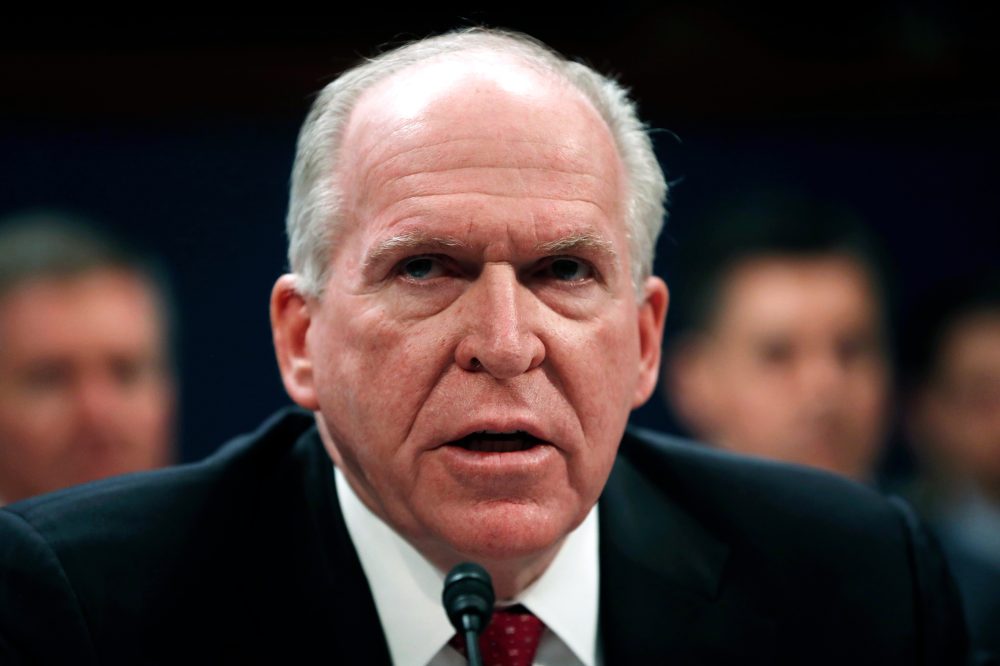
These subpoenas demonstrate ongoing investigative work in one of multiple criminal probes the Justice Department has launched targeting Trump’s political adversaries. Various former intelligence and law enforcement leaders have received subpoenas in this investigation. Legal representatives for former CIA Director John Brennan, who supervised the intelligence assessment’s creation and whom Trump has labeled “crooked as hell,” stated they’ve been notified he’s a target but haven’t been given any “legally justifiable basis for undertaking this investigation.”
The intelligence community report, released during the Obama administration’s closing days, determined that Russia had formed a “clear preference” for Trump in 2016 and that Vladimir Putin had directed an influence operation designed to weaken faith in American democratic processes and damage Clinton’s electoral prospects.
This finding, along with a separate probe into potential coordination between Trump’s 2016 campaign and Russia, have remained among the Republican president’s primary complaints, and he has promised payback against government officials who participated in these inquiries. The Trump administration’s Justice Department indicted former FBI Director James Comey last year on charges of making false statements and obstruction, though the case was subsequently dropped.
Several government investigations, including bipartisan congressional studies and former special counsel Robert Mueller’s criminal probe, have confirmed that Russia interfered to benefit Trump through hacking and releasing Democratic emails and conducting a hidden social media operation designed to create division and influence American voters. Mueller’s investigation concluded that Trump’s campaign eagerly accepted Russian assistance, but didn’t prove that Russian agents and Trump or his team conspired to manipulate the election outcome.
The Trump administration has recently reexamined the intelligence community assessment partly because a classified section included a summary of the “Steele dossier,” a collection of Democratic-funded opposition research compiled by former British intelligence officer Christopher Steele and subsequently provided to the FBI. This research into Trump’s possible Russian connections contained unverified claims and scandalous allegations, and Trump has consistently highlighted its flaws to undermine the entire Russia investigation.
A declassified CIA review commissioned by current Director John Ratcliffe and published last July criticizes Brennan’s supervision of the assessment.
The review doesn’t dispute the finding of Russian election meddling but criticizes Brennan for allowing the classified version to reference the Steele dossier.
Brennan told Congress, and also stated in his book, that he opposed including the dossier in the intelligence assessment because its content and sources hadn’t been verified, and he has maintained the dossier didn’t influence the assessment’s conclusions. He claims the FBI advocated for its inclusion.
The recent CIA review attempts to portray Brennan’s position differently, claiming he “showed a preference for narrative consistency over analytical soundness” and ignored dossier concerns because he felt it aligned “with existing theories.” It cites him, without providing context, as stating in writing that “my bottomline is that I believe that the information warrants inclusion in the report.”
In a December letter sent to the chief judge of the Southern District of Florida, where the investigation is headquartered, Brennan’s attorneys questioned the investigation’s foundation, asking what justification prosecutors had for launching the inquiry in Florida and noting they had received no explanation from prosecutors about what potential crimes were being examined.
“While it is mystifying how the prosecutors could possibly believe there is any legally justifiable basis for undertaking this investigation, they have done nothing to explain that mystery,” the lawyers said.