
PARIS — With high-end fashion losing its footing and spending pressured by ongoing conflict in the Middle East, investors in the luxury goods world are zeroing in on a single question: which companies have strong jewellery sales?
That answer, analysts say, could very well separate the winners from the losers in an industry worth roughly $400 billion.
The luxury sector had been expected to return to growth in 2026 following two straight years of decline, but the Middle East conflict continued to weigh on consumer spending through the first quarter — and industry analysts warn the impact will be even more pronounced in the three months ending in June.
High-end leather handbags, long a reliable source of profit for luxury houses, are no longer pulling their weight. Younger shoppers increasingly view them as overpriced and uninspiring. Jewellery, however, is telling a different story.
Although jewellery still makes up a relatively small portion of overall revenue for most luxury brands, the category “punches well above its weight” when it comes to consistent growth and healthier profit margins, according to Vontobel analysts earlier this year.
Carole Madjo, who leads European luxury research at Barclays, pointed to two factors fueling jewellery’s rise: shoppers growing frustrated with a lack of creativity in high-end fashion during a period of frequent designer turnover, and a rally in gold prices that has made jewellery more attractive as an investment.
“All these points combined together were making jewellery a bit more attractive compared to soft luxury,” Madjo said.
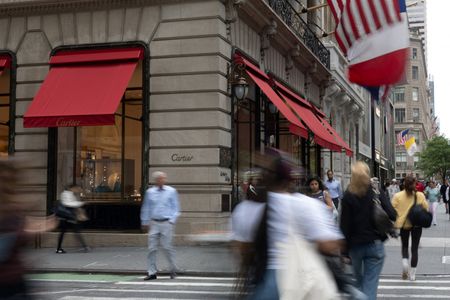
The numbers back that up. Richemont, which owns Cartier and Van Cleef & Arpels, reported jewellery sales surged 24% in the quarter ending June 30 — well beyond what analysts had projected.
LVMH, the parent company of Bulgari and Tiffany, is also expected to post stronger results in its hard luxury segment. Barclays analysts last month bumped up their growth forecast for LVMH’s Watches and Jewellery division from 7% to 8% for 2026 — well ahead of the 3% growth the division posted in 2025. That division, LVMH’s third largest, represented 13% of the company’s €81 billion in revenue last year.
LVMH is scheduled to report its second-quarter sales on Monday, followed by Kering — which owns Gucci — on Tuesday, and Hermes on Wednesday.
Smaller jewellery labels are also performing well, drawing renewed attention from fashion-focused luxury houses looking to diversify.
Kering, which owns Pomellato and Boucheron, reported in April that its newly formed jewellery division posted comparable sales growth of 22% in the first quarter, outperforming every other segment in the company.
Hermes’ jewellery business has grown at a compound annual rate of nearly 30% since 2019, according to Vontobel analysts — though it started from a very small base.
“Even at soft luxury players like Hermes, Prada, Gucci, everybody’s putting a bit more emphasis on jewellery because that’s where the growth is coming from right now. So you want to be exposed to that,” Madjo said.
The shift toward jewellery and away from handbags and shoes could create headaches for brands whose identity is closely tied to those products. Hermes, for example, has built much of its global prestige around its exclusive Birkin bag. The company’s stock dropped roughly 10% after it fell short of first-quarter growth expectations, raising doubts about whether its scarcity-based business model can hold up.
Claudia D’Arpizio, a senior partner at consulting firm Bain & Company, said the challenges facing bags and shoes are significant.
“Bags and shoes are facing meaningful headwinds, as both have experienced significant softening in consumer desirability, particularly among younger audiences,” she said. “These categories, especially bags, have historically been strong contributors to revenues and margin growth; however, post-COVID dynamics have created a more challenging environment. So players need to find a winning formula for these.”