
When cricket takes the field at the 2028 Olympic Games in Los Angeles, it will carry far greater significance than just a sport returning after more than a century away. Olympic leaders view cricket’s inclusion as a deliberate strategy to reach billions of new viewers — particularly in India, where cricket reigns as the dominant commercial and cultural force in sports.
The sport has been absent from the Olympics since 1900, but its return gives the International Olympic Committee something no recent addition to the Games has offered: a direct connection to a fan base exceeding 2 billion people and the enormous commercial weight of the Indian market. As the Olympics work to attract younger and wider audiences, cricket may turn out to be the most significant sport added to the program in decades.
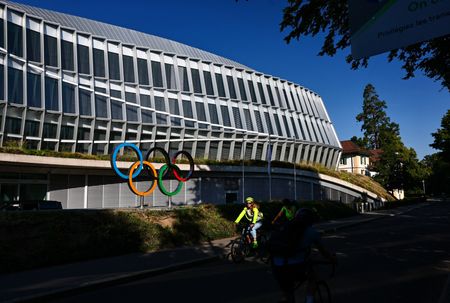
IOC Sports Director Pierre Ducrey told Reuters that cricket has long been one of the world’s major sports missing from the Olympic stage.
“It is very strong in markets where maybe you could say the Olympic Games today may not have penetrated as much as they have in other markets,” Ducrey said.
He added that cricket’s presence at the LA Games would draw in viewers who don’t typically follow the Olympics. “Cricket will bring to the LA Games audiences that may not necessarily tune in regularly to watch the Olympic Games,” Ducrey said. “It’s a win-win compromise where we’ll give them more opportunities, and they will definitely strengthen our appeal in markets that are very strongly interested in cricket and sometimes mostly in cricket.”
Broadcasting Rights Already Drawing Attention
The upcoming return of cricket to the Olympics has sparked immediate commercial interest. The IOC has confirmed “strong interest” in broadcasting rights for the Indian subcontinent for the 2028 Games.
IOC Television and Marketing Services Managing Director Anne-Sophie Voumard told Indian media late last year that the rights deal would be worth “a multiple” of what was paid for the 2024 Games contract, which was estimated at around $30 million.
“Regarding media rights for the LA28 Olympic Games in the Indian subcontinent, we are currently engaged in constructive discussions with a number of key players across the region,” an IOC spokesperson told Reuters. “We can confirm that there has been strong interest from the market, reflecting both the momentum behind the LA28 Olympic Games and the addition of cricket to the sports programme.”
Connections between Olympic broadcasting and cricket already run deep in the region. Billionaire Mukesh Ambani’s Indian broadcaster JioStar — formed through a 2024 merger of Reliance Industries and Walt Disney’s Indian media holdings — held the rights to both the Paris 2024 Games and the Milano Cortina 2026 Winter Games, and also broadcasts the Indian Premier League, the country’s premier cricket competition. Ambani’s wife Nita is an IOC member and hosted the 2023 IOC session in Mumbai.
The Rise of T20 Cricket
Cricket re-entered the Olympic conversation after the IOC recognized the International Cricket Council in 2010, but the sport’s traditional five-day Test matches and lengthy one-day internationals were seen as impractical for the Games. The turning point came with the rise of Twenty20 cricket — a three-hour format whose growing popularity coincided with IOC reforms in 2014 that allowed host cities to propose additional sports, opening the door for Los Angeles to bring cricket back in 2028.
ICC Chief Executive Sanjog Gupta, who previously served as CEO of sports and live experiences at JioStar, said T20’s short format and global reach make it a natural fit for the Olympics.
“The jeopardy or the unpredictability that live sports benefit from is maximised in this format,” Gupta told Reuters. Unlike Test matches, which are limited to the ICC’s 12 full members, T20 cricket has a much wider international footprint.
“Avenues of participation have been expanded significantly to really position this format as cricket’s handshake with the world,” Gupta said. “It’s global, more accessible and representative. T20 ticks all the right boxes.”
A Journey More Than Two Decades in the Making
The 2028 Los Angeles Games will mark the conclusion of a 21-year process that began when the IOC provisionally recognized cricket back in 2007.
“The interests of some of the federations, the interests of the Olympic movement at large, sometimes converge, sometimes they don’t,” Ducrey said. “And it took some time for the interests of the International Cricket Council, of the sport of cricket at large, and those of the Olympic movement to align in a more significant way that led to the discussions around the 2028 program.”
“So a long journey, but I would say one that was consistently getting our movements and our sports, and our interests closer and closer,” he added.
Cricket’s commercial growth has been driven largely by the Indian Premier League, which has reshaped the sport over the past two decades. The 10-team IPL is now valued at roughly $20 billion, and the 2026 season drew 1.2 billion viewers across various platforms.
Cricket’s Olympic Future Looks Bright
Cricket is widely expected to remain part of the Olympic program beyond 2028. The 2032 Games are scheduled for Brisbane, Australia — a country with a deep cricketing history — and India is actively pushing Ahmedabad as the host city for the 2036 Games.
The sport also delivers a highly sought-after audience demographic. According to ICC chief executive Gupta, nearly 50% of cricket’s followers are under 35, and 35% are under 27, making the sport what he describes as “future-ready.”
Gupta said cricket’s inclusion positions the Olympic movement to gain a significant “demographic dividend.” “As the Olympic movement looks to the future of its own significance and relevance of sport in various markets, cricket can potentially play a huge role in driving that forward,” he said.
“Cricket is the fastest growing large-scale team sport in the world. It’s a massive opportunity for the Olympic movement to ride on.”