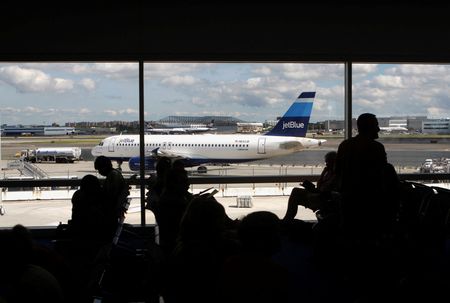

JetBlue Airways announced Monday that it is completely restructuring its fare offerings, giving passengers greater ability to customize their travel experience based on seating preferences, flexibility to make changes, and refundability options.
The New York-based airline, which was scheduled to release its second-quarter financial results before markets opened Tuesday, said the new fare system would begin rolling out within days. The announcement reflects a broader industry trend of using tiered pricing to drive revenue as fuel costs remain unpredictable.
“Customers will be able to book what’s right for them. First, the onboard experience, and then the fare option depending on their preferences around seat selection and refundability,” said JetBlue President Marty St. George.
Wall Street analysts and investors are closely watching whether JetBlue successfully passed along higher fuel expenses to travelers through increased ticket prices during the second quarter. Rival carriers including United Airlines, Delta Air Lines, and Alaska Airlines have already reported success in generating additional revenue through fare hikes.
Peter Trombetta, vice president of corporate finance at Moody’s Ratings, weighed in on the pressure facing the industry. “Now that we’ve seen a few airlines talk about that, now all the airlines have to reflect that. If they don’t, then there might be an issue,” he said. “The revenue side is important. We know costs are going to be higher.”
Airlines raised ticket prices this past spring — by an average of roughly 20% — in response to a spike in jet fuel costs tied to the Iran war. However, those increases have not fully made up for the added expense. U.S. spot jet fuel stood at $3.67 per gallon as of July 24, which, while elevated, remains well below the early-April high of approximately $4.88 per gallon.
Giving travelers more choices has become a key tool for airlines looking to strengthen their financial performance. Southwest Airlines reported that expanding its basic economy tier led to more base-fare purchases and a higher number of customers choosing to upgrade when given the option. Delta announced last month that it would introduce basic fare pricing across all of its premium cabin categories, making higher-end travel accessible at a lower entry price.
JetBlue has previously offered multiple fare tiers, but the airline said this latest overhaul is also designed to prepare customers for the arrival of BlueFirst, its new domestic first-class product.
“We want to make sure customers know that JetBlue offers the experiences they are looking for,” St. George added.